Crab-stuffed sweet potatoes
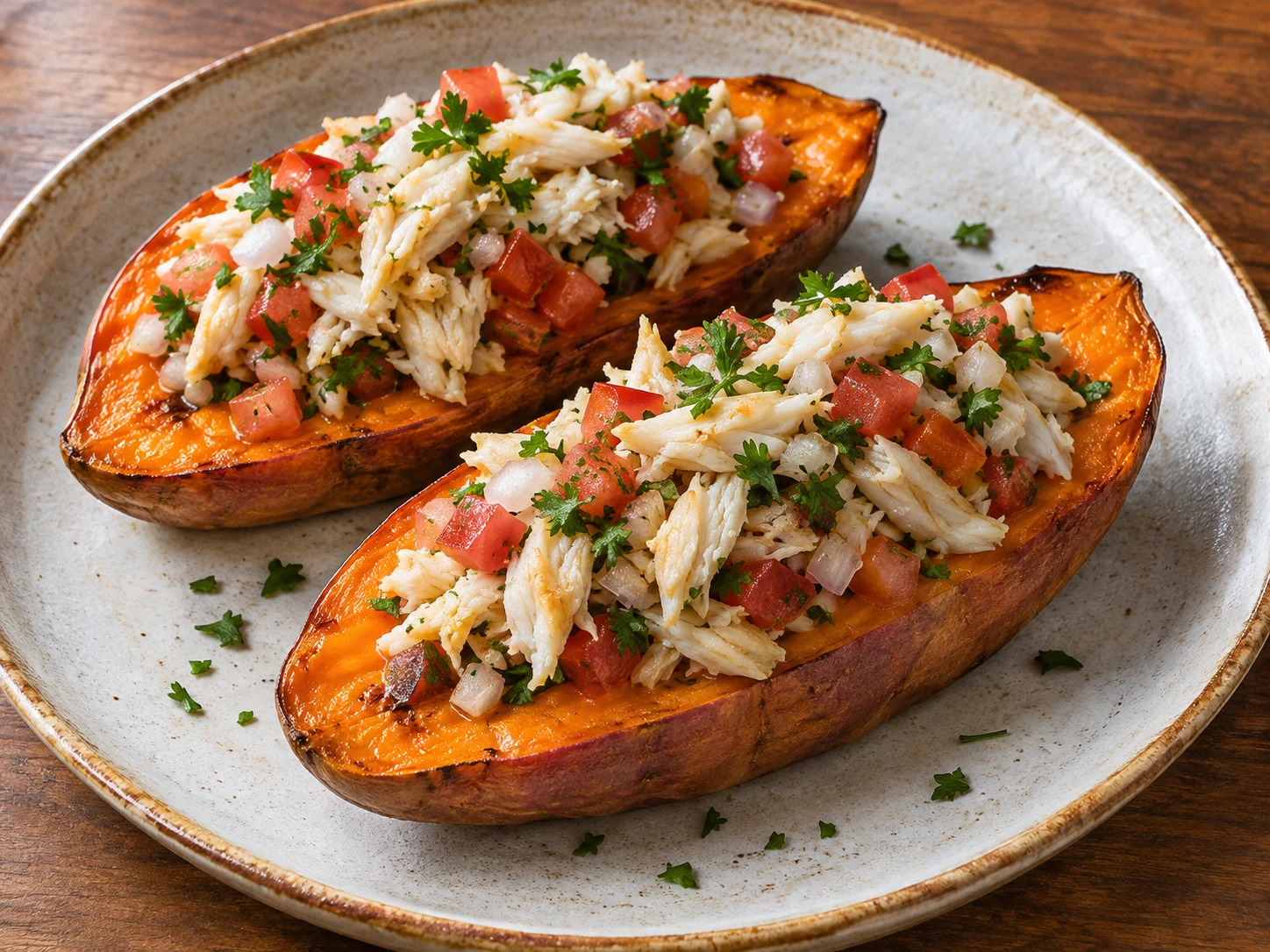
Roasted sweet potato serves here as an edible container for a crab, tomato and onion filling.
Ingredients
- 4 sweet potatoes of about 250 g each
- 300 g cooked, drained crab meat
- 150 g tomatoes
- 80 g onion
- 1 garlic clove
- 15 ml oil
- 15 ml lemon juice
- 10 g parsley
- 2 g salt
- Black pepper
Preparation
Bake the whole washed potatoes at 200 °C for 45–60 minutes until tender.
Soften chopped onion in oil for 8 minutes, add garlic then tomato and cook 5 minutes.
Open the potatoes, scoop out a little flesh and mash it with the tomato base.
Add crab, lemon, parsley and salt.
Fill the potato halves and reheat for about 10 minutes in the oven until thoroughly hot in the centre.
Introduction
Roasted sweet potato serves here as an edible container for a crab, tomato and onion filling. The sweetness of its flesh contrasts with the shellfish flavour and the lemon added to the stuffing. This contemporary preparation, inspired by products of the Angolan table and its coastal supplies, is not presented as a historical speciality of a particular town. It makes four light main-course portions, each comprising two sweet potato halves depending on the size chosen. The filling is already cooked before the final spell in the oven; this finish should heat it thoroughly without drying out the crab.
Success depends on the ratio between the shell, the scooped-out flesh and the filling. Hollowing out a potato completely leaves a fragile skin that tears when served. Removing only a small amount of flesh instead supports the filling while naturally binding the ingredients. There is no need to add mayonnaise or a thick sauce. The crab remains identifiable and the tomato must be cooked sufficiently to avoid making the inside soggy.
Cultural context
This recipe is a contemporary creation inspired by ingredients from the Angolan table, not an attested traditional recipe. The references document the products and their context; they are not the source of the proposed formula. The proportions and method are an original editorial proposal. The institutional texts cited provide agricultural or cultural context and do not establish a traditional origin for this formula.
https://www.fao.org/4/j2771p/j2771p00.htm https://www.embassyangolatr.org/tr/angola/cultura
Tips
The recipe contains crustaceans.
Pick through cooked meat to remove shell fragments.
Do not scoop all the way to the skin.
Reduce the tomato before incorporating it.
Check that filling is hot in the centre and avoid unnecessarily prolonging the crab’s cooking.
Planning
Choose four sweet potatoes of similar size, each weighing around two hundred and fifty grams before cooking. Wash carefully and remove damaged areas; keep the skin on during roasting. Orange flesh provides a clear colour, but paler varieties are possible with attention to cooking time. The crab weight refers to cooked, drained meat, excluding shell and preserving liquid. Plain canned crab may be suitable if its composition and salt content are taken into account.
Fresh crab purchased already cooked must be kept chilled and used according to the seller’s instructions. Pick through it with clean fingers to find fragments of shell, even if the packaging says the meat is ready to use. The recipe does not describe cooking a live crab or shelling a whole animal. Dice the tomato small and chop the onion fairly finely for an even filling. Wash the parsley and dry it before chopping, so as not to add extra water.
Preheat the oven to two hundred degrees. Place the potatoes on a rimmed tray without wrapping each in material that would hide its condition. Cook until a blade passes easily through the flesh, generally forty-five to sixty minutes depending on size. The skin may wrinkle slightly and a little juice may appear; a protected tray prevents this from burning on the oven floor. A potato that is still hard cannot be hollowed properly and must continue cooking before assembly.
Meanwhile, soften the onion in the oil over medium heat. Add garlic, then tomato, and let enough water evaporate to create a concentrated base. Stir the bottom without aiming for dark browning. Do not add crab to this pan during a long reduction, as it would become dry and fibrous. Prepare the lemon and parsley separately, then set the tomato base aside for a few minutes. Working in parallel lets the filling be ready when the potatoes are tender.
Let the potatoes release their fiercest steam before opening them lengthways. Handle them with a clean cloth or suitable protection. With a teaspoon, scoop just a little flesh from the centre of each half, keeping a sufficiently thick layer against the skin and at the ends. Mash the removed flesh with the tomato base, then add crab, lemon and parsley. Fold gently to avoid reducing all the crab pieces to very fine fibres. Salt moderately after considering the crab meat used.
Divide the filling among the potato halves in a slight dome without packing it down firmly. Return them to the tray and bake for about ten minutes until thoroughly hot in the centre. If the surface dries before the filling is hot, protect the dish without trapping all the steam. This reheating should not become a lengthy extra cooking stage. A cold product straight from the refrigerator may need longer than still-warm filling; check the inside rather than relying solely on the potato’s golden appearance.
Serving
Serve the potato halves on plates wide enough to keep the filling in place. A leaf and cucumber salad provides a fresh contrast. The potato is already the dish’s main starch; extra bread or rice is an appetite-based choice, not an automatic necessity. Offer a little lemon separately if desired. To prepare ahead, cook the potatoes and keep the filling separately chilled, then assemble and reheat at mealtime. Adjust reheating time for cold components.
Storage
Cool leftovers quickly in a shallow container, refrigerate at 4 °C or below and eat within 24 hours. Reheat dishes intended to be eaten hot only once, until thoroughly hot at the centre. For salads, keep the dressing and crunchy elements separate where possible.
Variations
Already cooked, boneless fish flesh may replace the crab, but the dish must be renamed and its main allergen becomes fish. A plant-based version with cooked black-eyed peas requires another filling and should not be presented as equivalent to crab. Spring onions may replace some parsley in the finish. Avoid hiding the filling under a layer of very salty cheese: it would change the flavour, nutritional intake and logic of this formula. Add lemon gradually to preserve the sweet potato’s sweetness without making the mixture harsh.
Nutrition notes
Estimated values per serving, excluding accompaniments. Calculated from edible weights and reference foods; brands, cooking and actual yield may change the results. All fats are counted in full. Where energy is not provided in the table, it is estimated from protein and carbohydrate (4 kcal/g), fat (9 kcal/g) and fibre (2 kcal/g). Optional spices in very small quantities are not counted.
Conclusion
The desired result depends on the textures described and on seasoning adjusted at serving. This editorial formula is not presented as kitchen-tested. Enjoy your meal!
Enjoy your meal
Enjoy your meal!