Sweet potato salad with múcua dressing
Múcua is the fruit of the baobab; here its dried pulp is used as a food-grade powder, not as a prepared, sweetened drink.
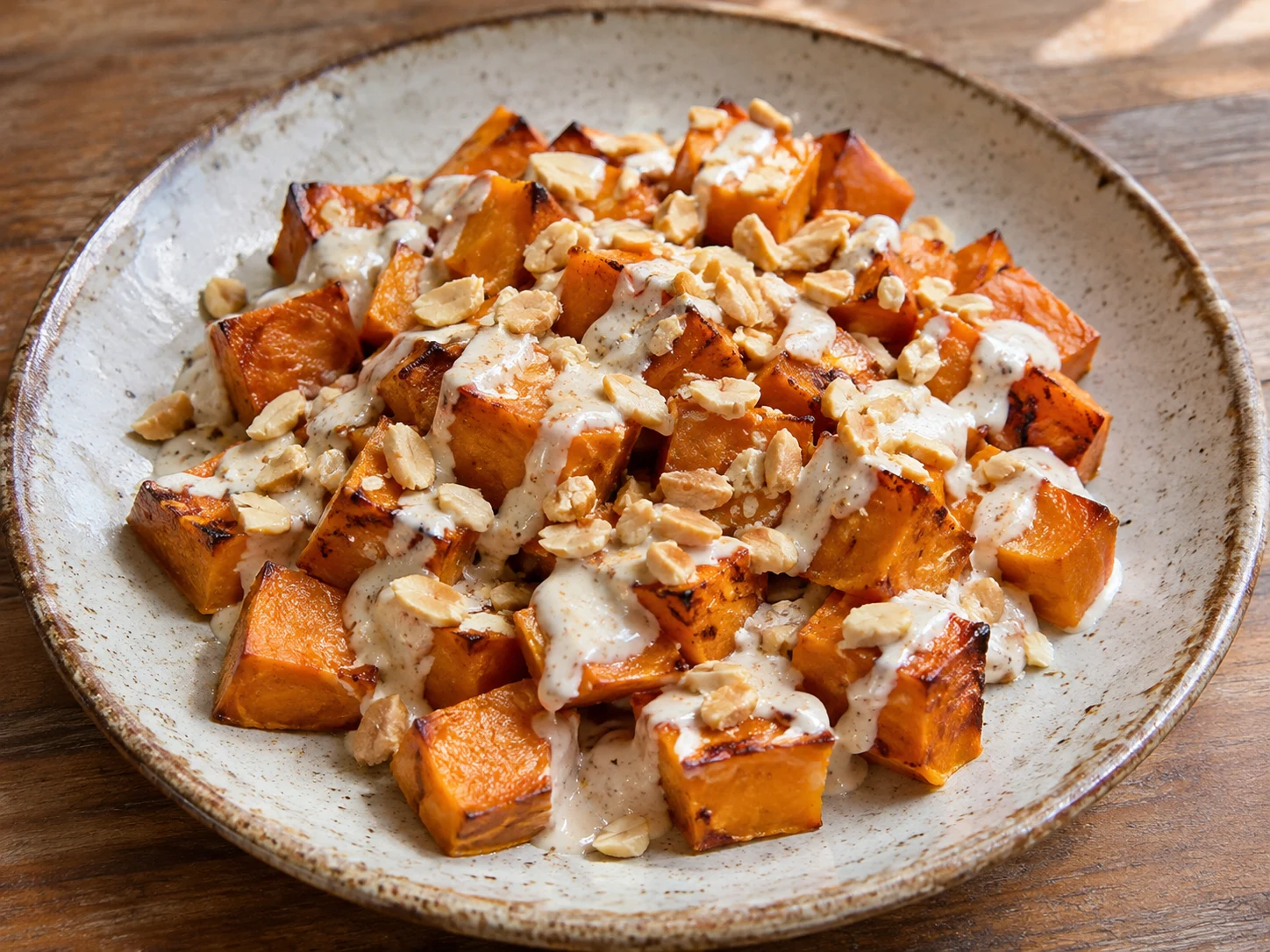
Ingredients
- 700 g peeled sweet potatoes
- 25 g unsweetened food-grade múcua or baobab pulp powder
- 60 g unsalted roasted peanuts
- 100 g red onion
- 20 ml oil
- 120 ml drinking water
- 10 g parsley
- 2 g salt
- Black pepper to taste
Preparation
Preheat the oven to 200 °C. Cut the sweet potatoes into 2 cm cubes, mix with 15 ml oil and spread on a tray.
Roast for 25–35 minutes, turning halfway. The cubes should be tender at the centre and lightly golden at the edges.
Meanwhile, whisk the múcua powder with 120 ml water. Leave to hydrate for 10 minutes, then stir again. If necessary, strain coarse fibres through a fine sieve.
Stir the remaining 5 ml oil, salt and pepper into the dressing. Taste before changing the acidity: múcua already adds a tart note.
Finely slice the red onion, chop parsley and roughly crush peanuts. Let the sweet potatoes cool slightly for 5 minutes.
Gently mix the cubes with onion and part of the dressing. Add parsley and peanuts when serving; offer the remaining dressing separately.
Introduction
Múcua is the fruit of the baobab; here its dried pulp is used as a food-grade powder, not as a prepared, sweetened drink. Its natural acidity balances the cubes of roasted sweet potato. Peanuts provide a crunchy contrast without being blended into the dressing. This salad is a contemporary creation inspired by products of the Angolan table. Its assembly, separate dressing and warm serving temperature distinguish it from the simply boiled or roasted sweet potatoes in the first volume.
The quantities make four generous side portions. For a main meal, add a source of protein and, depending on appetite, some vegetables. There is no need to sweeten the dressing: the sweet potato already supplies enough sweetness. Múcua nevertheless varies between products, sieving methods and concentrations. The twenty-five grams are a starting point for the specified powder. Pulp sold with seeds or a liquid drink cannot be substituted at the same weight; this recipe does not describe their processing.
Cultural context
The terms múcua and ginguba are retained to identify the products, without giving this salad a family or regional origin. The document supplied for Angola already mentions sweet preparations and múcua drinks; this proposal explores a distinct savoury use. The Angolan embassy lists ginguba among products of the country’s table. That source supports the general context and does not document the dressing proposed here. Context reference: https://www.embassyangolatr.org/tr/angola/cultura
Tips
The recipe contains peanuts.
Let the dressing hydrate before adjusting it.
Add peanuts just before serving.
Múcua already provides acidity; lemon is unnecessary.
Weigh sweet potatoes after peeling.
Planning
Read the powder’s label and choose baobab pulp with no added sugar or flavouring. A sieved food-grade product mixes more easily and avoids fragments of shell. Do not use powder intended for another purpose. After opening, seal the bag carefully and keep it away from moisture. Weigh the powder on scales rather than estimating by spoonfuls, because its density changes with fineness and packing.
Choose firm sweet potatoes without mouldy areas. Orange flesh provides a strong visual contrast with the pale dressing, but a pale-fleshed variety also works if the cooking time is adjusted. Weigh after peeling. The peanuts should be roasted and unsalted so that seasoning remains under control. Check their smell and discard any damaged nuts. Red onion is useful for crunch, but its sharpness should remain moderate; a brief rinse followed by thorough draining can soften it.
Cutting even-sized cubes matters more than obtaining perfectly geometric shapes. Small pieces cook and brown more quickly; very large cubes remain firm at the centre while their edges are already colouring. Mix all the cubes with the fifteen millilitres of oil before spreading them out, so that some are not left dry while others are immersed. Use two trays if necessary: overcrowding encourages steam and produces sweet potato that is more steamed than roasted.
Turn the cubes halfway through cooking with a wide spatula. From twenty-five minutes onwards, check tenderness with the point of a knife. Additional time depends on the oven, variety and moisture content of the vegetable. Do not wait until the entire surface is brown. Once cooked, the cubes still hold together but are easily pierced. Resting them on the tray for five minutes makes them less fragile and prevents the dressing from heating too abruptly on contact.
For the dressing, first pour a small part of the water over the powder, whisk until the lumps disappear, then gradually add the rest. Leave to hydrate for ten minutes before assessing consistency: a mixture that initially looks runny may thicken. The dressing should flow in a short ribbon rather than form a compact paste. Stir after resting and, if still too thick, add a spoonful of water. If it seems too tart, start by using less on the potatoes rather than trying to conceal it with lots of sugar.
Assemble at the last moment. Add some dressing first and gently lift the cubes to coat them. The peanuts remain crunchy if added just before the meal. Avoid prolonged marinating: the potato surfaces soften and their shapes become less defined. Reserving the remaining dressing separately lets everyone adjust the quantity while keeping the basic dish pleasant to eat.
Serving
Present the salad in a shallow dish to preserve the cubes. Scatter some peanuts and parsley over the top without adding decoration unrelated to the ingredients. With grilled fish or cooked beans, it makes a contrasting side dish. The dressing should not form a pool at the bottom; it accompanies the potatoes rather than drowning them. For a meal prepared ahead, keep the potatoes, dressing and peanuts in separate containers and assemble when serving.
Storage
Cool leftovers quickly in a shallow container, refrigerate at 4 °C or below and eat within 48 hours. Reheat dishes intended to be eaten hot only once, until thoroughly hot at the centre. For salads, keep the dressing and crunchy elements separate where possible.
Variations
Roasted pumpkin cubes can replace some of the sweet potatoes, but their moisture changes the dressing and makes the mixture more fragile. A peanut-free version can omit the nuts; it loses their crunch and should not be declared safe for someone with an allergy without checking the entire preparation and possible cross-contact. Baobab pulp cannot be replaced directly by the same weight of powdered lemon. For an adaptation using fresh lemon, make a separate vinaigrette and clearly identify the change.
Nutrition notes
Estimated values per serving, excluding accompaniments. Calculated from edible weights and reference foods; brands, cooking and actual yield may change the results. All fats are counted in full. Where energy is not provided in the table, it is estimated from protein and carbohydrate (4 kcal/g), fat (9 kcal/g) and fibre (2 kcal/g). Optional spices in very small quantities are not counted.
Conclusion
The desired result depends on the textures described and on seasoning adjusted at serving. This editorial formula is not presented as kitchen-tested. Enjoy your meal!
Enjoy your meal
Enjoy your meal!