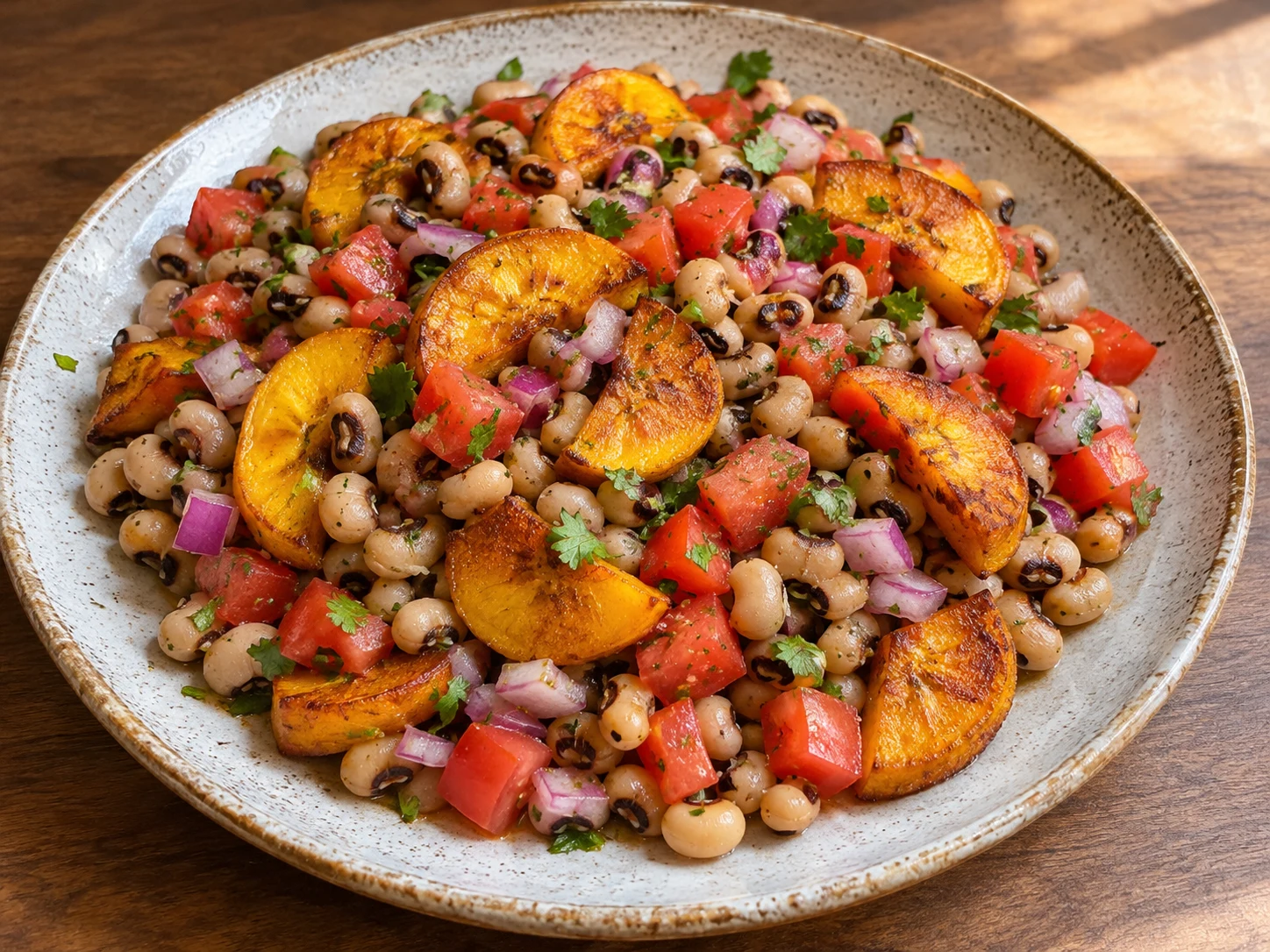
Black-eyed pea salad with roasted plantain
Black-eyed peas, recognizable by their small dark eye, form this salad’s base.
Ingredients
- 500 g cooked drained black-eyed peas
- 400 g peeled yellow but firm plantain
- 250 g tomatoes
- 80 g red onion
- 25 ml oil, including 10 ml for roasting
- 25 ml lime juice
- 10 g parsley
- 2 g salt
- Black pepper and gindungo chilli to taste
Preparation
Preheat oven to 200 °C. Peel plantains, weigh 400 g of flesh and cut into 1.5 cm half-rounds.
Toss pieces with 10 ml oil and spread in a single layer. Roast 20–25 minutes, turning halfway, until tender and lightly coloured.
Rinse and thoroughly drain the cooked black-eyed peas. If refrigerated, let them lose only a little of their chill during preparation.
Dice tomatoes, slice onion very finely and chop parsley. Combine in a large bowl with beans.
Emulsify the remaining 15 ml oil with lemon juice, salt, pepper and a little gindungo if desired. Mix with beans first.
Let plantains cool for 5 minutes, then fold in with a broad spatula. Divide between four plates and serve without a long wait.
Introduction
Black-eyed peas, recognizable by their small dark eye, form this salad’s base. Roasted plantain pieces bring moderate sweetness and coloured edges. Tomato, red onion and lemon provide fresh contrast; they are not cooked with the banana. This is a contemporary creation inspired by produce used in Angola, not a new name for the first volume’s feijão de óleo de palma. The absence of palm oil and serving it as a salad give it a different structure.
The four portions suit a plant-based lunch or a substantial side dish. Plantain should be yellow but firm enough to hold its shape during mixing. Too green, it stays floury and less sweet; very black and soft, it crushes easily and strongly sweetens the dish. Beans are weighed after cooking and draining. This avoids confusing five hundred grams of dry beans with the intended quantity. Any cooking of dried beans must be arranged beforehand and is not included in the twenty-five oven minutes.
Cultural context
Angola’s embassy in Türkiye mentions ginguba, banana-pão and maize among products and preparations of the Angolan table. The 2004 FAO/WFP report also describes beans’ place among food crops. These references support the ingredient context; neither presents this salad as traditional. Roasting, proportions and dressing are contemporary editorial choices. Context sources: https://www.embassyangolatr.org/tr/angola/cultura and https://www.fao.org/4/j2771p/j2771p00.htm
Tips
The 500 g of black-eyed peas is a cooked weight.
Use yellow, firm plantain.
Leave space between pieces on the tray.
Add plantains last to preserve their shape.
Dressing does not make the salad stable at room temperature.
Planning
Plain canned black-eyed peas work very well: rinse, drain in a colander and let liquid run off for a few minutes. Freshly cooked beans must be tender to the centre and cool enough not to cook tomatoes on contact. Slightly split skins are fine, but badly burst beans would produce a purée texture. Avoid beans already prepared in sauce, whose seasoning would change the recipe and salt quantities.
Plantain differs from dessert banana in its behaviour during cooking. Slit the skin lengthwise and lift it away with your fingers; the flesh may resist more than an ordinary banana. Weigh after removing the skin. Choose firm ripe tomatoes, remove only the hard part and keep the flesh. Very pungent red onion can be briefly rinsed after slicing, then thoroughly drained. Residual water must not dilute the dressing.
Use a tray wide enough to avoid overlapping the half-rounds. Crowding traps steam and reduces surface colour. Distribute the ten millilitres of oil with clean hands or a spatula before spreading plantains out. Baking paper makes release easier but does not replace checking colour. Time depends on ripeness and the oven. Turning halfway exposes both faces to the hot tray, avoiding a very brown face opposite a still-pale one.
Out of the oven, a knife tip should pass easily through the flesh. Let pieces cool for five minutes: they are easier to handle and do not abruptly heat the whole salad. This brief rest does not mean a prolonged wait at room temperature. Meanwhile, combine beans, tomatoes and onion with dressing. Beans thus receive seasoning before the more fragile pieces are added.
Fold in the last ingredient with a broad spatula, lifting from the bottom rather than stirring vigorously. Three or four movements usually distribute plantain. If a few pieces break, preserve the others and stop handling. Taste a bite containing both bean and banana before adjusting lemon: plantain sweetness makes the balance different from tomato alone. Add gindungo gradually because strength varies widely among powders and sauces sold under this name.
Serving
Serve warm or cool without leaving it on the table for long. A sufficiently wide dish gives every portion plantain pieces. For a buffet, keep part refrigerated and replenish the dish progressively. If accompanying grilled fish, reduce portions according to appetite rather than systematically adding another starch. Lemon and parsley are already included in the quantities; extra garnish is optional and must be counted if tracking intake.
Storage
Cool leftovers promptly in a shallow container, refrigerate at 4 °C or below and eat within 48 hours. Reheat preparations intended to be eaten hot only once, until thoroughly hot at the centre. For salads, keep the dressing and crunchy components separate where possible.
Variations
Replace tomato with well-drained cucumber for a crunchier version. Red or white beans produce another salad and must be named clearly. To prepare partly ahead, cook plantains and refrigerate components separately, then assemble at mealtime. Dessert banana is not an equivalent substitute: it is more fragile and needs a different cooking time. A spoonful of crushed ginguba adds crunch but introduces the peanut allergen.
Nutrition notes
Estimated values per serving, excluding accompaniments. Calculated from edible weights and reference foods; brands, cooking and actual yield may alter the results. All fat is counted. Where energy is unavailable in the table, it is estimated from protein and carbohydrate (4 kcal/g), fat (9 kcal/g) and fibre (2 kcal/g). Very small optional quantities of spices are not counted.
Conclusion
The intended result depends on the textures described and seasoning adjusted when serving. This editorial formula is not presented as kitchen-tested. Enjoy your meal!
Enjoy your meal
Enjoy your meal!