Fish broth with cassava and ginger
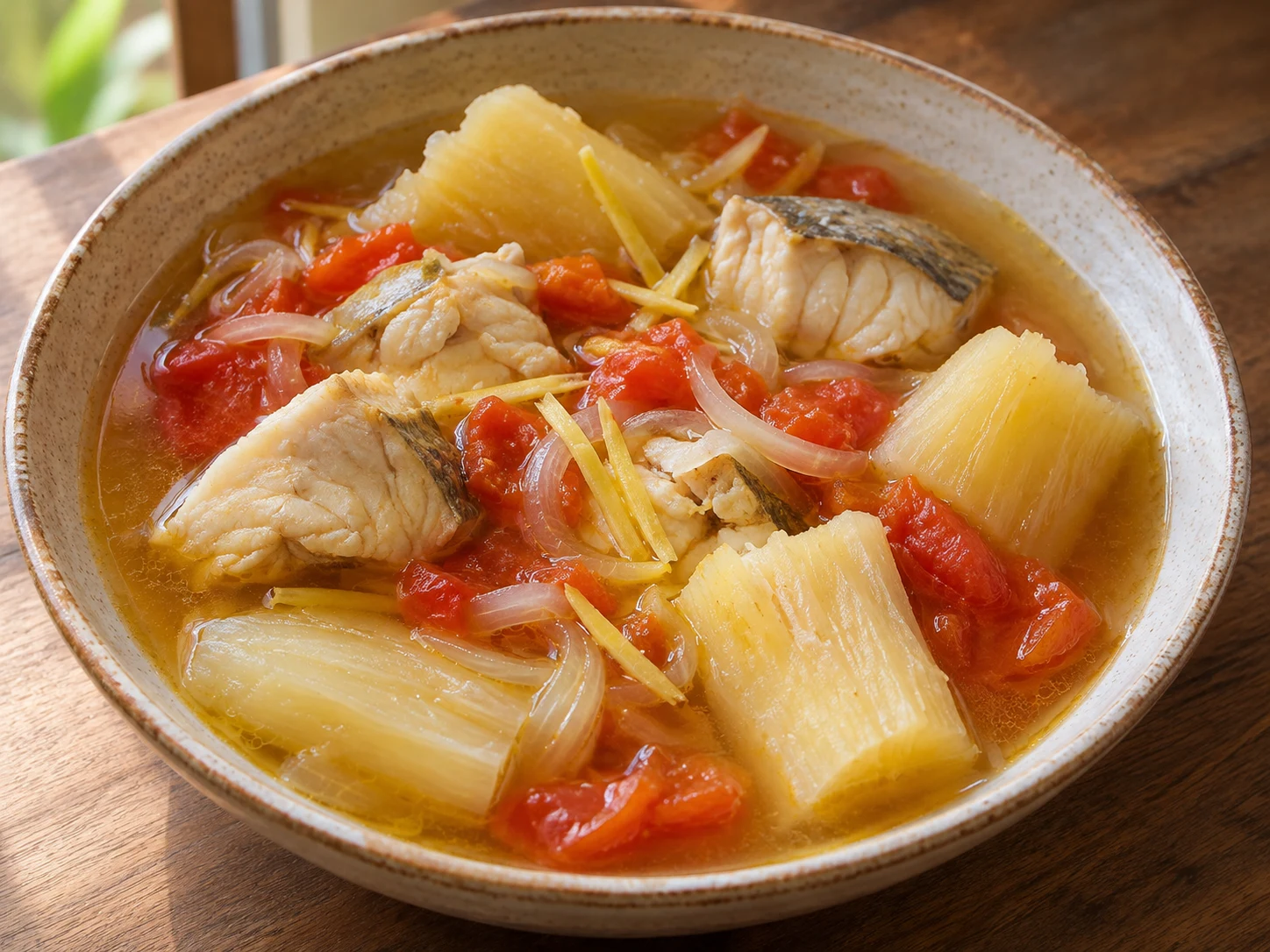
This broth keeps a relatively clear liquid around pieces of fish and cassava.
Ingredients
- 600 g boneless white fish fillets
- 500 g peeled food-grade sweet cassava, fresh or frozen
- 200 g tomatoes
- 150 g onion
- 15 g fresh ginger
- 2 garlic cloves
- 15 ml oil
- 1 litre fresh water for the broth, plus water for boiling cassava
- 15 ml lime juice
- 3 g salt
- Black pepper to taste
Preparation
Remove the central fibres of the cassava and cut the flesh into 3 cm pieces. Cook uncovered in plenty of boiling water until completely tender, generally 25–35 minutes for the culinary product specified. Follow the supplier’s directions if they require longer.
Drain cassava and discard its cooking water. Do not use it in the broth. Set cooked pieces aside.
Slice onion, chop garlic, grate ginger and cut tomatoes. Soften onion in oil for 8 minutes. Add garlic and ginger for 1 minute, then tomato for 5 minutes.
Pour in the litre of clean water, add salt and simmer partly covered for 15 minutes. Meanwhile, feel the fillets with your fingers and remove remaining bones.
Add cooked cassava, then fillets cut into four portions. Cook at a gentle simmer for 6–10 minutes depending on thickness, until fully cooked and opaque, with flesh that separates easily.
Remove from heat, add lemon and pepper. Gently divide fish, cassava and broth between four soup plates without breaking the fillets.
Introduction
This broth keeps a relatively clear liquid around pieces of fish and cassava. It does not aim for the thickness of a calulu and contains neither peanut paste nor palm oil. Ginger provides a lively aroma, tomato moderate acidity, and cassava makes the dish more nourishing without turning all the broth into a purée. This contemporary creation inspired by Angolan produce serves four. Fish goes in last to cook gently, while cassava is cooked separately in water that is then discarded.
This separation governs the whole preparation. Cassava and fish have different cooking times and requirements. Putting both in raw together would overcook the fish before the root was ready. Greater precision comes from preparing cassava first, then an onion, tomato and ginger base. The broth stays simple: without industrial stock or intensely concentrated fish stock, the fish flesh and the character of the root are easier to appreciate.
Cultural context
Cassava is among Angola’s major crops described in the FAO/WFP report dated 6 August 2004. That agricultural context does not document this combination of fish, ginger and clear broth. The recipe therefore receives no provincial name or status as a historical speciality. It offers a new way to cook a root familiar at many Angolan tables, distinguishing the handling each ingredient requires. Context source: https://www.fao.org/4/j2771p/j2771p00.htm
Tips
Discard cassava cooking water.
Do not use a bitter or unidentified variety with this method.
Check bones carefully, even in fillets sold as boneless.
Maintain a gentle simmer after adding fish.
Refrigerate any leftovers promptly and consume within 24 hours.
Planning
Buy only identifiable culinary cassava supplied with preparation directions. This recipe is intended for commercially sold sweet cassava; it gives no procedure for making a bitter variety or a root of uncertain origin edible. Peel generously, remove damaged parts and the central fibre. Do not taste the flesh raw. Ready-peeled frozen cassava is convenient provided you follow its directions and cook it completely before adding it to the broth.
Choose thick fish fillets that hold together when cooked, such as hake or another white fish available from your fishmonger. The quantity refers to skinless, boneless flesh. Thawing in the refrigerator allows the fillets to drain before cutting. Portions of similar thickness cook more evenly. Very ripe tomatoes break down in the liquid; firmer tomatoes leave some pieces. Finely grated ginger is less conspicuous in the mouth than long fibrous strips.
Have two pans, a colander and a plate for the fillets ready. Use the first pan to cook cassava in plenty of water. Pieces must be completely cooked, easily pierced with a blade and free of a hard centre. Time depends on product, size and variety; twenty-five to thirty-five minutes is a guide for commercial sweet cassava, not a guarantee for every root. Discard this cooking water. Once drained, the cassava waits briefly while the broth finishes simmering.
In the second pan, soften onion before adding ginger and garlic. Cooking tomato for a few minutes gives a more balanced base than simply adding raw vegetables to water. Then pour in one litre of clean water and let flavours infuse. You may strain the broth for a clearer appearance, but this is unnecessary. Vegetables can remain in the dish, providing more texture.
Add the cooked cassava before the fish to bring everything to an even temperature. Lay in the fish portions and return to a gentle simmer without a vigorous boil. Avoid stirring a spoon among the fillets: gently moving the pan is enough to redistribute the liquid. Adapt the six-to-ten-minute time to thickness; check a portion instead of relying solely on the clock. Flesh must be opaque to the centre and separate easily. A broad slotted spoon preserves the pieces better during serving than a small ladle alone.
Serving
Distribute the solid pieces first and pour broth around them. Cassava already supplies the starch: there is no need automatically to add a large portion of rice or bread. Separately cooked green vegetables complement the meal well. Offer a small dish of lemon if desired, but first taste the broth after the specified addition. Excessive acidity can mask the fish. Preheated soup plates slow cooling without requiring the whole pan to be overcooked.
Storage
Cool leftovers promptly in a shallow container, refrigerate at 4 °C or below and eat within 24 hours. Reheat preparations intended to be eaten hot only once, until thoroughly hot at the centre. For salads, keep the dressing and crunchy components separate where possible.
Variations
Replace some cassava with separately cooked sweet potato if desired; the flavour becomes sweeter and the name should be adjusted. Change the white fish according to availability, retaining fillets suitable for poaching. Avoid replacing fresh fish with salted fish without reconsidering desalting and the recipe’s salt. For a more fragrant broth, let ginger infuse a few minutes longer before adding fillets rather than extending their cooking.
Nutrition notes
Estimated values per serving, excluding accompaniments. Calculated from edible weights and reference foods; brands, cooking and actual yield may alter the results. All fat is counted. Where energy is unavailable in the table, it is estimated from protein and carbohydrate (4 kcal/g), fat (9 kcal/g) and fibre (2 kcal/g). Very small optional quantities of spices are not counted.
Conclusion
The intended result depends on the textures described and seasoning adjusted when serving. This editorial formula is not presented as kitchen-tested. Enjoy your meal!
Enjoy your meal
Enjoy your meal!