Pumpkin soup with massango millet flour
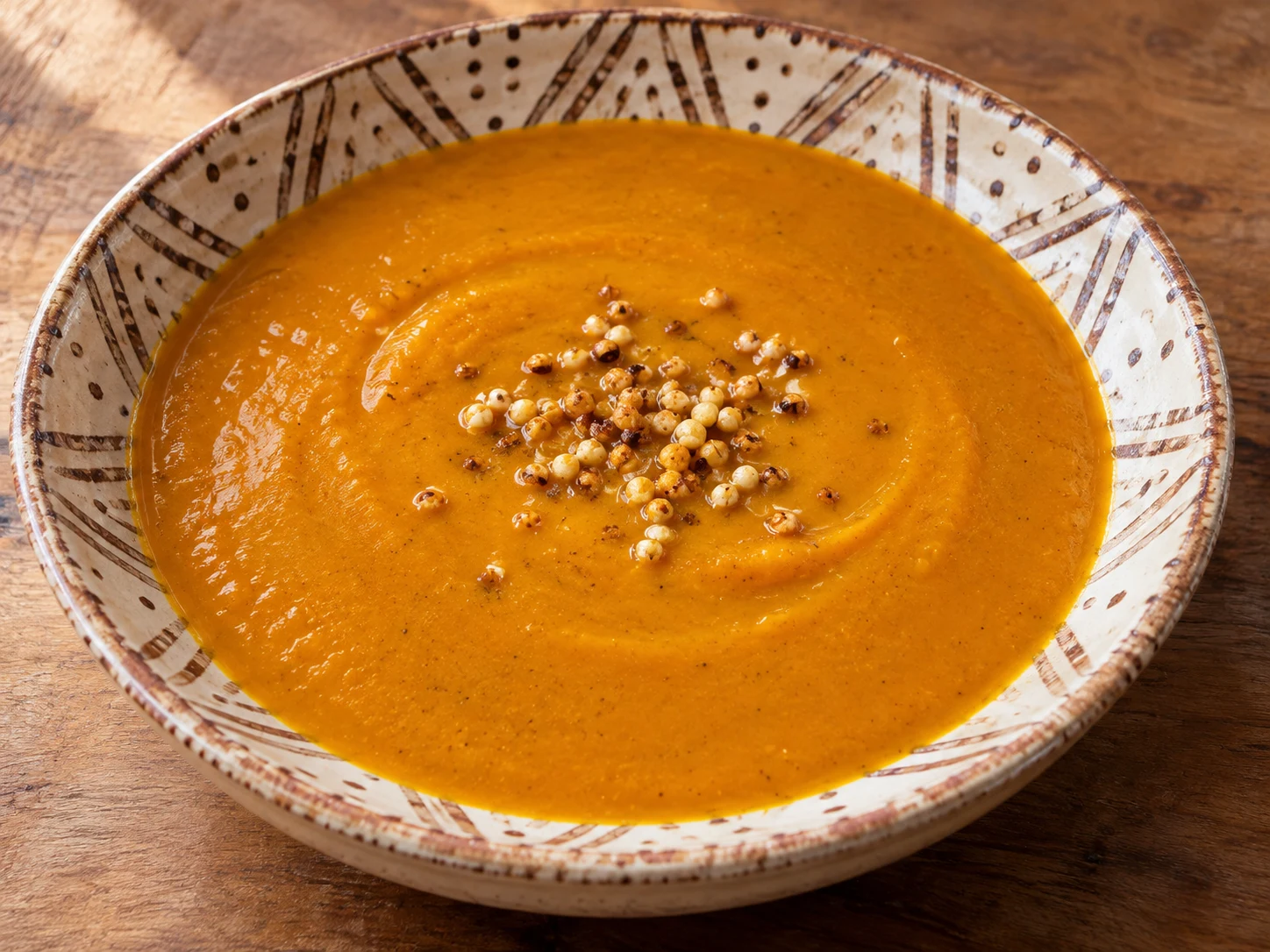
Pumpkin provides colour and sweetness here, while massango flour gives a different body from a creamy soup thickened with potato.
Ingredients
- 700 g peeled deseeded pumpkin flesh
- 50 g food-grade pearl millet flour, massango
- 150 g onion
- 1 garlic clove
- 15 ml oil
- 900 ml water
- 10 ml lemon juice
- 3 g salt
- Black pepper to taste
Preparation
Cut pumpkin into even 2 cm cubes. Slice onion and chop garlic. Measure 100 ml cold water separately for the flour.
Soften onion in oil for 8 minutes. Add garlic, stir for 30 seconds, then add pumpkin cubes.
Pour in 800 ml water, partly cover and simmer for 20–25 minutes, until the cubes crush easily.
Blend pumpkin with its liquid off the heat. Dilute massango flour smoothly in the reserved 100 ml cold water.
Return soup to low heat. Whisk in diluted flour and cook for 12–15 minutes, or longer if its label requires, stirring the bottom.
Add salt and pepper. Check that the flour no longer tastes raw or feels gritty. Loosen with a little hot water if needed.
Add lemon off the heat and serve in four bowls. Soup should coat a spoon without becoming a firm paste.
Introduction
Pumpkin provides colour and sweetness here, while massango flour gives a different body from a creamy soup thickened with potato. In the Angolan context, massango means pearl millet; sorghum, called massambala, is another grain. This precision matters when shopping, because the flours do not have exactly the same flavour or absorption. This contemporary recipe serves four and is inspired by pairing a vegetable and a grain present in Angolan food systems.
The aim is a supple soup, not a compact porridge. The small amount of flour complements the pumpkin texture without hiding it. Lemon at the end prevents an overly sweet impression, but should not turn the soup into a sharply acidic preparation. It can precede a fish meal or form a light dish with beans. The millet cooks in the soup after the pumpkin is blended: this sequence controls its dispersion and allows its actual cooking to be monitored.
Cultural context
The 2004 FAO/WFP report on Angola distinguishes massango from massambala and lists them among food crops. This agricultural reference supports identifying the grains clearly; it does not describe this soup or assign it a provincial origin. The quantities and method are a contemporary editorial proposal. Pumpkin and millet are combined for their culinary properties, without presenting the formula as a rediscovered heritage recipe. Source: https://www.fao.org/4/j2771p/j2771p00.htm
Tips
Weigh pumpkin after peeling and removing seeds.
Stir the diluted flour immediately before adding.
Check the bottom even if the surface looks calm.
Add lemon juice after cooking, in small amounts.
Do not confuse rapid thickening with fully cooked flour.
Planning
Choose a dense-fleshed pumpkin, such as butternut squash or a peeled red kuri squash for this formula. The stated weight is flesh without skin or seeds. Very watery pumpkin needs longer reduction before flour is added; very dry flesh may require a little more water. Do not immediately correct a first impression of thinness with a lot of flour: the soup thickens during cooking and then while resting.
The flour must be sold as food and kept away from moisture. Smell it before use: discard it if rancid or unusual-smelling. Wholemeal and more finely sifted flour have different textures; bran particles may remain noticeable even when fully cooked. Follow any cooking time on the package. For someone requiring a gluten-free diet, also check contamination risks rather than assuming that the grain name alone guarantees the production chain.
Cutting all pumpkin cubes to a similar size allows them to cook together. The largest pieces should no longer resist the point of a knife before blending. Onion cooks first to provide a rounder aromatic base. Do not aim for dark caramelisation, which would give the soup a browner colour and a dominant flavour. A few spoonfuls of water can be added if the bottom dries during this first stage.
Blending pumpkin before adding flour avoids having to work with an already thickened preparation. Remove the pan from the heat, submerge the blender head and leave sufficient headroom. Dilute flour in cold water: added directly to hot soup, it can form cooked envelopes around dry centres. Whisk the mixture immediately before adding it, because flour quickly settles to the bottom of the bowl. Pour in a thin stream while stirring continuously.
After incorporation, keep the simmer moderate. Use a spoon that reaches the corners of the pan, where flour may settle. The soup may look ready as soon as it thickens, but thickening does not prove that the particles are sufficiently cooked. Take a small spoonful, cool it and check flavour and texture. Continue cooking with extra water if needed. Excessive heat makes the soup spit, rapidly concentrates the bottom and increases sticking. A lid placed at an angle limits splashes while still allowing frequent checks.
Serving
Pour into four bowls immediately after adjusting consistency. A ladleful should spread gently rather than remain in a mound. If serving is delayed a few minutes, keep a little hot water ready to loosen the pan. Offer a fresh salad alongside rather than a very fatty garnish that would obscure millet’s subtle aroma. For a more substantial meal, serve beans or a separately cooked egg, taking that addition into account when balancing the plate.
Storage
Cool leftovers promptly in a shallow container, refrigerate at 4 °C or below and eat within 48 hours. Reheat preparations intended to be eaten hot only once, until thoroughly hot at the centre. For salads, keep the dressing and crunchy components separate where possible.
Variations
The same method works with another dense-fleshed pumpkin, adjusting only water and cooking time. Sorghum flour can be substituted, but produces a different soup that should be named accordingly. For a rustic texture, mash the pumpkin before adding flour. Avoid replacing flour directly with whole grains: they need separate hydration and cooking, and change the character of the dish.
Nutrition notes
Estimated values per serving, excluding accompaniments. Calculated from edible weights and reference foods; brands, cooking and actual yield may alter the results. All fat is counted. Where energy is unavailable in the table, it is estimated from protein and carbohydrate (4 kcal/g), fat (9 kcal/g) and fibre (2 kcal/g). Very small optional quantities of spices are not counted.
Conclusion
The intended result depends on the textures described and seasoning adjusted when serving. This editorial formula is not presented as kitchen-tested. Enjoy your meal!
Enjoy your meal
Enjoy your meal!