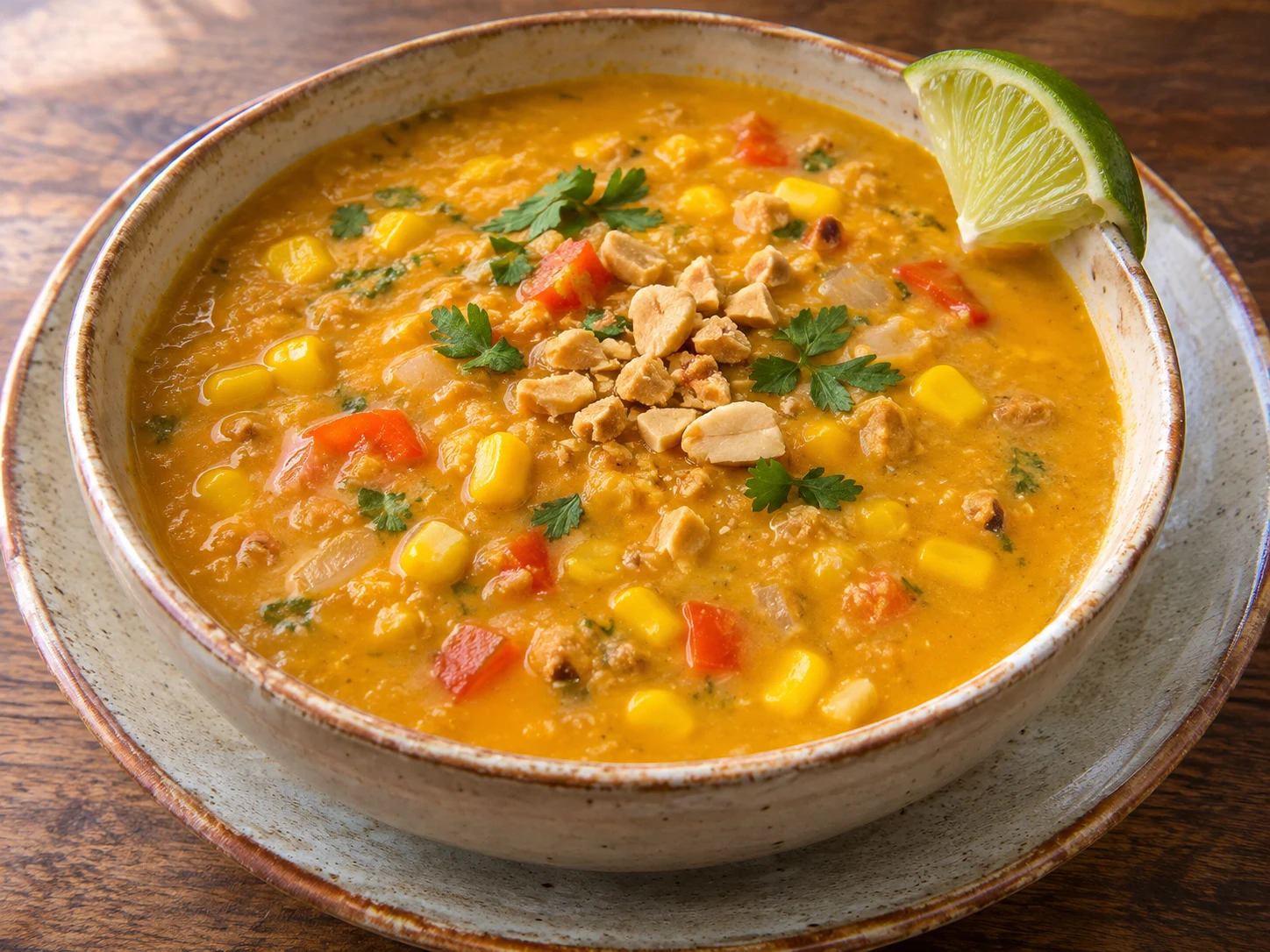
Sweetcorn soup with ginguba and lime
This soup combines a base of sweetcorn, the richness of ginguba and a lime finish.
Ingredients
- 400 g cooked drained sweetcorn
- 80 g unsweetened pure peanut butter
- 150 g onion
- 200 g tomatoes
- 2 garlic cloves
- 10 g fresh ginger
- 15 ml oil
- 800 ml water
- 20 ml lime juice
- 2 g salt
- Optional pinch of ground gindungo chilli
Preparation
Slice the onion, chop the garlic and grate the ginger. Dice the tomatoes. Reserve four spoonfuls of corn for garnish.
Heat the oil in a heavy saucepan over medium heat. Soften the onion for 8 minutes, stirring. Add garlic and ginger for 1 minute.
Add tomatoes and cook for 6 minutes, until they begin to break down. Stir the bottom to prevent their sugars from burning.
Pour in 700 ml water, add the remaining corn and bring to a simmer. Cook gently for 15 minutes, partly covered.
Dilute peanut paste with the remaining 100 ml water, warmed. Gradually stir into the saucepan and cook for another 10 minutes over low heat.
Blend part of the soup with a hand blender, keeping some kernels whole. Add salt and the optional pinch of gindungo.
Add lime juice off the heat. Taste, divide into four bowls and garnish with the reserved corn, reheated in the soup. Serve immediately.
Introduction
This soup combines a base of sweetcorn, the richness of ginguba and a lime finish. Ginguba means peanuts; here, a pure, unsweetened paste thickens the liquid without cream. The result should remain fluid enough to eat with a spoon, with recognisable kernels in a velvety texture. Lime is added after cooking to preserve its freshness and allow precise seasoning. This is a contemporary creation inspired by products found in the Angolan diet, intended to complement the dishes in the first volume.
The quantities make four starter bowls or two more substantial bowls. A main meal needs something alongside, such as a bean salad and vegetables. This soup should not be confused with moamba de ginguba: it uses corn kernels and is served as a soup. Its success depends mainly on cooking the onion, choosing the peanut paste and balancing the blended portion with the kernels left whole. It needs neither stock cubes nor a long list of spices to develop flavour.
Cultural context
FAO lists maize and groundnuts among Angola’s food crops in its FAO/WFP report of 6 August 2004. This documents the choice of ingredients, not the historical existence of this soup. The recipe and proportions are part of the present editorial work. Ginguba is retained in the title and explained so readers can recognise the ingredient without attributing a particular traditional preparation to it. Context source: https://www.fao.org/4/j2771p/j2771p00.htm
Tips
The soup contains peanuts; identify this allergen when serving.
Lime does not replace salt: adjust them separately in small amounts.
If the mixture sticks, transfer it without scraping up the burnt part.
The corn must already be tender before blending.
Resting for five minutes lets you check the actual consistency before adding water.
Planning
Canned sweetcorn is suitable if its liquid is thoroughly drained. Rinse it when very salty, then weigh it after draining. Frozen corn can also be used after cooking according to the manufacturer’s directions. Fresh kernels need cooking beforehand: their firmness varies with maturity and will not always be corrected during the fifteen minutes allotted to the soup. Avoid dried, unrehydrated kernels, which require an entirely different preparation schedule.
Check the ingredients of the peanut paste. Some spreads contain sugar, salt or additional fats that alter the balance. If oil has separated on the surface of the jar, stir before measuring the eighty grams. Choose ripe tomatoes, or use the same weight of unseasoned chopped tomatoes. The onion may be yellow or white. Ginger should be firm and free from mould; grating it finely avoids long fibres in the soup.
The saucepan should leave a little space above the liquid so that blending does not cause splashes. Softening the onion means making it tender without drying it out; if the base starts sticking before the onion is soft, add a spoonful of water and lower the heat slightly. Garlic and ginger go in afterwards because they burn more quickly. Once tomato is added, moisture increases and loosens the first cooking juices. Taking time over this base avoids a soup dominated by raw onion or undercooked tomato.
Peanut paste incorporates more easily after dilution. Start by adding a few spoonfuls of warm water in a bowl and stir; the mixture may briefly become thicker before loosening. Continue until smooth. Once it is in the saucepan, maintain a gentle simmer and stir the bottom regularly. The sauce thickens as it cooks and a little more as it rests. If it becomes too dense, add hot water in small amounts rather than pouring in a large glass at once.
For blending, take the saucepan off the heat and keep the blender head submerged. Use short pulses. There is no need to make the whole soup completely smooth: some kernels provide the desired contrast. With a closed jug blender, follow the appliance’s instructions for hot liquids and work in small batches. Return to gentle heat only if reheating is necessary. Add lime at the end, starting with only part of it if particularly acidic.
Serving
Serve in warmed bowls with a spoon wide enough to pick up the kernels. Extra lime may be offered separately, but the soup should already be balanced. At a meal with several dishes, allow a small bowl per person and avoid combining large portions of several starches. The corn garnish comes from the stated four hundred grams; it is not an extra quantity. Distributing the kernels before pouring the last little soup gives an even presentation.
Storage
Cool leftovers promptly in a shallow container, refrigerate at 4 °C or below and eat within 48 hours. Reheat preparations intended to be eaten hot only once, until thoroughly hot at the centre. For salads, keep the dressing and crunchy components separate where possible.
Variations
For a smoother version, blend all the corn and reserve none for garnish. For a more textured soup, leave half the kernels whole instead of increasing their quantity. A small part of the water may be replaced with unsalted homemade stock; reassess the final salt accordingly. Sunflower seed paste produces a different result: the preparation can no longer be described as ginguba soup, and this is not a safe substitution for every allergy.
Nutrition notes
Estimated values per serving, excluding accompaniments. Calculated from edible weights and reference foods; brands, cooking and actual yield may alter the results. All fat is counted. Where energy is unavailable in the table, it is estimated from protein and carbohydrate (4 kcal/g), fat (9 kcal/g) and fibre (2 kcal/g). Very small optional quantities of spices are not counted.
Conclusion
The intended result depends on the textures described and seasoning adjusted when serving. This editorial formula is not presented as kitchen-tested. Enjoy your meal!
Enjoy your meal
Enjoy your meal!