Shrimp with Tamarind and Onions
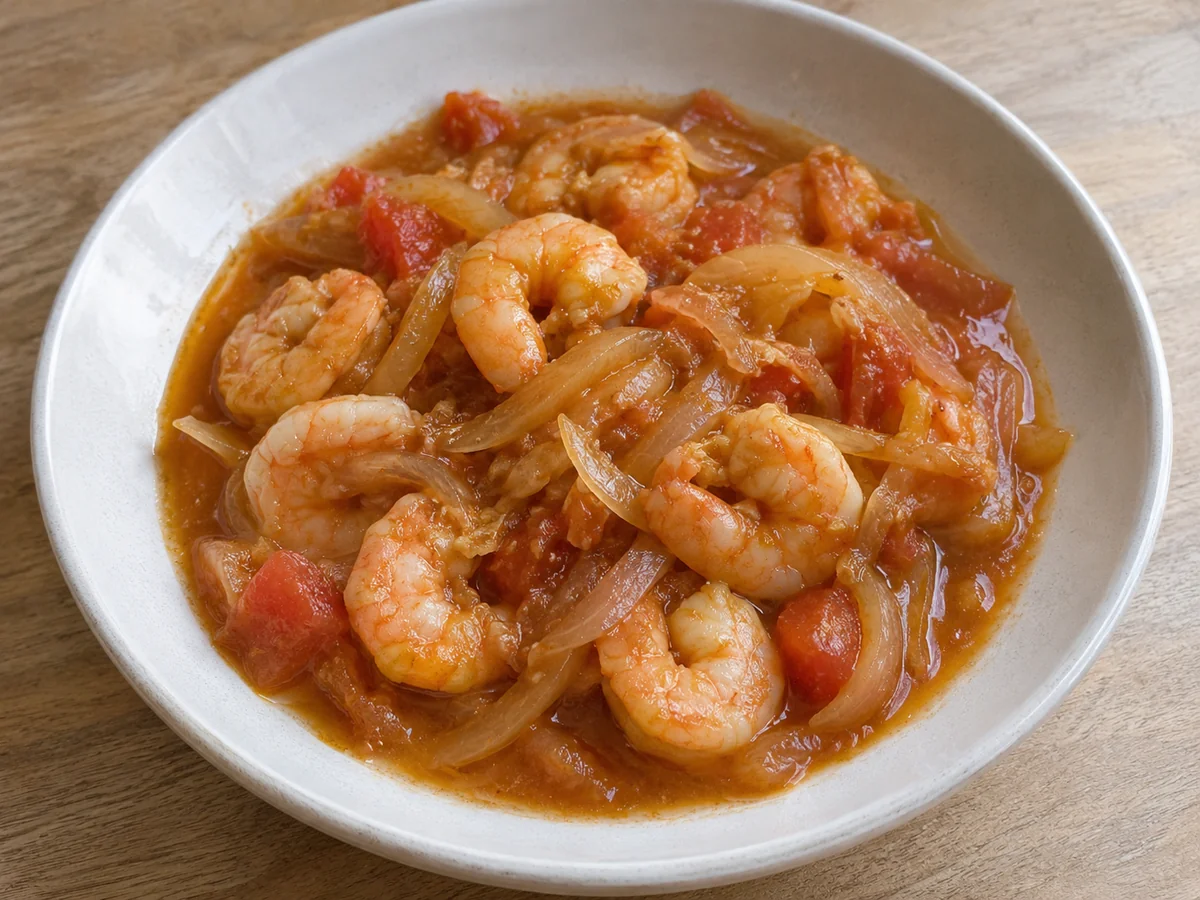
Raw shrimp simmered in a fragrant tomato-onion sauce flavored with tamarind and ginger, ready in 35 minutes for four people.
Ingredients
- 500 g raw peeled shrimp
- 350 g onions
- 300 g tomatoes
- 20 g unsweetened seedless tamarind pulp
- 15 g ginger
- 25 ml oil
- 350 ml water, of which 100 ml hot for tamarind
- 4 g salt
- 1 g pepper
Preparation
Place the twenty grams of seedless tamarind pulp in a heat-resistant bowl, pour the one hundred milliliters of hot water (approximately ninety degrees Celsius) over it, stir with a spoon to detach the pulp, let infuse exactly ten minutes covered, then pass through a fine sieve pressing well to recover maximum liquid; discard fibers and reserve the clear dark brown tamarind extract.
During infusion, peel the three hundred fifty grams of onions, slice them into fine regular half-moons about three millimeters thick to ensure even cooking; peel ginger, grate finely to obtain about one heaped tablespoon; wash the three hundred grams of tomatoes, cut them into one-centimeter dice preserving their juice.
Heat the twenty-five milliliters of oil in a wide heavy-bottomed sauté pan over medium-low heat (approximately one hundred fifty degrees Celsius at surface) for one minute; add the sliced onions, sprinkle with a pinch of the total salt to promote melting, stir regularly with a wooden spatula for ten minutes until they become translucent, tender and lightly golden without browning.
Add the grated ginger to the sauté pan, stir for thirty seconds to release its aroma without burning it, then incorporate the tomato dice with their juice; increase heat intensity to medium, cook ten minutes stirring frequently until tomatoes break down completely, release their water and form a thickened, shiny and fragrant sauce.
Pour the two hundred fifty milliliters of remaining water (room temperature) and the entirety of the filtered tamarind extract into the tomato-onion sauce; bring to a gentle simmer (ninety degrees Celsius), lower heat to maintain a calm simmer, cover partially and let cook ten minutes stirring halfway through to homogenize the acidic, sweet and salty flavors.
During simmering, verify that the five hundred grams of raw shrimp are well peeled, deveined if necessary, and dried thoroughly on paper towels to avoid splattering and promote sauce adherence; reserve in the refrigerator until the final step.
At the end of the ten minutes of simmering, taste the sauce, adjust with the remaining salt (four grams total) and the gram of pepper if needed; plunge the dried shrimp into the simmering sauce, stir gently to coat them, cook exactly three to five minutes over low heat (ninety degrees Celsius) until they become opaque, pearly and firm to the touch without being rubbery.
Immediately remove the sauté pan from heat, taste one last time to validate the acid-salty balance, distribute the shrimp and sauce into four preheated deep plates, serve without delay with plain white rice cooked separately according to package directions, cooled quickly and refrigerated if prepared in advance.
Introduction
This contemporary recipe for shrimp with tamarind and onions offers a quick Ivorian main dish, structured around the fruity acidity of unsweetened tamarind which balances the natural sweetness of melted onions and the richness of ripe tomatoes. The choice of ingredients relies on accessible fresh products: five hundred grams of raw peeled shrimp, three hundred fifty grams of finely sliced onions for even melting, three hundred grams of crushed tomatoes that provide body and juice, twenty grams of seedless tamarind pulp, fifteen grams of grated ginger for a light spicy note, twenty-five milliliters of neutral oil, three hundred fifty milliliters of water of which one hundred milliliters hot for tamarind infusion, four grams of salt and one gram of pepper. The preparation organization follows a strict sequential logic: tamarind infusion in hot water for ten minutes, then filtration to remove fibers, prepares the aromatic base while onions melt gently in oil with ginger. The addition of tomatoes creates a sauce reduced in ten minutes before incorporating the remaining water and tamarind extract for a ten-minute simmer that develops flavors without concentrating them excessively. Raw shrimp only enter at the end for a very brief cooking of three to five minutes, just the time they become opaque and pearly, avoiding any overcooking that would make them rubbery. This distinction between sauce base ingredients and delicate final protein is the central technical point of the recipe.
Cultural context
Contemporary creation included in an Ivory Coast collection, without claim of traditional or historical origin. General composition and food safety references: https://www.fao.org/infoods/infoods/tables-and-databases/faoinfoods-databases/en/ ; https://www.who.int/teams/nutrition-and-food-safety/multisectoral-actions-in-food-systems/five-keys-to-safer-food-poster ; https://www.foodsafety.gov/food-safety-charts/safe-minimum-internal-temperatures. No nutritional calculation has been performed for this specific recipe.
Tips
Infusing tamarind in water at ninety degrees Celsius maximizes extraction of acidic flavors without cooking the pulp; filtering through a fine sieve lined with cheesecloth avoids any fibrous residue in the final sauce.
Slicing onions into regular three-millimeter half-moons guarantees even melting in ten minutes; uneven size creates crunchy pieces and others burnt which unbalance the base texture.
Drying raw shrimp on paper towels just before plunging them into the sauce eliminates excess surface moisture, preventing hot oil splattering and ensuring perfect coating of the tamarind-tomato sauce.
Prepare tamarind extract and slice onions up to two hours in advance, store in refrigerator in airtight containers; reheat sauce gently before cooking shrimp at the last minute to preserve their pearly texture.
Nutrition notes
Carbohydrates come in part from vegetables. Protein is supplied in part by shrimp. Fats come in part from oil. Allergens to flag in the listed ingredients: crustaceans. These notes describe the ingredients rather than a calculated nutritional analysis of the dish. Actual composition varies with the products chosen, their water content and the way the food is divided among four plates. Evaporation changes serving weight without establishing calories per portion. Added salt must also be considered alongside any salt in packaged ingredients. Check their labels and possible allergen contact on equipment. The stated proportions are for preparing the recipe; they do not define a suitable dietary portion for every person. Garnishes or side dishes served separately should be considered separately because they are not included in this formulation.
Conclusion
Serve immediately the pearly shrimp coated in their creamy tamarind sauce in preheated deep plates, accompanied by plain white rice cooked separately, cooled quickly at room temperature for less than two hours then refrigerated at four degrees Celsius maximum if prepared in advance. Leftover cooked shrimp keep twenty-four hours in refrigerator in an airtight container; reheat them very briefly over low heat with a spoonful of water to avoid drying out, without ever boiling them. Do not freeze already cooked shrimp as their texture becomes rubbery upon thawing. Discard any portion left at room temperature for more than two hours.
Enjoy your meal
Bon appétit !