Rice Soup with Mushrooms and Chicken
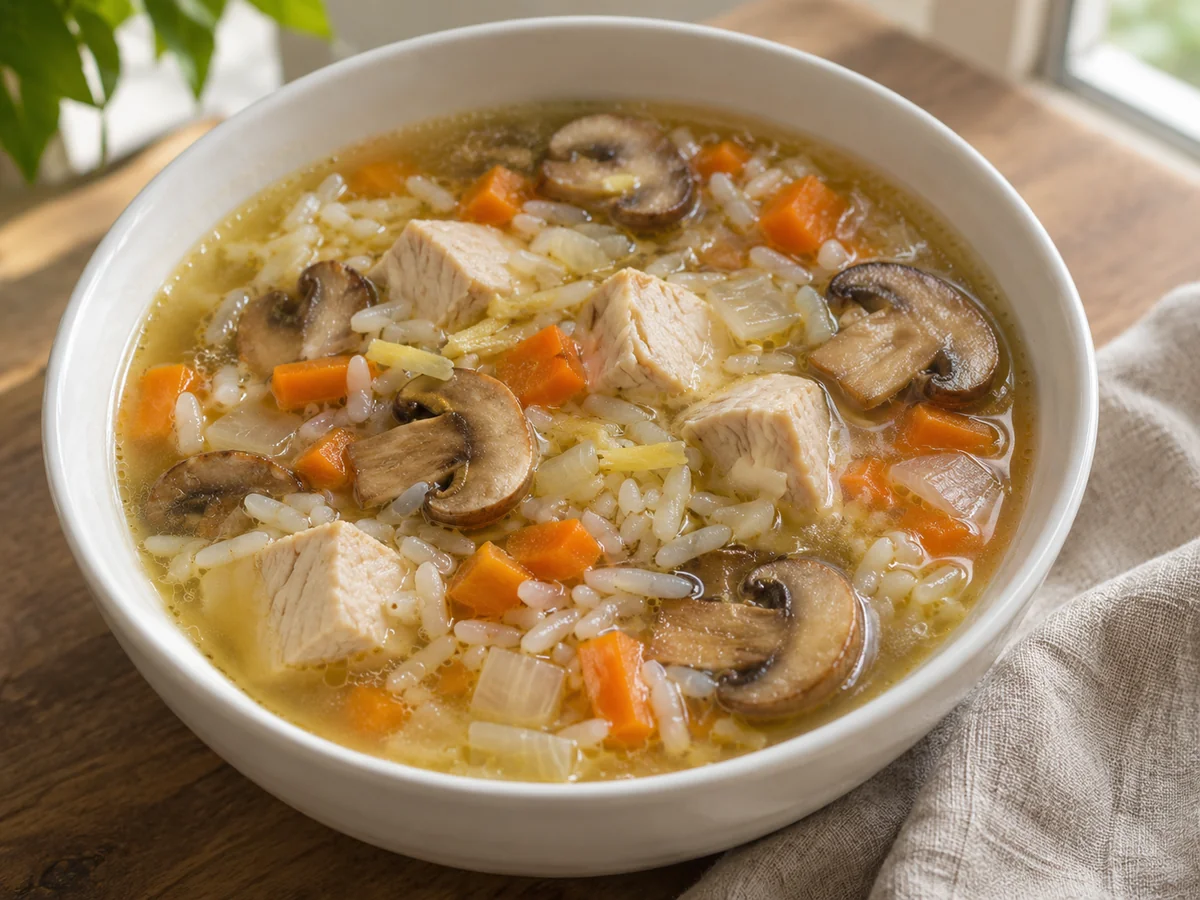
Complete soup of rice, chicken, and golden mushrooms, cooked in a light broth for a balanced family meal.
Ingredients
- 160 g raw rice
- 400 g chicken breast
- 350 g mushrooms
- 200 g carrots
- 120 g onion
- 15 g ginger
- 20 ml oil
- 1.4 liter water
- 4 g salt
- 1 g pepper
Preparation
Clean the three hundred fifty grams of button mushrooms using a brush or damp paper without soaking them, cut them into regular five-millimeter slices. Heat ten milliliters of oil in a large pot over medium-high heat, add the mushrooms in a single layer, let them brown without stirring for three minutes, then stir and continue cooking for five additional minutes until they have released their water and are well colored. Remove them with a slotted spoon and set them aside in a bowl.
Peel one hundred twenty grams of onion and two hundred grams of carrots, dice the onion into one-centimeter cubes and slice the carrots into three-millimeter half-rounds. Finely grate fifteen grams of fresh ginger. In the same pot, heat the remaining ten milliliters of oil over medium heat, add the onion, carrot, and ginger, sweat for five minutes stirring often until the onion becomes translucent and the carrots begin to soften without browning.
Pour one point four liters of water into the pot, bring to a rolling boil. Add one hundred sixty grams of raw long-grain rice and four grams of salt, stir once to separate the grains. Reduce to a simmer, cover partially, and let cook for fifteen to twenty minutes following the time indicated on the rice package, until the grains are tender but still firm to the bite.
While the rice cooks, cut four hundred grams of raw chicken breast into regular two-centimeter cubes. After five to eight minutes of rice cooking, depending on the variety, plunge the chicken cubes into the simmering broth. Stir gently, maintain a moderate simmer, and continue cooking for ten to twelve minutes. Check doneness by taking a central cube: its internal temperature must reach seventy-four degrees Celsius and its flesh must be white and opaque with no pink parts.
Five minutes before the end of the chicken cooking, return the reserved browned mushrooms to the pot. Stir to reheat them without breaking them up, let them infuse their fragrance into the broth during these five minutes. Taste and adjust seasoning with one gram of freshly ground black pepper, distributed evenly.
Turn off the heat. If the soup seems too thick, add one hundred to one hundred fifty milliliters of hot water to obtain the desired consistency, stirring. Let rest for two minutes off the heat so the flavors harmonize without the rice absorbing all the liquid.
Take a ladle of broth with a few rice grains, a chicken cube, carrots, and mushrooms to check the visual and taste balance. The rice grains must be distinct, the chicken juicy, the mushrooms tender but firm, the carrots cooked but not mashed. Adjust salt if necessary, without excess.
Serve immediately in preheated bowls. Distribute the solid elements and broth evenly. For a neat presentation, place a few mushroom slices on the surface. The soup is enjoyed hot, optionally accompanied by whole wheat bread or cassava flatbreads according to preferences.
Introduction
This rice soup with mushrooms and chicken offers a contemporary take on a complete dish, designed for the Côte d'Ivoire collection of the RecettesAfricaines.com website. It makes no claim to a traditional origin or specific historical heritage, but fits into a modern, accessible, and nourishing family cooking approach. The intended result is a generous soup where each ingredient retains its identity: the rice remains in distinct grains, slightly tender without turning into porridge, the chicken breast offers a firm and juicy texture thanks to a controlled cooking at the end of the process, and the mushrooms bring a deep umami note, reinforced by a first dry sear that concentrates their aromas before they join the broth. The choice of ingredients follows a logic of simplicity and availability: a standard long-grain rice, fresh button mushrooms, carrots for natural sweetness, onion and ginger for the aromatic base, and a measured quantity of water that becomes broth through the cooking of the elements themselves. The organization of the preparation follows a precise order to optimize textures: the mushrooms are cleaned, sliced, and browned separately in ten milliliters of oil for eight minutes, then set aside; the onion, carrot, and ginger are then sweated in the remaining ten milliliters for five minutes; the water is brought to a boil with the rice for a cooking time of fifteen to twenty minutes according to package directions; the two-centimeter cubes of raw chicken are added during the last ten to twelve minutes, their core needing to reach seventy-four degrees Celsius; the mushrooms return to the pot for the last five minutes. This sequence avoids overcooking the rice and chicken, guarantees food safety, and preserves the flavor of the mushrooms. The important distinction of this recipe lies in the separate treatment of the mushrooms and the late addition of the chicken, two technical choices that differentiate this bowl from a simple ordinary soup where everything would cook together indistinctly.
Cultural context
Contemporary recipe created for the Côte d'Ivoire collection of RecettesAfricaines.com, without claim of traditional origin or historical heritage. General composition and food safety references: https://www.fao.org/infoods/infoods/tables-and-databases/faoinfoods-databases/en/ ; https://www.who.int/teams/nutrition-and-food-safety/multisectoral-actions-in-food-systems/five-keys-to-safer-food-poster ; https://www.foodsafety.gov/food-safety-charts/safe-minimum-internal-temperatures. These sources do not validate the origin or the exact recipe, no nutritional calculation has been performed.
Tips
Prepare the mushrooms and chicken the day before: clean, slice, and store the mushrooms in an airtight container in the refrigerator; cut the chicken into cubes and keep it cold on a covered plate. This reduces the active work on the day to assembly and cooking.
Use a heavy-bottomed pot of at least six liters to prevent the rice from sticking and the broth from boiling over. A slightly offset lid allows controlling evaporation while maintaining temperature.
If you prefer a richer broth, sauté the onion and carrot trimmings in the oil before adding the water, then strain before incorporating the rice. This step adds ten minutes but strengthens the aromatic base without additional salt.
Cool leftovers quickly: pour the soup into shallow dishes, let it reach room temperature in less than two hours, then refrigerate at four degrees Celsius maximum. Consume within twenty-four hours by reheating to a simmer for five minutes.
Nutrition notes
Carbohydrates come in part from rice. Protein is supplied in part by chicken. Fats come in part from oil. These notes describe the ingredients rather than a calculated nutritional analysis of the dish. Actual composition varies with the products chosen, their water content and the way the food is divided among four plates. Evaporation changes serving weight without establishing calories per portion. Added salt must also be considered alongside any salt in packaged ingredients. Check their labels and possible allergen contact on equipment. The stated proportions are for preparing the recipe; they do not define a suitable dietary portion for every person. Garnishes or side dishes served separately should be considered separately because they are not included in this formulation.
Conclusion
This soup is served very hot, ideal for a lunch or light dinner. Preheated bowls maintain the temperature longer. For leftovers, respect the cold chain: rapid cooling in shallow dishes, refrigeration at four degrees Celsius maximum, consumption within twenty-four hours with reheating to a simmer for at least five minutes. Never leave the soup at room temperature for more than two hours. As rice tends to absorb the broth at rest, add a trickle of hot water when reheating to restore the soup consistency. This contemporary recipe, created for RecettesAfricaines.com, illustrates a practical approach to modern daily Ivorian cooking, without claim of historical authenticity.
Enjoy your meal
Bon appétit !