Braised Beef with Cowpeas and Lime
Tender beef cubes braised long with tomatoes, onion, garlic, cooked cowpeas, and lime juice added at the end of cooking for a controlled acidity.
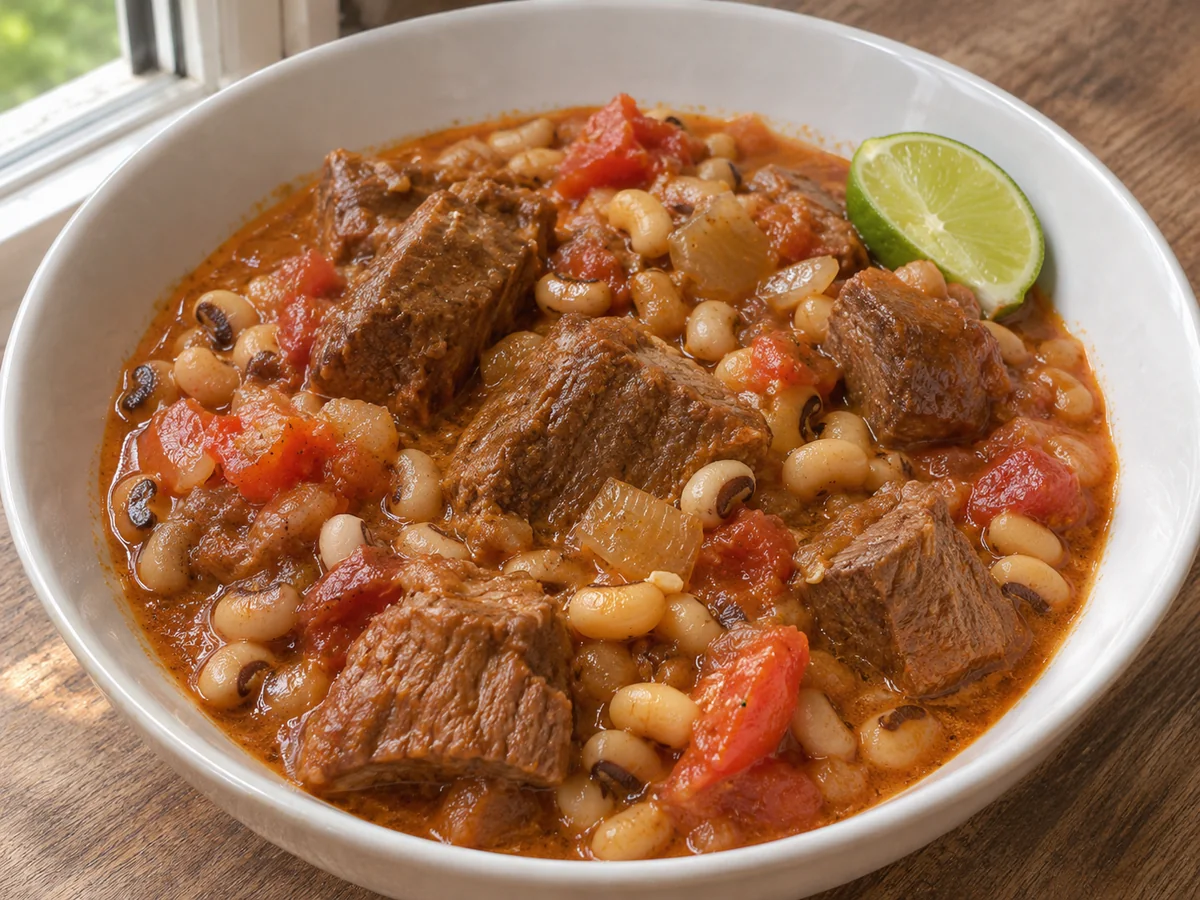
Ingredients
- 650 g stewing beef
- 450 g cooked cowpeas drained
- 400 g tomatoes
- 150 g onion
- 2 garlic cloves
- 25 ml oil
- 750 ml water
- 1 lime
- 4 g salt
- 1 g pepper
Preparation
Cut the stewing beef into regular four-centimeter cubes; dry them thoroughly with paper towels to promote browning. Heat the twenty-five milliliters of oil in a heavy-bottomed Dutch oven over medium-high heat until it shimmers without smoking. Sear the beef cubes in small batches, two to three minutes per side, until a deep brown color is obtained on all surfaces; do not overcrowd the Dutch oven to avoid boiling the juices. Reserve the meat on a plate.
In the same Dutch oven, reduce heat to medium; add the finely sliced onion and sweat for five to six minutes, stirring often, until it becomes translucent and fragrant, without brown coloring. Incorporate the minced garlic and continue cooking thirty seconds, just long enough to release its aroma without burning it. Pour in the crushed tomatoes with their juice, stir, and let reduce three to four minutes until the mixture thickens slightly.
Return the browned beef cubes to the Dutch oven, with any resting juices. Gradually pour the seven hundred fifty milliliters of water, scraping the bottom with a wooden spoon to detach the caramelized fond. Add the four grams of salt and the one gram of pepper. Bring to a simmer, then cover and lower to minimum to maintain a gentle bubbling.
Let braise covered for ninety to one hundred twenty minutes, checking at mid-cooking that the liquid still covers the meat halfway up; top up with a little hot water if necessary, without excess. The meat is ready when it falls apart easily under the pressure of a fork and the broth is unctuous.
While the beef braises, quickly rinse the cooked drained cowpeas under cold water to remove excess surface starch, then drain them thoroughly. Reserve at room temperature.
Ten minutes before the end of the planned braising time, incorporate the drained cowpeas into the Dutch oven; stir gently to coat them with sauce without crushing the grains. Continue cooking covered exactly ten minutes, just long enough to reheat the cowpeas to the core.
Remove the Dutch oven from the heat. Press the lime over a small bowl, catching the seeds; drizzle the juice over the braise while stirring gently to distribute the acidity evenly. Do not return to the heat after adding the lime.
Let the dish rest five minutes covered off the heat so the flavors harmonize. Adjust seasoning if necessary. Serve hot in deep plates, without accompaniment counted in the recipe.
Introduction
This braised beef with cowpeas and lime offers a complete main dish where the stewing beef, cut into regular four-centimeter cubes, becomes meltingly tender after a covered cooking of ninety to one hundred twenty minutes in a broth adjusted gradually. The aromatic base rests on one hundred fifty grams of finely sliced onion and two minced garlic cloves, sweated in twenty-five milliliters of oil until translucent, then enriched with four hundred grams of crushed tomatoes that provide body and natural acidity. The cowpeas, already cooked and drained at four hundred fifty grams, are incorporated only during the last ten minutes to reheat them without breaking them up, preserving their firm texture and mild flavor. The juice of one lime is drizzled in at the very end, off the heat, to avoid prolonged cooking of the acid which would toughen the meat fibers; the zest is not used, which keeps the acidity clean and direct. Seasoning is limited to four grams of salt and one gram of pepper, added at the start of braising for even distribution. The recipe is calibrated for four generous servings without counted accompaniment, ideal served as is or with plain white rice prepared separately according to package directions, cooled quickly and refrigerated within one hour.
Cultural context
Contemporary creation for the Côte d'Ivoire collection of RecettesAfricaines.com; does not claim traditional or historical status. General composition and food safety references (do not validate the origin or the exact recipe, no nutritional calculation has been performed): https://www.fao.org/infoods/infoods/tables-and-databases/faoinfoods-databases/en/ ; https://www.who.int/teams/nutrition-and-food-safety/multisectoral-actions-in-food-systems/five-keys-to-safer-food-poster ; https://www.foodsafety.gov/food-safety-charts/safe-minimum-internal-temperatures
Tips
For optimal browning, dry the beef cubes perfectly and do not hesitate to sear them in three batches; an overcrowded Dutch oven makes the meat cook in its juice instead of browning, which reduces the depth of the final flavor.
The cooked cowpeas integrate better if they are warm rather than cold from the refrigerator; taking them out thirty minutes before incorporation avoids a thermal shock that would split the grains and cloud the sauce.
The braising water must be added hot or warm so as not to stop the boil; pouring it in three times while scraping the fond well each time builds a bound sauce without flour or added thickener.
Lime juice keeps for two days in the refrigerator in a small airtight container; pressing it in advance allows precise dosing and avoids seeds in the finished dish.
Nutrition notes
Carbohydrates come in part from legumes. Protein is supplied in part by beef. Fats come in part from oil. These notes describe the ingredients rather than a calculated nutritional analysis of the dish. Actual composition varies with the products chosen, their water content and the way the food is divided among four plates. Evaporation changes serving weight without establishing calories per portion. Added salt must also be considered alongside any salt in packaged ingredients. Check their labels and possible allergen contact on equipment. The stated proportions are for preparing the recipe; they do not define a suitable dietary portion for every person. Garnishes or side dishes served separately should be considered separately because they are not included in this formulation.
Conclusion
This braised beef with cowpeas and lime is served immediately in deep plates, drizzled with its unctuous broth. For safe storage, let the dish cool at room temperature for a maximum of two hours, then transfer to shallow airtight containers and refrigerate at four degrees Celsius or less; it keeps thus for forty-eight hours. When reheating, bring to a gentle boil for at least two minutes while stirring to ensure a core temperature above seventy-four degrees Celsius. Avoid refreezing after thawing. If plain white rice accompanies the dish, cook it according to package directions, spread it on a tray to cool in less than one hour, then refrigerate separately; consume within twenty-four hours and reheat by steaming or microwave until boiling.
Enjoy your meal
Bon appétit