Pears poached in hibiscus and ginger
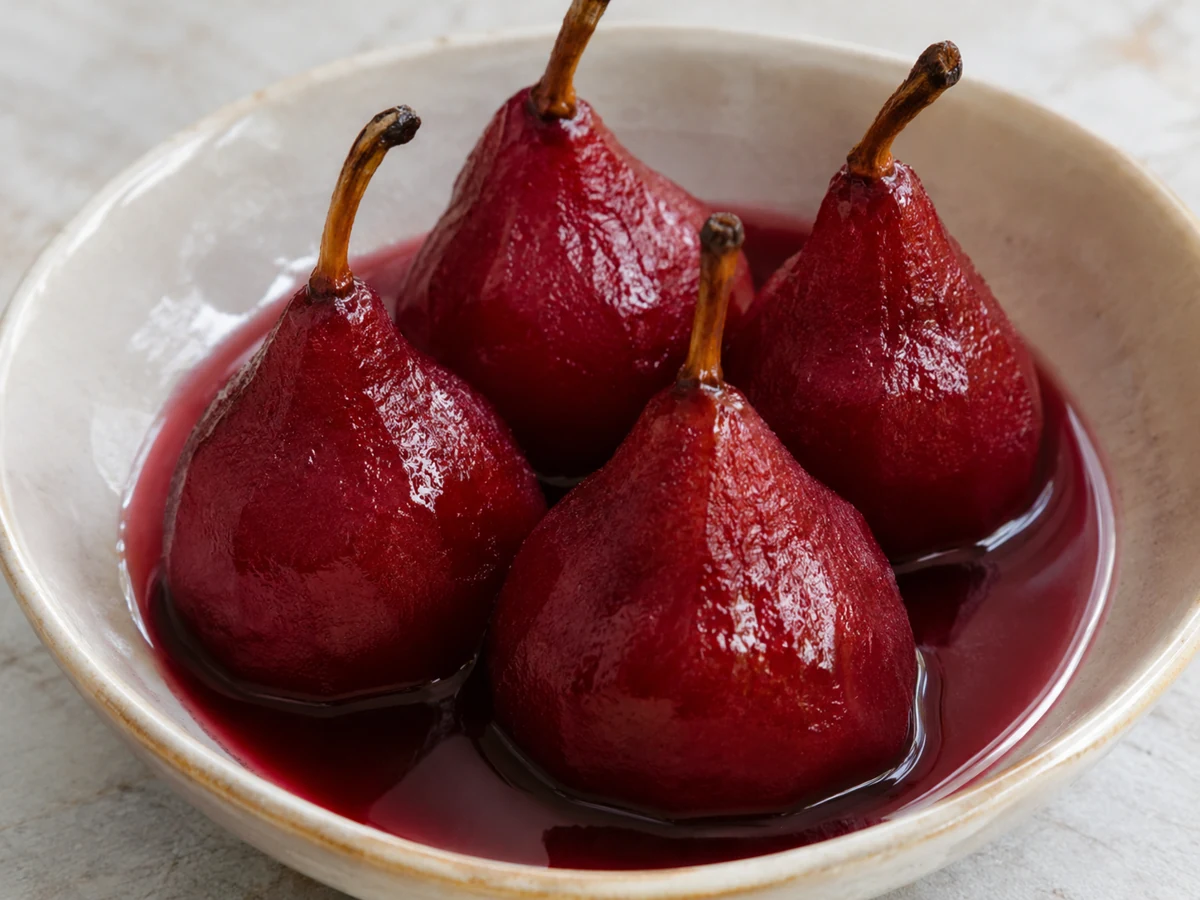
Firm pears gently poached in a strained hibiscus and ginger syrup, then promptly cooled and served chilled with a little syrup.
Ingredients
- 4 firm pears
- 15 g dried food-grade hibiscus calyces
- 15 g ginger
- 70 g sugar
- 800 ml water
- 1 lime
Preparation
Bring 800 ml water to a gentle simmer. Briefly rinse the calyces if their packaging recommends it. Add them with peeled, thinly sliced ginger. Remove from heat or keep very low and infuse about ten minutes, stirring once or twice to wet every calyx. Vigorous boiling is unnecessary: extract colour and aroma rather than immediately reducing the liquid.
Strain into a container and return the clear infusion to the pan. Discard retained calyces and ginger. Dissolve the sugar, then add juice from about half the lime without seeds. Taste a cooled spoonful. The syrup should remain tangy. The stated sugar covers the whole preparation; do not automatically double it because hibiscus tastes sharp on its own.
Peel the pears, preserving shape and stems. Remove the hard base without digging deeply. Work one at a time and place promptly into the liquid to limit browning. Trim a small damaged patch if needed, but heavily bruised pears are unsuitable for whole poaching. Keep fingers clear of the blade near the stem.
Poach at a very gentle simmer about twenty to thirty minutes. Turn with a spoon or soft-tipped tongs to distribute heat and colour without piercing the flesh. Test discreetly with a knife tip: it should enter easily but the pear must not collapse. Timing varies with variety and ripeness. Remove a ready pear rather than allowing it to disintegrate while others finish.
Transfer pears to the cooling container. If a slightly more coating syrup is wanted, reduce the liquid alone about five minutes, watching its concentration. It will remain fluid with this sugar ratio. Pour an appropriate quantity around the fruit. Arrange rapid cooling in a shallow container, then refrigerate at least one hour. Do not let the whole hot pan cool slowly on the worktop.
Serve one pear per person in a small deep plate or bowl. Add a few spoonfuls of cold syrup and reserve excess separately instead of filling every portion. Check no calyx or ginger fragment remains on the fruit. The stem aids presentation but should not be used to lift a fragile pear; use a broad spoon.
Introduction
Bissap, the dried edible calyces of hibiscus, colours these pears deep red and supplies acidity balanced by syrup sugar. Ginger infuses with the calyces; strain before adding fruit. Start with firm pears so they become tender while retaining shape and stems. Serve chilled after prompt cooling, with a small amount of syrup. Do not cook until they collapse into compote. This contemporary culinary use makes no therapeutic claim. Colour varies with the product, concentration and contact time; a different shade is no reason to overcook the fruit.
Buy clean, properly stored, food-grade dried calyces, never decorative material or a mixture of unknown composition. Choose four similarly sized, ripe but firm pears without bruising; retain sound stems. Prepare a pan roomy enough for the fruit without crowding, a fine sieve and a cooling container. The 800 ml water need not completely submerge every pear: turn them during poaching. Only about half the lime juice is used. Allow sufficient preparation time for cooling and at least an hour of refrigeration rather than relying on prolonged room-temperature waiting.
Cultural context
Contemporary creation using ingredients from the West African repertoire, proposed for this volume devoted to Côte d’Ivoire. No exclusive regional origin or particular tradition is attributed to this formulation.
Institutional references FAO INFOODS : https://www.fao.org/infoods/infoods/tables-and-databases/faoinfoods-databases/en/ — Food composition tables for Western Africa; general context, without a nutritional calculation for this recipe. World Health Organization : https://www.who.int/teams/nutrition-and-food-safety/multisectoral-actions-in-food-systems/five-keys-to-safer-food-poster — Principles of cleanliness, food separation, cooking and temperature control.
Tips
Pear variety changes cooking time considerably. Check early for small or already tender fruit. Gentle heat gives control; hard boiling knocks pears against the pan and can damage their surface before the middle softens.
A fine sieve traps small plant fragments. Strain before adding pears to avoid handling hot fruit in a crowded infusion. The syrup should be aromatic and coloured, without fibres stuck to the pears.
Cold syrup may thicken without becoming caramel-like. Do not reduce extensively to force that texture: sugar and acidity would become too concentrated. A small amount of fluid syrup is sufficient.
Turn while cooking and cool with syrup touching much of the fruit for even colour. Natural variation remains compatible with careful presentation; no colouring is needed.
Nutrition notes
Pears provide the fruit base and the syrup contains added sugar. Sugar consumed depends on the syrup actually served; the whole pan need not be divided between four plates. Hibiscus and ginger supply flavour, colour and aroma without health claims. The base list contains neither milk nor egg, but check products and cross-contact for dietary needs. No per-portion nutritional calculation has been made. This is neither a treatment nor a sugar-free preparation.
Conclusion
Aim for a tender whole pear served cold with strained syrup. Observe fruit maturity and gentle simmering rather than applying one fixed time blindly. Refrigerate after cooling and use a clean utensil for serving. Avoid repeated prolonged warming and return to refrigeration. This contemporary use of hibiscus contrasts pear flesh with tangy infusion and measured ginger, without inventing a historical origin for the combination.
Enjoy your meal
Enjoy your meal!