Sautéed cabbage with corn and sardines
Thinly sliced cabbage cooked with tomatoes and corn, with canned sardines added gently at the end and lime juice off the heat.
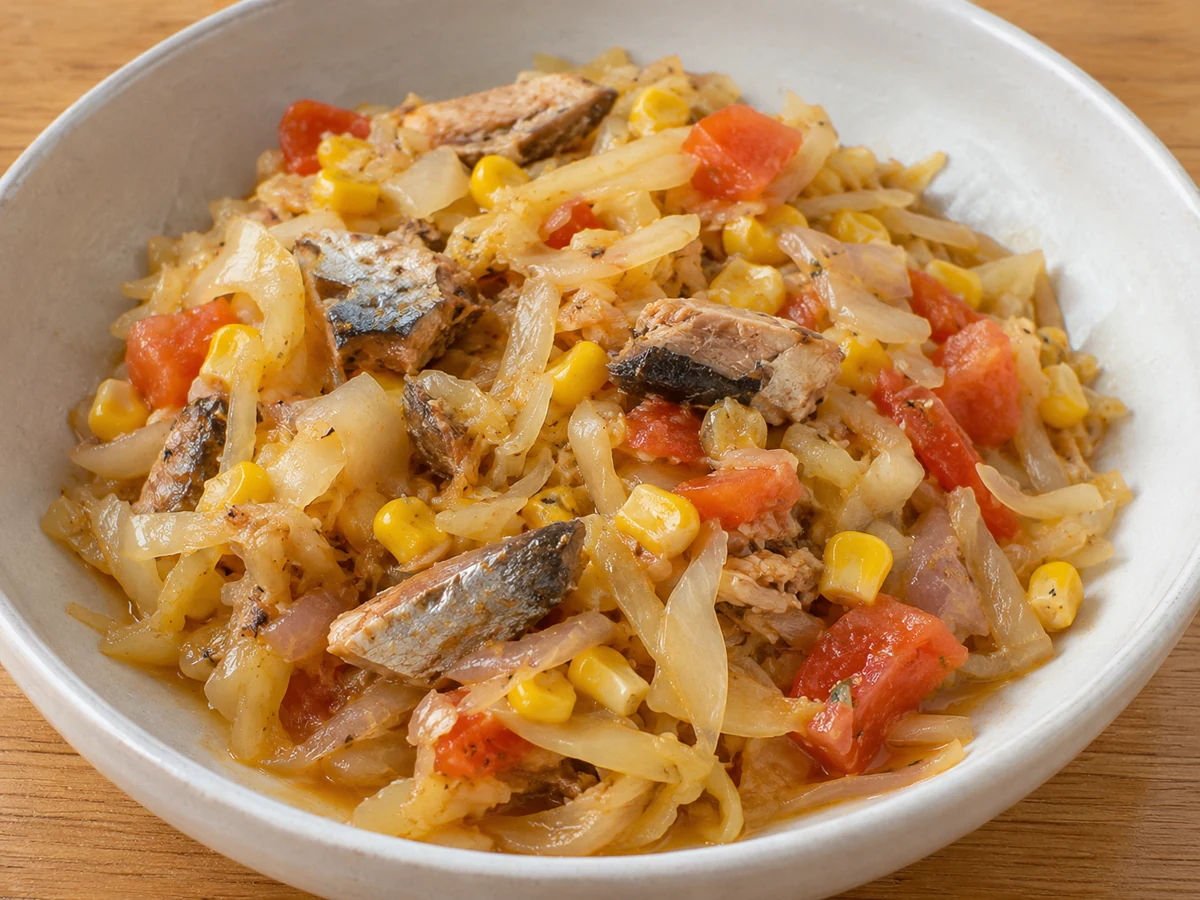
Ingredients
- 600 g white cabbage
- 300 g cooked, drained corn
- 250 g canned sardines in water or brine, drained
- 150 g onion
- 200 g tomatoes
- 2 garlic cloves
- 20 ml oil
- 100 ml water
- 1 lime
- 3 g salt, adjusted to the sardines
- 1 g black pepper
Preparation
Wash and finely shred the cabbage. Chop onion, garlic and tomatoes. Drain the corn thoroughly. Open and separately drain the sardines when needed, without crushing, removing any parts you do not wish to eat. Preparing everything first allows ingredients to enter at the appropriate stage rather than being cooked together despite differing needs.
Heat the oil and soften the onion over medium heat for about five minutes. Add garlic towards the end so it flavours the oil without darkening excessively. Stir and check the bottom. The onions should become soft rather than dry and crisp. Reduce heat if the edges colour quickly: burnt garlic would overwhelm the fish.
Add cabbage and 100 ml water, distributing the aromatics. Cover and cook about ten minutes over moderate heat. Lift the lid once or twice to stir and check moisture. Cabbage should shrink and soften. If the bottom dries before the strips are tender, add a little hot water and lower the heat. This is not boiling cabbage in a full pan of water.
Stir in diced tomatoes and cook about five minutes, leaving partially uncovered if much liquid remains. Keep the mixture moist without turning it into soup. Taste a cabbage strip: it should be tender but still distinct. Coarsely sliced cabbage needs extra cooking now, before the fish, so the sardines do not endure prolonged heating to compensate.
Add drained corn and large sardine pieces. Reheat gently for three to five minutes over low to medium heat, lifting rather than stirring vigorously. The fish should become hot without disintegrating. Add pepper and only some of the planned salt, then taste: both canned products may contribute salt already. Do not automatically use the full quantity.
Off the heat, add lime juice and carefully fold once more. Divide among four plates, distributing sardines and corn through the cabbage. Serve hot as soon as ready. Do not evaporate every trace of moisture, which would dry the fish. A little light cooking juice is normal and can be spooned around the vegetables.
Introduction
Thinly sliced white cabbage forms the base of this contemporary skillet dish. A short covered cooking stage softens it before tomatoes, corn and finally sardines are added. Canned sardines in water or brine are already cooked and need only gentle reheating. Keep recognisable pieces instead of stirring the fish into a paste. Lime provides the final fresh note. The measured water helps the first cooking stage, followed by moisture from the vegetables; correct heat and timing matter more than adding oil at random.
Remove damaged leaves and the hard core before weighing 600 g cabbage. Slice finely enough for the stated time. Use cooked drained corn and canned sardines whose ingredients and salt content you have checked. Sardines packed in oil would change the fat quantity and require an adjustment not covered here. Prepare a wide lidded sauté pan, colander and flexible spatula. Keep opened fish separately and do not leave it at room temperature for long. Chop the aromatics before starting and have 100 ml water ready when the cabbage enters the pan.
Cultural context
Contemporary creation using ingredients from the West African repertoire, proposed for this volume devoted to Côte d’Ivoire. No exclusive regional origin or particular tradition is attributed to this formulation.
Institutional references FAO INFOODS : https://www.fao.org/infoods/infoods/tables-and-databases/faoinfoods-databases/en/ — Food composition tables for Western Africa; general context, without a nutritional calculation for this recipe. World Health Organization : https://www.who.int/teams/nutrition-and-food-safety/multisectoral-actions-in-food-systems/five-keys-to-safer-food-poster — Principles of cleanliness, food separation, cooking and temperature control. FoodSafety.gov : https://www.foodsafety.gov/food-safety-charts/safe-minimum-internal-temperatures — Core cooking temperature guidance; timings depend on the ingredients and equipment.
Tips
Remove the tough core and cut strips evenly. For softer cabbage, extend its initial cooking before adding sardines; the fish need not undergo that adjustment.
Keep sardine pieces fairly large and use a broad spatula to lift cabbage over them. A few flakes in the juice are normal, but uniform fish purée is not the intended texture.
Water-packed sardines make the measured oil easier to track. Still read salt and ingredient labels. Do not automatically add the can liquid: it is outside the measured cooking water and would alter flavour and moisture.
For a quick meal, slice vegetables in advance and refrigerate appropriately. Open fish near the final cooking stage to avoid unnecessary storage of an opened can and minimise handling.
Nutrition notes
Sardines provide an important share of protein, corn supplies carbohydrates, and cabbage and tomatoes form most of the vegetables. The measured oil is distributed through the dish. Fish is the main allergen; check canned-product labels and possible kitchen cross-contact. No numerical nutritional calculation has been made. Salt partly depends on the packaged products, and actual portions vary with the distribution of fish and vegetables.
Conclusion
The dish is ready when cabbage is tender, corn hot and sardines warmed without drying. Lime added off the heat provides freshness and replaces neither cooking nor proper storage. Rapidly cool leftovers, refrigerate in a closed container and thoroughly reheat only what is needed. Avoid repeated cycles. This practical contemporary creation depends chiefly on order: vegetables cook first, ready-to-eat fish joins at the end.
Enjoy your meal
Enjoy your meal!