Chicken stew with aubergines and tamarind
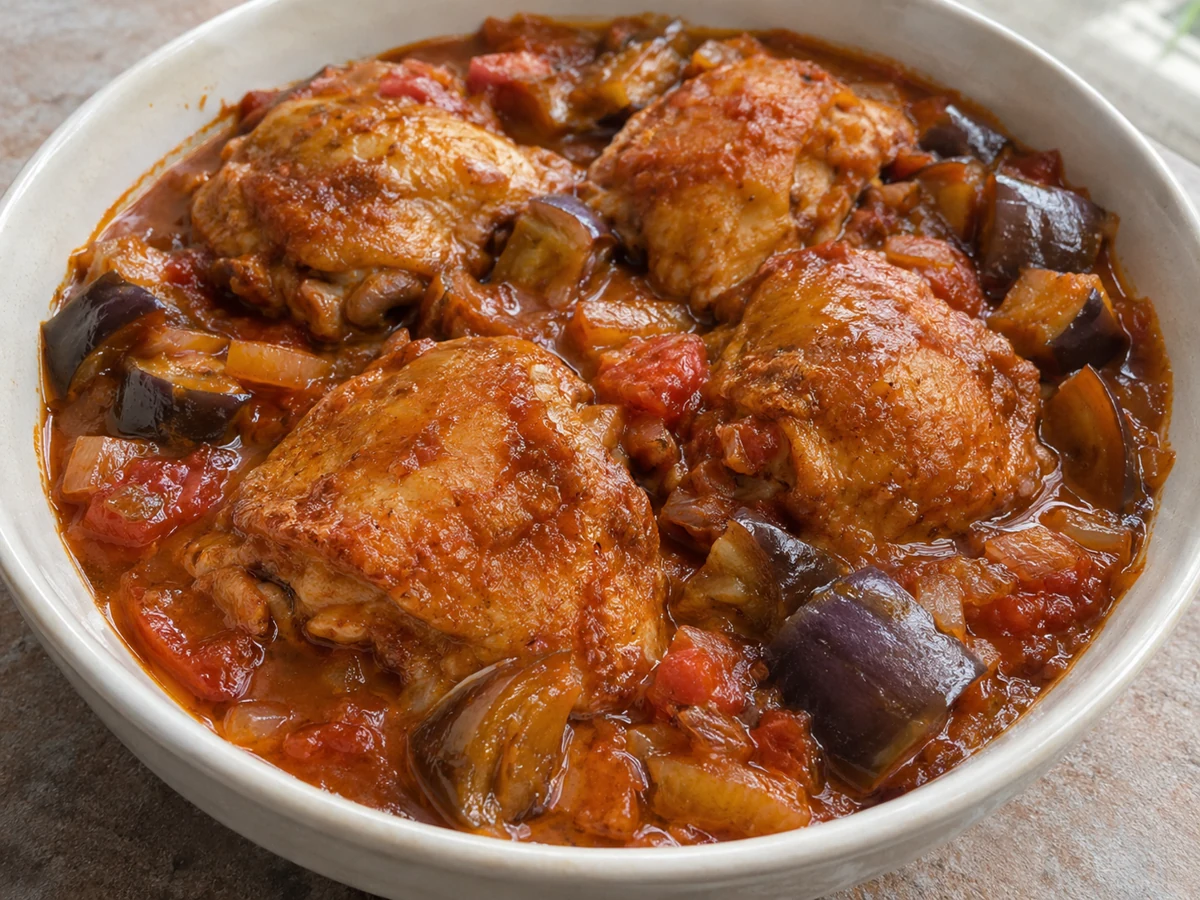
Bone-in chicken thighs simmered with aubergines in a tomato and tamarind sauce. The tamarind is diluted and strained before use.
Ingredients
- 4 bone-in chicken thighs, about 900 g
- 600 g purple aubergines
- 400 g tomatoes
- 150 g onion
- 20 g seedless tamarind pulp
- 15 g ginger
- 25 ml oil
- 400 ml water, including 100 ml hot water for the tamarind
- 4 g salt
- 1 g black pepper
Preparation
Pour one hundred millilitres of hot water over the tamarind pulp in a small bowl. Let it soften for a few minutes, then press with a spoon to disperse the pulp. Strain into another container, pressing gently. Discard retained fibres or fragments. Reserve the extracted liquid for the sauce. This distributes acidity more evenly through the casserole and avoids finding a concentrated piece of tamarind in a mouthful of chicken.
Remove the aubergine stalks and cut into cubes about three centimetres across. Finely chop the onion, grate the ginger and chop the tomatoes. Pat the chicken dry with kitchen paper. Heat fifteen millilitres of oil in the casserole and brown the thighs for around eight minutes, turning. This is preliminary colouring, not complete cooking. Reserve on a clean plate once the surface is golden.
Reduce the heat slightly and add the remaining ten millilitres of oil. Soften the onion with the ginger for around five minutes. Stir and lift the brown cooking juices with a spatula. Add the tomatoes and cook for approximately eight minutes until they start breaking down. Do not dissolve black, burnt residue into the sauce: it would introduce bitterness, which differs from the clean acidity expected from tamarind.
Return the chicken to the casserole and add the aubergine cubes, the remaining three hundred millilitres of water and the strained tamarind liquid. Distribute salt and pepper. Bring to a gentle simmer, cover and cook for around thirty to thirty-five minutes. Stir carefully around the pieces to stop the bottom catching. The aubergines may shrink and take on the sauce colour; keep the heat moderate so they do not break down too quickly.
Check that the thickest chicken flesh reaches 74 °C without the probe touching bone. Test the aubergines with a knife tip: the centres should be meltingly tender rather than spongy. If the chicken is not ready, continue covered for a few minutes. If everything is cooked but the sauce is very watery, uncover and briefly reduce for about five minutes, watching the bottom and avoiding rough stirring.
Taste the sauce and check the balance of tomato, tamarind and salt. Serve one thigh per person with a generous share of aubergines and sauce. Move the pieces with tongs so they stay intact. The sauce should coat the vegetables without becoming a dense paste. Bring the dish to the table as soon as ready, or hold it hot only for a short, controlled interval rather than leaving it lukewarm for a long time.
Introduction
This stew combines chicken thighs, aubergines and a tomato sauce sharpened with tamarind. The poultry is browned first, then finishes cooking in the sauce. The aubergines soften and absorb some liquid without deliberately being reduced to a purée. Dilute and strain the tamarind before adding it to avoid fibres and fragments of seed. Its acidity should remain noticeable without masking the chicken. Bone-in thighs suit this longer simmering better than breast meat cut into small cubes. This contemporary proposal is not presented as a traditional kedjenou: its technique and seasoning follow the precise formulation described here.
Check that the tamarind pulp is seedless and intended for food use. Some products are already diluted or sweetened; they are not equivalent to twenty grams of concentrated pulp. Choose firm aubergines with smooth skin and chicken pieces of comparable size. Keep the poultry refrigerated until preparation and separate contaminated utensils from those used for ready-to-eat vegetables. Prepare a casserole or deep sauté pan with a lid, a small sieve and tongs. Of the four hundred millilitres of water, one hundred are used to extract the tamarind and three hundred for simmering. Adjust if the vessel allows substantial evaporation, but do not drown the chicken in abundant stock. A probe checks the thickest flesh without touching the bone, which would distort the reading.
Cultural context
Contemporary creation using ingredients from the West African repertoire, proposed for this volume devoted to Côte d’Ivoire. No exclusive regional origin or particular tradition is attributed to this formulation.
Institutional references FAO INFOODS : https://www.fao.org/infoods/infoods/tables-and-databases/faoinfoods-databases/en/ — Food composition tables for Western Africa; general context, without a nutritional calculation for this recipe. World Health Organization : https://www.who.int/teams/nutrition-and-food-safety/multisectoral-actions-in-food-systems/five-keys-to-safer-food-poster — Principles of cleanliness, food separation, cooking and temperature control. FoodSafety.gov : https://www.foodsafety.gov/food-safety-charts/safe-minimum-internal-temperatures — Core cooking temperature guidance; timings depend on the ingredients and equipment.
Tips
Dose tamarind cautiously because concentration varies. This recipe specifies unsweetened pulp; a ready-to-use sauce requires checking its ingredients before substitution. Do not try to disguise excessive acidity with plenty of salt. Proper dilution and distribution make the sauce easier to balance.
Aubergines absorb liquid and then release moisture during simmering. Do not immediately add a whole pan of water if the dish looks tight just after they are added. Leave covered for a few minutes and check again. However, if the bottom starts catching, act promptly with a little water and a reduction in heat.
Thighs of markedly different sizes do not cook at the same rate. Check the thickest pieces and remove any that are ready if another requires substantially longer. A bone does not automatically guarantee even cooking. Temperature is more reliable than applying one fixed cooking time to every size of poultry.
If preparing for another day, cool promptly in shallow containers and refrigerate. Thoroughly reheat only the quantity needed. The sauce may thicken and the aubergines soften further at the second serving. Stir gently and add a little water if needed, without reducing an already cooked preparation for a long time.
Nutrition notes
Chicken provides the main protein and an amount of fat that varies with the cuts and whether the skin is eaten. Aubergines and tomatoes make up the vegetable component. At the stated quantity, tamarind mainly supplies acidic seasoning and is not presented as therapeutic. The base ingredients do not include milk, egg or peanut; nevertheless, check all products and possible cross-contact according to individual needs. No numerical nutritional calculation has been made. Bone weight and the amount of sauce served affect the actual portion eaten.
Conclusion
The dish is finished when the chicken is properly cooked and the aubergines are tender in a fairly short sauce. Initial browning creates cooking juices, while moderate simmering tenderises without burning. Choose any accompaniment according to the meal; it is not included in this recipe's quantities. For leftovers, distinguish between food served at the table and portions reserved for refrigeration, using clean utensils. This recipe proposes a measured use of tamarind in a contemporary stew without attributing an undocumented tradition or health property to it.
Enjoy your meal
Enjoy your meal!