Shrimp with butternut squash and lemongrass
Shrimp added at the end of a butternut squash stew with tomato, ginger and lemongrass, with separate cooking cues for the vegetables and shellfish.
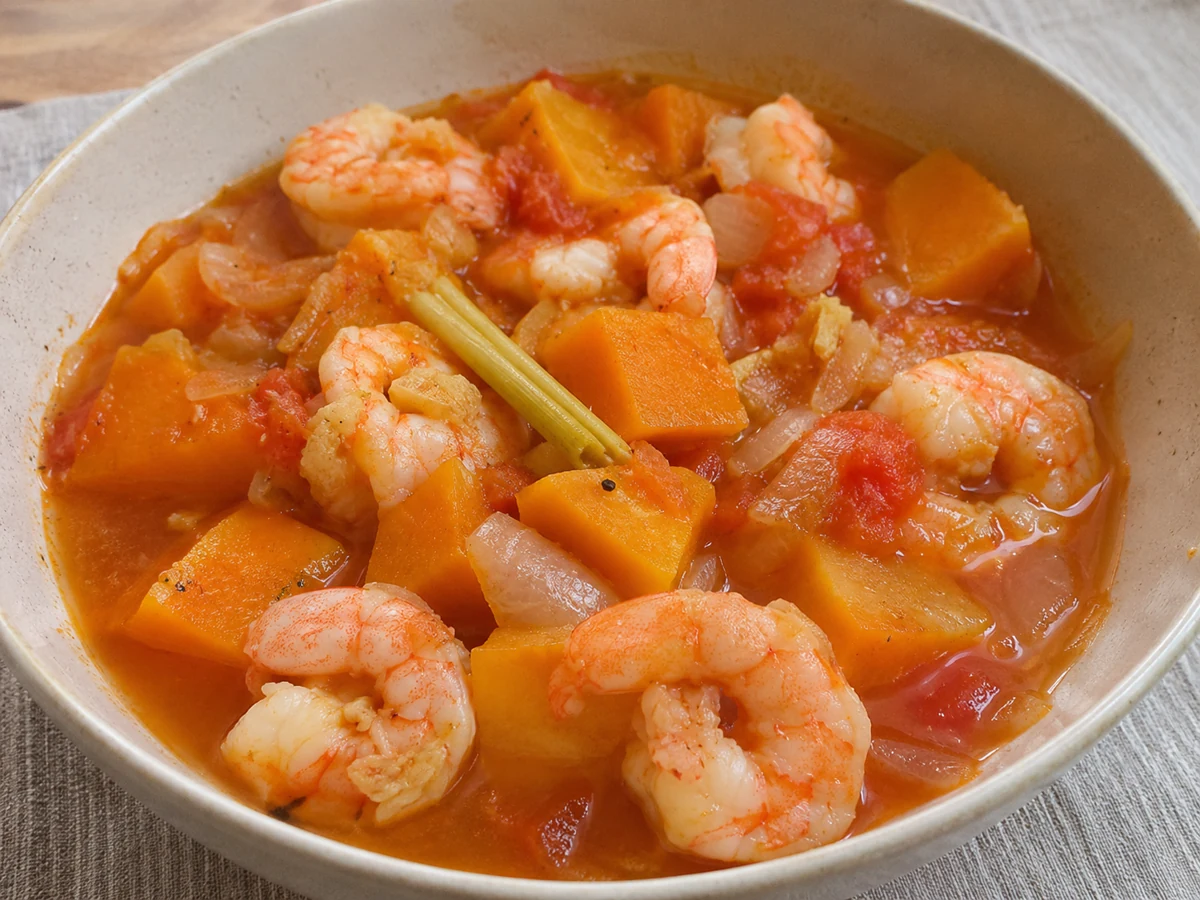
Ingredients
- 500 g raw peeled shrimp
- 700 g peeled butternut squash
- 250 g tomatoes
- 120 g onion
- 1 lemongrass stalk
- 15 g ginger
- 20 ml oil
- 350 ml water
- 4 g salt
- 1 g black pepper
Preparation
Cut the squash flesh into cubes of about two centimetres. Finely chop the onion, grate the ginger and dice the tomatoes. Divide the lemongrass stalk into two or three easily identifiable sections, then bruise lightly. Keep the shrimp refrigerated while cutting. If their packaging contains liquid, do not automatically add it to the pan: the recipe’s water is measured and the flavour should come from the prepared ingredients, not an unplanned liquid.
Heat the oil in the sauté pan and soften the onion for about five minutes over medium heat. Add the ginger and stir briefly to distribute. The onion should become soft and slightly translucent without dark colouring. Finely grated ginger flavours the oil quickly; watch that it does not stick. The aromatic base should remain subtle and accompany the squash. Excessive heat at this stage can create bitterness that will be more noticeable in a relatively light broth.
Add the tomatoes, squash, lemongrass and three hundred and fifty millilitres of water. Season with salt and pepper, then bring to a simmer. Partially cover and cook for about twenty to twenty-five minutes. Stir carefully to avoid breaking the cubes. The squash should be tender when tested with a knife tip. Add a small quantity of hot water if the liquid falls too quickly, retaining a short broth that coats the ingredients.
Inspect the shrimp and remove any shell fragments. Depending on their preparation, remove the intestinal vein if still present and if desired, then gently pat the surface dry. Add them when the squash is already tender. Distribute through the hot liquid rather than placing in one pile. Stir gently with a broad spoon to coat them, keeping the squash cubes as intact as possible.
Cook the shrimp for about three to five minutes, depending on size, until the flesh is pearly or white and opaque. Watch the thickest pieces: a pink surface alone is not the only guide. Do not continue cooking for a long time once ready. If some cook faster, move them towards a cooler area of the pan. The stated timings must be adapted to the product’s size and starting temperature.
Remove all the lemongrass sections with tongs, counting against the pieces added at the beginning. Taste the broth and adjust the salt only if needed. Divide the stew between four deep plates, with a comparable share of squash and shrimp. Serve immediately while the shrimp remain tender. Avoid leaving the dish covered over even very low heat after cooking: prolonged heat would continue changing the shellfish flesh and eventually break down the squash.
Introduction
Squash and shrimp do not need the same cooking time. In this light stew, the squash first simmers in a tomato broth scented with lemongrass and ginger; the shrimp join the pan only at the end. This separation protects their flesh and avoids a firm, rubbery texture. The lemongrass remains in pieces large enough to remove before serving. Its role is to infuse the liquid, not to provide a fibrous garnish to chew. Butternut squash supplies tender cubes that ideally retain their shape. This contemporary dish combines seafood and vegetables without coconut milk, despite an appearance that might recall other stews.
The shrimp are raw, peeled and kept chilled until added. If buying frozen, thaw according to the manufacturer’s recommendations, in the refrigerator when that method is specified, then drain. The five hundred grams refer to the peeled product used in the dish. The squash is also weighed after removing its skin and seeds. Work on a stable board with a suitable knife. For the lemongrass, strip away very dry outer layers, then bruise the tender section with the flat of a knife without finely chopping it. Prepare a wide sauté pan, lid and tongs for removing the stem pieces. Measure the water before cooking. An excessively large pan would reduce the liquid quickly, whereas a very narrow saucepan would leave some shrimp piled up when they need even heating.
Cultural context
Contemporary creation using ingredients from the West African repertoire, proposed for this volume devoted to Côte d’Ivoire. No exclusive regional origin or particular tradition is attributed to this formulation.
Institutional references FAO INFOODS : https://www.fao.org/infoods/infoods/tables-and-databases/faoinfoods-databases/en/ — Food composition tables for Western Africa; general context, without a nutritional calculation for this recipe. World Health Organization : https://www.who.int/teams/nutrition-and-food-safety/multisectoral-actions-in-food-systems/five-keys-to-safer-food-poster — Principles of cleanliness, food separation, cooking and temperature control. FoodSafety.gov : https://www.foodsafety.gov/food-safety-charts/safe-minimum-internal-temperatures — Core cooking temperature guidance; timings depend on the ingredients and equipment.
Tips
Count the lemongrass pieces before putting them into the stew. This simple step makes removal easier and prevents one being forgotten under the squash. Finely chopped stalk would be harder to remove and leave fibres in the broth. In this recipe, infusion is deliberately separate from eating the solid ingredients.
If the squash is almost meltingly tender, mix by gently shaking the pan rather than stirring vigorously with a spoon. The cubes move with the broth and break less. Very ripe butternut squash or pieces cut too small may cook more quickly than expected: start checking tenderness before the end of the suggested range.
Do not add frozen shrimp as a still-frozen block. This would lower the broth’s temperature and release an unpredictable quantity of water. Follow the thawing instructions, drain and check their condition. The time needed for this preparation should not be replaced with a prolonged wait at room temperature.
To prepare part of the meal ahead, make the squash stew without shrimp, cool quickly and refrigerate. Reheat completely before adding the shellfish at the end. This preserves their short, controlled cooking rather than cooking once and then holding them for a long time in the reheated stew.
Nutrition notes
Shrimp are the dish’s main source of protein. Squash contributes carbohydrates among other nutrients and provides vegetable volume, complemented by tomatoes and onion. At the listed quantities, lemongrass and ginger mainly provide aroma. Shrimp are allergenic shellfish; also check their labelling, particularly any declared sulphites. The recipe contains neither coconut milk nor dairy products. No calculation of calories or nutrients per portion has been made. Any rice or other starchy accompaniment is not included in this formulation.
Conclusion
The stew succeeds when the squash is tender, the shrimp opaque and the broth fragrant without fibrous pieces. Removing the lemongrass is genuinely the final preparation step; it should not be left to diners amid a hot sauce. Refrigerate leftovers promptly if keeping them and avoid repeated reheating. Shrimp may become firmer on a second heating, so preferably prepare a quantity suited to the meal. This recipe offers a contemporary combination with reproducible techniques and separate cooking cues for each main ingredient, rather than an undocumented historical origin.
Enjoy your meal
Enjoy your meal!