Tomato and fonio soup with eggs
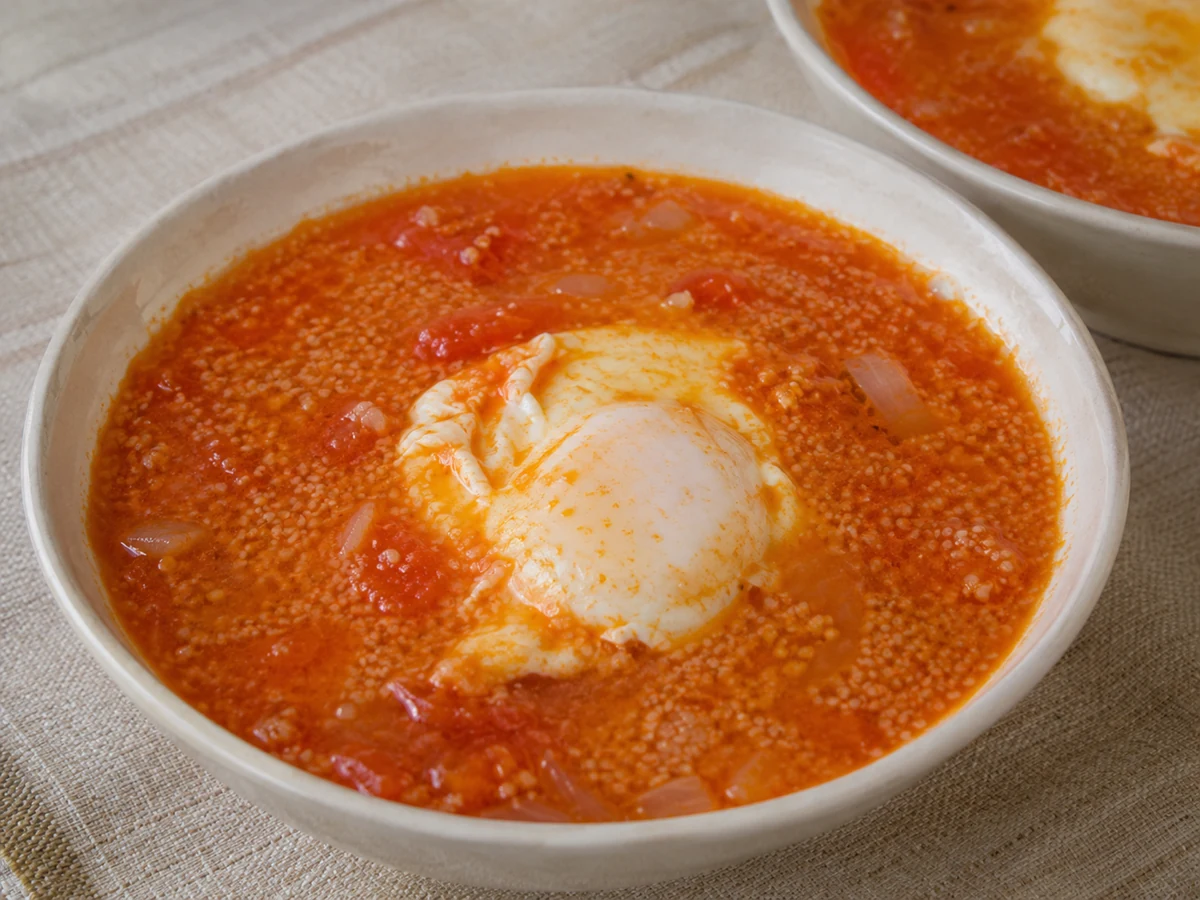
Tomato and fonio soup with thoroughly poached eggs. A creamy preparation without cream, with guidance on consistency and checking the grains and eggs.
Ingredients
- 800 g tomatoes
- 100 g dry precooked fonio
- 4 eggs
- 150 g onion
- 2 garlic cloves
- 15 g ginger
- 20 ml oil
- 900 ml water, adjusted to the fonio
- 4 g salt
- 1 g black pepper
Preparation
Finely chop onion and garlic and grate ginger. Heat oil in the saucepan and soften the aromatics over moderate heat for around six minutes, starting with onion and adding garlic and ginger once it softens. Stir regularly. Cut tomatoes into pieces after removing the hard stalk areas. Do not let garlic brown strongly: it would quickly dominate a soup whose main flavour should remain tomato.
Add tomatoes, water, salt and pepper. Bring to a simmer and cook for around fifteen minutes, partially covering to reduce splashes. The tomatoes should soften enough to squash easily with a spoon. Stir occasionally and check that aromatics are not sticking. Reduction depends on pan shape: a wide saucepan allows more evaporation than a narrow one.
Remove from the heat and blend to the desired smoothness with the blender head submerged. Use short bursts to prevent splashing. If using a jug blender, follow its hot-liquid precautions and suitable maximum capacity. Return the soup to low heat after blending. The liquid should be even, but there is no need to strain away all the pulp automatically.
Add fonio prepared according to package directions and simmer for about five to ten minutes, or as required by the chosen product. Stir along the bottom. The grains should become tender and the soup thicken. Add a little hot water if it becomes too dense to hold the eggs. Taste a small cooled spoonful to check fonio tenderness rather than assuming a thick soup means the cereal is completely cooked.
Crack eggs one at a time into the small bowl and slide into four areas of the simmering soup. Reduce the heat to prevent vigorous boiling that would scatter the whites. Cover and cook for about six to eight minutes, adapting to the liquid's actual temperature. Check that whites and yolks are firm. Avoid stirring directly across the eggs; if necessary, move a little soup around them with the ladle instead.
Taste the liquid between eggs and adjust only as needed. First place one egg in each bowl using a large spoon or small skimmer, then ladle the fonio soup around it. Serve hot without leaving the saucepan on low heat for a long time. Fonio continues absorbing water and consistency can change quickly. Warn diners that a thick bowl retains heat even when the surface appears calm.
Introduction
Tomato soup becomes a spoonable main dish through tiny fonio grains that thicken the liquid and eggs poached directly in the saucepan. Smoothness comes from blended tomatoes and fonio, without added cream. In this version, eggs cook until both white and yolk are firm. The aim is therefore not a runny yolk, but a fully set egg in the centre of each bowl. Ginger provides a restrained aromatic note. This contemporary preparation needs particular attention after adding fonio: it absorbs liquid and can catch on the bottom. Adjust the stated times to your precooked product and the soup's actual thickness.
Choose dry precooked fonio with clear package cooking instructions. Water quantities vary between products and any rinsing should follow those directions. The nine hundred millilitres given are a starting point for the whole soup, to be adjusted if the fonio absorbs more. Use ripe tomatoes without damaged areas and eggs stored according to their label. Prepare a saucepan wide enough for four eggs without stacking, a stick blender and a ladle. Blend before adding eggs, off the heat to limit splashing. Keep a small bowl to crack each egg into separately. This helps identify shell fragments and lets you slide an egg close to the surface rather than dropping it from above into hot liquid.
Cultural context
Contemporary creation using ingredients from the West African repertoire, proposed for this volume devoted to Côte d’Ivoire. No exclusive regional origin or particular tradition is attributed to this formulation.
Institutional references FAO INFOODS : https://www.fao.org/infoods/infoods/tables-and-databases/faoinfoods-databases/en/ — Food composition tables for Western Africa; general context, without a nutritional calculation for this recipe. World Health Organization : https://www.who.int/teams/nutrition-and-food-safety/multisectoral-actions-in-food-systems/five-keys-to-safer-food-poster — Principles of cleanliness, food separation, cooking and temperature control. FoodSafety.gov : https://www.foodsafety.gov/food-safety-charts/safe-minimum-internal-temperatures — Core cooking temperature guidance; timings depend on the ingredients and equipment.
Tips
Overly thick soup is easier to loosen before the eggs go in. Add hot water in small amounts and stir until it flows from the ladle. After poaching, movement must be limited to avoid breaking eggs. Anticipating this adjustment keeps presentation neat and makes each component's cooking easier to check.
Fonio may clump if added all at once to very thick soup. Add gradually while stirring, following the preparation recommended by its manufacturer. Do not directly substitute another couscous or grain while retaining identical timings: water absorption and grain size can require a completely different adjustment.
Tomatoes determine the dish's acidity. Choose ripe ones and cook sufficiently before blending rather than automatically adding sugar, which the recipe does not contain. Ginger should accompany tomato flavour rather than mask it; distribute finely to avoid a mouthful with a very pungent, fibrous piece.
For advance preparation, make the tomato base, cool promptly and refrigerate. Add fonio and eggs during final reheating. Keeping stages separate avoids a soup made very dense by several hours' standing. It also provides simpler control of the eggs' cooking close to the time they are actually served.
Nutrition notes
Fonio forms the cereal base and eggs provide most of the protein. Tomatoes make up the main vegetable volume along with onion and aromatics. The measured oil is distributed throughout. Egg is the major allergen to identify; also check fonio labelling and possible precautionary statements if a particular dietary exclusion is required. No calories or nutrients per bowl have been calculated. These notes describe ingredients without offering an individual nutritional guarantee or assessing the entire meal.
Conclusion
The soup is ready when fonio is tender, liquid still sufficiently flowing and all four eggs completely set. Poaching eggs directly simplifies preparation but needs a wide pan and gentle heat. Serve the bowls promptly for similar consistency. To save a portion, cool without excessive delay and refrigerate in a closed container, then reheat thoroughly. Added water may loosen fonio during reheating but does not replace good storage conditions. This is a contemporary creation without any claim to an exclusive regional origin.
Enjoy your meal
Enjoy your meal!