Black-eyed pea stew with leeks and pumpkin seeds
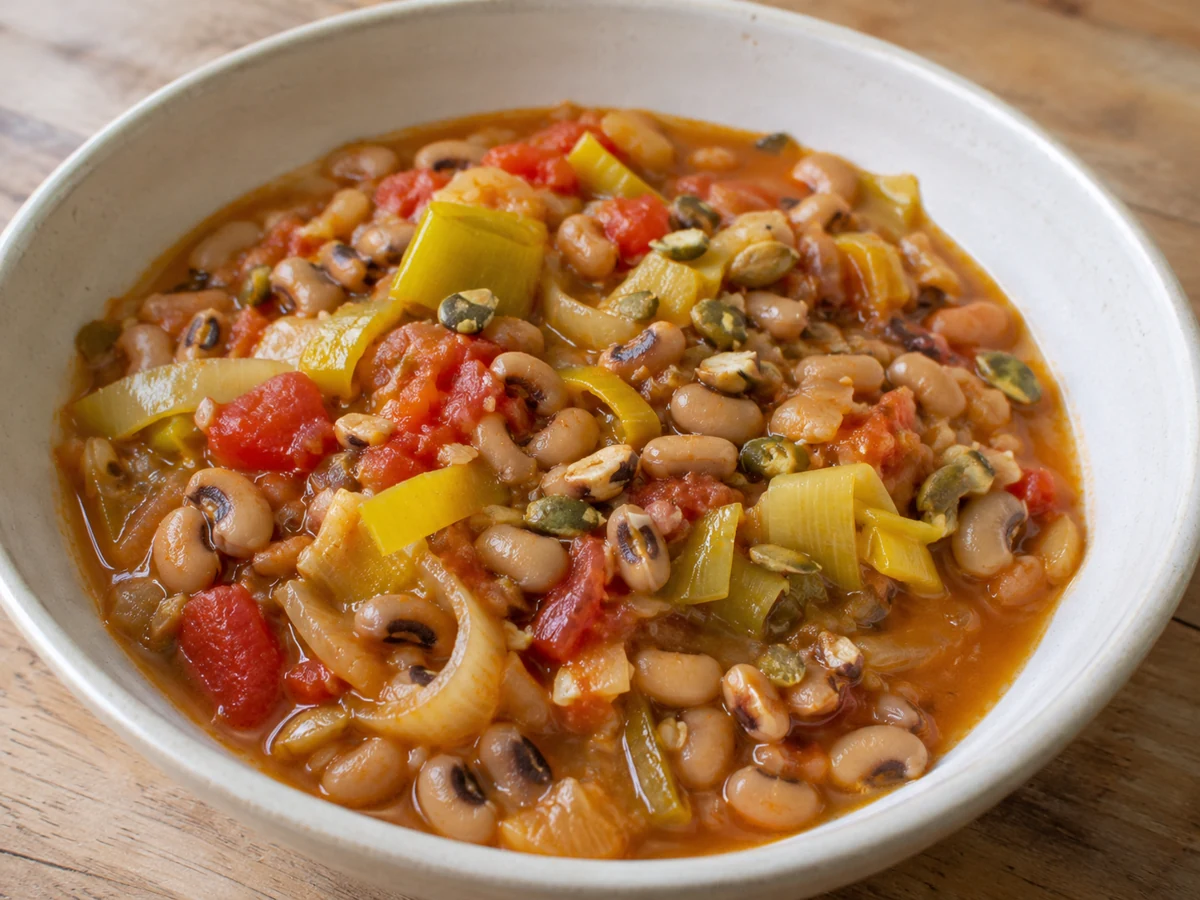
Black-eyed peas simmered with leeks, tomatoes and pumpkin seeds in a short sauce thickened without cream. Detailed steps help preserve the peas and vegetables.
Ingredients
- 600 g cooked black-eyed peas, drained
- 400 g leeks
- 300 g tomatoes
- 60 g shelled pumpkin seeds
- 120 g onion
- 2 garlic cloves
- 20 ml oil
- 350 ml water
- 4 g salt
- 1 g black pepper
Preparation
Split the leeks lengthways, spread their layers and rinse thoroughly to remove soil. Trim very tough areas, then slice the tender parts into half-rounds. Drain without squeezing firmly. Finely chop the onion and garlic. Dice the tomatoes. Keep the ingredients separate: their order matters because leeks need more time than garlic to soften, and tomatoes then supply moisture for the stew.
Warm a small dry frying pan and add the shelled pumpkin seeds. Stir over moderate heat for about three minutes, just until they smell toasted. Remove as soon as they begin to colour, then cool on a plate. Coarsely crush with a knife or pestle. Reserve ten grams for serving. Overtoasting produces bitterness that the tomato sauce cannot truly correct.
Heat the oil in the sauté pan and soften the onion for about five minutes. Add the garlic, followed by the sliced leeks. Stir to coat the ribbons and continue over medium heat for around eight minutes, stirring regularly. Their volume should decrease and the white parts become softer. Do not aim for dark browning. If a few pieces catch, reduce the heat and add a spoonful of the measured water rather than another dose of oil.
Add the tomatoes, salt, pepper and the rest of the three hundred and fifty millilitres of water. Bring to a simmer and cook for about twelve minutes. Stir occasionally to check the bottom of the pan. The tomatoes should begin breaking down while the leeks remain visible. This first cooking forms the sauce; adding the peas too soon would require prolonged stirring and could crush most of the beans.
Add the drained cooked peas and the crushed seeds intended for simmering. Heat everything through for about ten minutes at a gentle simmer with the lid slightly ajar. Mix carefully, passing a spatula underneath the beans. If the stew becomes too thick before it is hot, add a little hot water. The amount depends on the vegetables' and peas' moisture; the aim is not a large volume of sauce completely covering every ingredient.
Take out about two spoonfuls of peas and mash them with a little liquid against the side of the pan or in a small bowl. Return this paste to the stew, mix and simmer another minute to bind. Taste before adjusting the salt. Divide among four deep plates and scatter over the reserved seeds. Serve hot, distributing peas, leeks and thickened juices fairly evenly between portions.
Introduction
Using already cooked black-eyed peas removes the need for soaking or lengthy bean cooking in this stew. Leeks provide soft ribbons, while pumpkin seeds add texture to a fairly short tomato sauce. A small portion of the peas is mashed at the end to bind the liquid without cream or flour. The seeds are coarsely crushed rather than ground into a paste: the aim is to retain some tender pieces and a slightly crunchy topping. This contemporary legume dish serves four. It should have the spoonable texture of a stew, not a very watery soup. Water can be adjusted during cooking, but the pan must never dry out enough to catch.
The six hundred grams of black-eyed peas refer to cooked, drained beans, not dry weight. Use a plain jar or can, or home-cooked beans that have been stored correctly. Choose firm leeks and check for soil between their layers even when the outside looks clean. Pumpkin seeds must be shelled, without their hard husks. Prepare a heavy-bottomed sauté pan, knife, colander and small container for crushing the seeds. Reserve ten grams of seeds for finishing and keep the remainder for simmering. Chop the onion and garlic before switching on the heat. Steady preparation is more useful than high heat: the leeks need to soften without suddenly browning, while tomatoes must lose their raw flavour before the already tender peas are added.
Cultural context
Contemporary creation using ingredients from the West African repertoire, proposed for this volume devoted to Côte d’Ivoire. No exclusive regional origin or particular tradition is attributed to this formulation.
Institutional references FAO INFOODS : https://www.fao.org/infoods/infoods/tables-and-databases/faoinfoods-databases/en/ — Food composition tables for Western Africa; general context, without a nutritional calculation for this recipe. World Health Organization : https://www.who.int/teams/nutrition-and-food-safety/multisectoral-actions-in-food-systems/five-keys-to-safer-food-poster — Principles of cleanliness, food separation, cooking and temperature control.
Tips
Rinsing the leeks deserves a few minutes. Grit left in a vegetable spoils the whole stew even when it is cooked correctly. After splitting, run water between the leaves and pay particular attention to their junctions. Avoid soaking them in dirty water and then pouring that water back over the clean pieces.
The seeds do not need to become powder. A fine grind would thicken the liquid more and change the mouthfeel. Some small pieces should remain among the leek ribbons. If using a small processor, give brief pulses and stop before an oily paste forms on the bowl's sides.
Very tender black-eyed peas need little stirring. Add when the vegetables are already cooked and lift with a spatula rather than a narrow spoon. This helps keep the beans whole. Deliberately mashing two spoonfuls is enough to thicken afterwards; turning the entire stew into purée is unnecessary for a bound texture.
To reheat a portion prepared ahead, use a small saucepan with a splash of water and stir gently until thoroughly hot. Add finishing seeds after reheating. Refrigerated stew may thicken as the peas absorb liquid; this is not a reason to use fierce heat that would burn the bottom.
Nutrition notes
Black-eyed peas supply carbohydrates, fibre and plant protein. Leeks and tomatoes make up the vegetable component, while pumpkin seeds and oil contribute fat. The seeds are more than decoration because most are stirred into the stew. The basic list has no dairy, egg or meat; nevertheless, check labels and possible cross-contact where a specific dietary exclusion is necessary. No per-serving nutritional calculation has been established. Salt in purchased peas and the actual amounts served can change the final composition.
Conclusion
The stew is ready when the leeks are soft, peas thoroughly hot and juices thick enough to coat them. It can be served on its own as part of the meal chosen, without automatically adding an accompaniment absent from the ingredient list. Cool leftovers promptly in a shallow container, then refrigerate covered. Reheat only what is needed for the next meal and avoid repeated movements between warm and cold conditions. This preparation particularly illustrates a useful principle: cook the vegetables first, then gently handle a legume whose cooking is already complete.
Enjoy your meal
Enjoy your meal!