Chicken, plantain and ginger parcels
Chicken and plantain baked in paper parcels with tomato, onion and ginger. Detailed instructions for tender plantain and thoroughly cooked poultry.
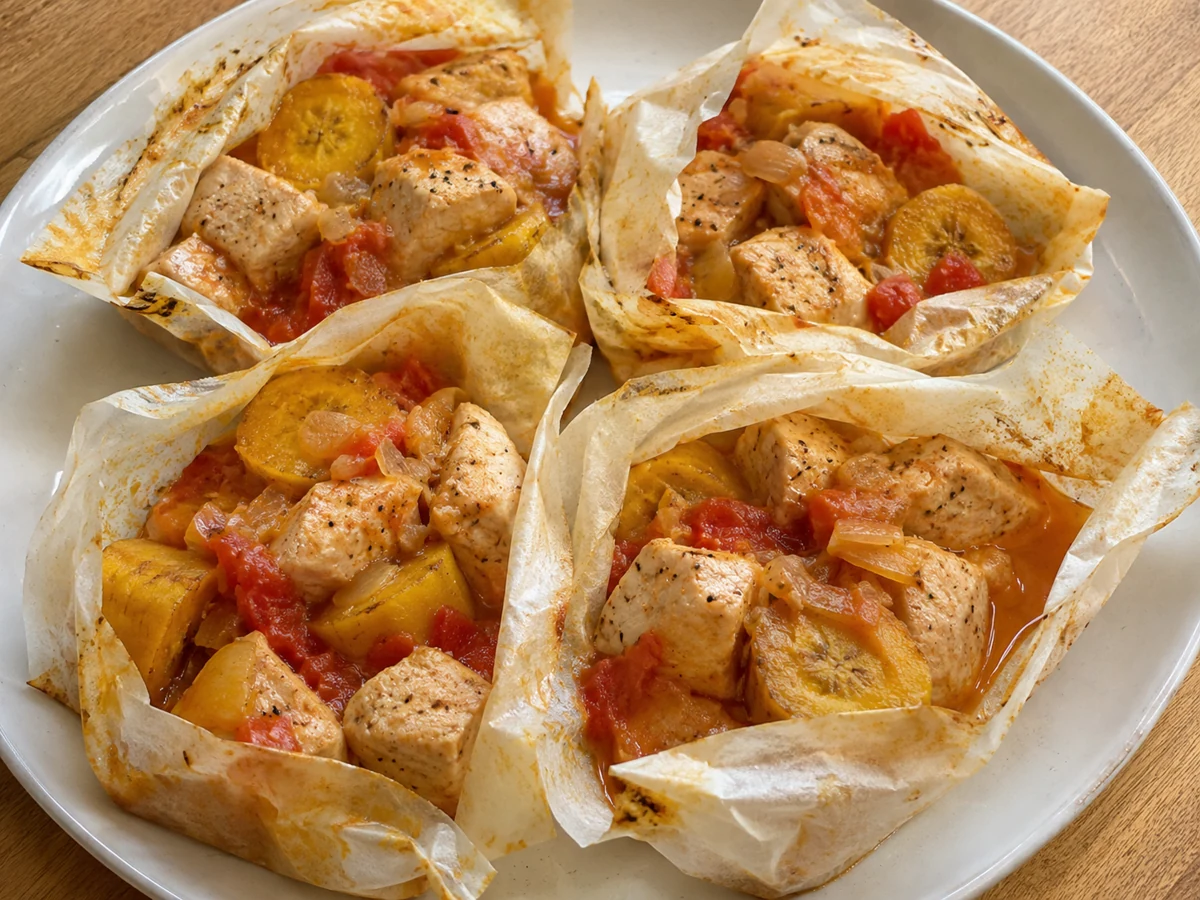
Ingredients
- 600 g chicken breast
- 500 g ripe but firm plantains, peeled
- 250 g tomatoes
- 120 g onion
- 20 g ginger
- 1 lime
- 20 ml oil
- 80 ml water
- 4 g salt
- 1 g black pepper
Preparation
Preheat the oven to 190 °C. Peel the plantains by scoring the skin lengthways, then cut the flesh into slices about one centimetre thick. This allows fairly quick cooking while retaining distinct pieces. Remove damaged ends if necessary. Divide the slices into four equal piles before assembling. This prevents overfilling the first parcels and running short of plantain for the last ones.
Cut the chicken breasts into cubes about three centimetres across. Keep them refrigerated while preparing the vegetables if that will take some time. Then wash your hands and clean utensils that touched raw poultry. Dice the tomatoes, finely chop the onion and grate the ginger. Combine these ingredients in a bowl with the oil, salt and pepper. Fairly thin onion pieces will cook more evenly inside the closed parcel.
Lay the paper sheets in the baking dish. Put a portion of plantain in the centre of each, then distribute the chicken and the tomato and aromatic mixture. Add twenty millilitres of water to each parcel, pouring directly over the food. Do not compress everything into a thick block. A fairly spread-out layer helps steam circulate and prevents a plantain piece from sitting isolated on top, away from the cooking juices.
Bring the long paper edges together above the filling and fold them over several times, then close the ends. Leave a little free space above the food: the paper should not be pressed against every piece. Set the four parcels side by side without stacking them. Bake for about thirty-five to forty minutes. Do not open them repeatedly while cooking, as each opening releases the steam that helps cook the filling.
At the end, carefully open one parcel, directing steam away from your face and hands. Check that a thick piece of chicken reaches 74 °C at its centre and that a knife tip passes easily through the plantain. If either component is not ready, close the parcel and continue for a few minutes. Times are approximate and depend particularly on the actual cube thickness, plantain ripeness and your oven's power.
Cut the lime and add its juice at serving, dividing it among the four portions as preferred. Place each parcel on a plate to contain the juices. Lightly mix the food after opening so the plantain is coated with the fragrant liquid. Warn diners about heat retained inside the paper. Serve immediately: chicken breast can become firmer if left in a hot oven for a long time after it is fully cooked.
Introduction
A baking-paper parcel brings chicken, plantain and tomatoes together in an enclosed space where their juices circulate during cooking. Ripe but firm plantain adds measured sweetness; it should become tender without dissolving completely. Ginger and onion flavour the juices, while lime is added at serving to retain a bright note. This contemporary preparation uses four individual parcels. Similar sizes make portioning and cooking checks easier. Open the paper carefully because the trapped steam is still very hot. This dish should not be described as traditional kédjénou: the method and combination belong to this recipe, with plantain cooked directly alongside the chicken.
Use baking paper suitable for the oven temperature and cut sheets large enough to close without squeezing the food. An overfilled parcel can tear or open easily. Choose plantains with yellowing or spotted skins whose flesh remains firm. Dessert bananas do not have the same texture or cooking behaviour. Cut the chicken on a separate board from the vegetables. Prepare an ovenproof dish to support the parcels and catch any leaks. Measure the eighty millilitres of water: each portion receives twenty. Tomatoes and chicken will also release liquid. Have a food thermometer ready to check the centre of a thick piece of chicken. Opening one test parcel at the end is preferable to judging readiness only by smell or the outside colour of the paper.
Cultural context
Contemporary creation using ingredients from the West African repertoire, proposed for this volume devoted to Côte d’Ivoire. No exclusive regional origin or particular tradition is attributed to this formulation.
Institutional references FAO INFOODS : https://www.fao.org/infoods/infoods/tables-and-databases/faoinfoods-databases/en/ — Food composition tables for Western Africa; general context, without a nutritional calculation for this recipe. World Health Organization : https://www.who.int/teams/nutrition-and-food-safety/multisectoral-actions-in-food-systems/five-keys-to-safer-food-poster — Principles of cleanliness, food separation, cooking and temperature control. FoodSafety.gov : https://www.foodsafety.gov/food-safety-charts/safe-minimum-internal-temperatures — Core cooking temperature guidance; timings depend on the ingredients and equipment.
Tips
An overripe plantain crushes easily and can make the filling almost creamy. Reserve it for another preparation and choose flesh that cuts neatly here. A green plantain, on the other hand, would need a different cooking balance and make the dish less sweet. Ripeness is therefore one of this recipe's important choices.
To assemble without soiling all the edges, keep the ingredients in the centre and leave a generous paper margin. Wipe away oil on the folding area if it prevents closure. A properly folded envelope retains juices more effectively; there is no need to add many paper layers around a well-proportioned parcel.
Do not leave the raw assembled parcels at room temperature for several hours. If assembling ahead, refrigerate them in their dish and adapt the final check to their colder starting temperature. The stated time never replaces checking the chicken. Do not reuse a bowl that held raw poultry to serve the lime.
The juices should remain light. If plentiful, spoon them around the food rather than thickening with a flour absent from the recipe. A successful parcel does not require a thickened sauce. Tomato cutting and its natural water content account for some differences you may notice between two preparations.
Nutrition notes
Chicken supplies most of the protein and plantain forms the starchy base. Tomatoes and onion add vegetables, while the measured oil is divided among four parcels. The basic ingredient list contains no dairy, egg or peanut, but that does not guarantee the absence of cross-contact in the kitchen or purchased ingredients. Check particular dietary needs before serving. No detailed nutritional calculation has been established for this formulation. The juices consumed, cooking losses and actual portion weights influence what is on the plate.
Conclusion
These individual parcels let the plantain and chicken share the same aromatics. Cutting can be done ahead while carefully separating poultry from vegetables, with assembly left until the last moment. To save a leftover portion, remove the paper and transfer the food to a container suitable for cooling and refrigeration. Reheat thoroughly without repeated cooling and reheating cycles. The most useful step remains the final check: tender plantain and correctly cooked chicken matter more than attractively puffed paper. Lime added after opening simply finishes the juices.
Enjoy your meal
Enjoy your meal!