Cassava and tuna croquettes with tomato and ginger sauce
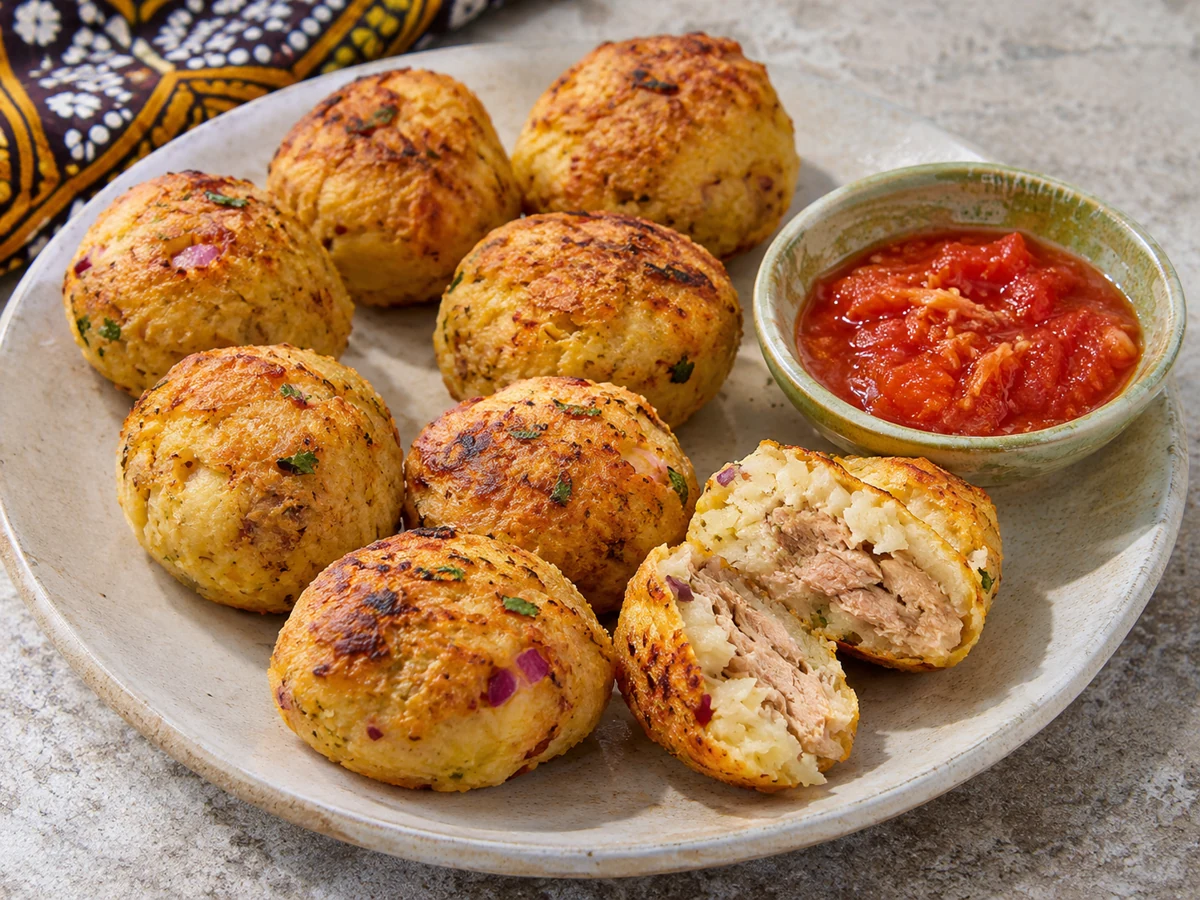
Oven-baked cassava and tuna croquettes with a separate tomato and ginger sauce. Detailed steps explain cassava preparation and how to shape the croquettes.
Ingredients
- 600 g fresh cassava
- 200 g canned tuna in water or brine, drained
- 1 egg
- 40 g breadcrumbs
- 400 g tomatoes
- 100 g onion
- 15 g ginger
- 25 ml oil
- 100 ml water for the sauce
- 4 g salt
- 1 g black pepper
Preparation
Cut the peeled cassava into pieces of similar size. Split them if necessary to remove the fibrous central core. Place in a large saucepan of boiling water and cook for about twenty-five minutes, until a knife tip passes easily through the flesh. Continue a little longer if the pieces remain hard. Drain, discard all the cooking water and let steam escape briefly. Do not save this water to thin the sauce or mash.
Mash the cassava while it is still hot. Remove visible fibres rather than dispersing them with a blender. Spread the mash in a shallow dish and promptly refrigerate for around twenty minutes to cool. A large mass enclosed in a mixing bowl would cool less evenly. The mash should be cool enough to receive the egg without setting it, yet remain soft enough to mix and shape without excessive effort.
While the mash cools, finely chop the onion and grate the ginger. Heat the ten millilitres of oil reserved for the sauce in a saucepan. Soften the onion over medium heat for five minutes without burning it, then add the ginger. Stir for one minute before adding the chopped tomatoes, the hundred millilitres of water, some of the salt and the pepper. Simmer for about twenty minutes: the sauce should thicken while retaining small, tender pieces.
Preheat the oven to 200 °C. Combine the cooled mash with the drained tuna, egg and breadcrumbs. Add the remaining salt gradually, as the tuna may already be seasoned. Work with a spoon until evenly mixed, without aiming for a perfectly smooth texture. If the mixture looks wet, wait five minutes to let the breadcrumbs absorb moisture before considering any adjustment. Packing the mixture tightly would produce heavy croquettes.
Divide the mixture into twelve similar portions. Lightly dampen your hands and shape thick patties or short croquettes. Place them apart on the lined baking sheet, then brush with the remaining fifteen millilitres of oil. Bake for about twenty minutes, carefully turning halfway through if their surface is firm enough. Check that the centre reaches 74 °C. Colour alone is not sufficient to assess whether the egg-containing mixture is cooked.
Remove the baking sheet and let the croquettes firm up for two or three minutes before moving them with a wide spatula. Stir the sauce and adjust its consistency: a little hot water can loosen it if it has reduced too much. Arrange the croquettes on a platter with the sauce in a separate bowl. Serve immediately to preserve the contrast between the golden surface and soft centre. Do not stack them straight away, as trapped steam would soften their exterior.
Introduction
These croquettes combine mashed cassava, flaked tuna and a tomato and ginger sauce served separately. Baking gives them a firm, lightly golden surface while reducing the handling needed in a frying pan. The inside should remain soft without becoming wet: cassava provides body, the egg binds the mixture and breadcrumbs absorb some moisture. This contemporary dish works as a shared starter. Make twelve similarly sized pieces so that they cook evenly. The sauce provides an acidic contrast and should not soak the croquettes before they reach the table. The components can be prepared in stages, but final assembly and reheating require the cold chain to be respected.
Choose fresh, firm cassava sold for food use, without blackened areas or an abnormal smell. Remove the outer skin and the layer beneath it carefully before cooking. Cassava must not be eaten raw: here it is boiled in plenty of water, which is then discarded. Bitter cassava or cassava of uncertain origin is unsuitable for this home preparation. The listed weight is before peeling; adjust the texture after cooking rather than adding all the breadcrumbs immediately. Prepare a saucepan, colander, potato masher, mixing bowl and baking sheet lined with baking paper. Drain the tuna in a small sieve and press it lightly. Keep the egg refrigerated until mixing. Divide the oil at the start: fifteen millilitres for the croquettes and ten for the sauce. This avoids generously oiling every utensil without tracking the total amount listed.
Cultural context
Contemporary creation using ingredients from the West African repertoire, proposed for this volume devoted to Côte d’Ivoire. No exclusive regional origin or particular tradition is attributed to this formulation.
Institutional references FAO INFOODS : https://www.fao.org/infoods/infoods/tables-and-databases/faoinfoods-databases/en/ — Food composition tables for Western Africa; general context, without a nutritional calculation for this recipe. World Health Organization : https://www.who.int/teams/nutrition-and-food-safety/multisectoral-actions-in-food-systems/five-keys-to-safer-food-poster — Principles of cleanliness, food separation, cooking and temperature control. FoodSafety.gov : https://www.foodsafety.gov/food-safety-charts/safe-minimum-internal-temperatures — Core cooking temperature guidance; timings depend on the ingredients and equipment.
Tips
Cassava moisture varies. If the mash is very wet, dry it briefly in the clean saucepan over low heat, stirring constantly before cooling. This corrects the texture without changing the whole recipe. Avoid automatically compensating with large amounts of breadcrumbs, which would mask the cassava flavour and make the centre dense.
To prepare ahead, keep the cooled mash, drained tuna and sauce separately in closed containers in the refrigerator. Assemble the croquettes on the serving day. The cooling time given applies to a thin layer: it does not justify leaving an entire saucepan to cool slowly on the worktop.
The sauce can remain rustic. For a finer texture, blend it off the heat in a suitable container, then gently reheat. Keep it thick enough to cling to a dipped croquette. An overly runny sauce would quickly wet the surface and reduce the intended contrast between the two components.
Make a trial croquette first if your cassava is very different from the products you normally use. Check its firmness with a spatula after baking. Slightly reducing the thickness of the following pieces can help them cook through; merely increasing the temperature risks drying the outside before the mixture is sufficiently hot inside.
Nutrition notes
Cassava supplies the starchy base and tuna provides protein, among other nutrients. Egg and breadcrumbs contribute to the structure, while tomatoes make up most of the sauce. The stated oil covers all twelve croquettes and their accompaniment. Fish, egg and the wheat in the breadcrumbs are allergens that must be identified. Also check the canned tuna ingredients and precautionary allergen statements on packaged products. No per-serving nutritional calculation has been made: the weight after peeling, retained water and actual serving size can change the composition of the plate.
Conclusion
Allow three croquettes per person to divide this starter among four diners, offering the sauce according to preference within the quantity prepared. If any food remains, cool it promptly, refrigerate in a closed container and reheat thoroughly before serving hot. Avoid repeated cooling and reheating cycles. This recipe describes a contemporary cassava and tuna creation; it does not claim to reproduce a regional speciality with a traditional name. Its value lies in managing moisture and pairing a mild mixture with a brighter sauce.
Enjoy your meal
Enjoy your meal!