Pan-fried mango with lime and sesame
A fresh and light dessert, where caramelized mango meets the vivacity of lime and the crunch of toasted sesame. An exotic and refined touch.
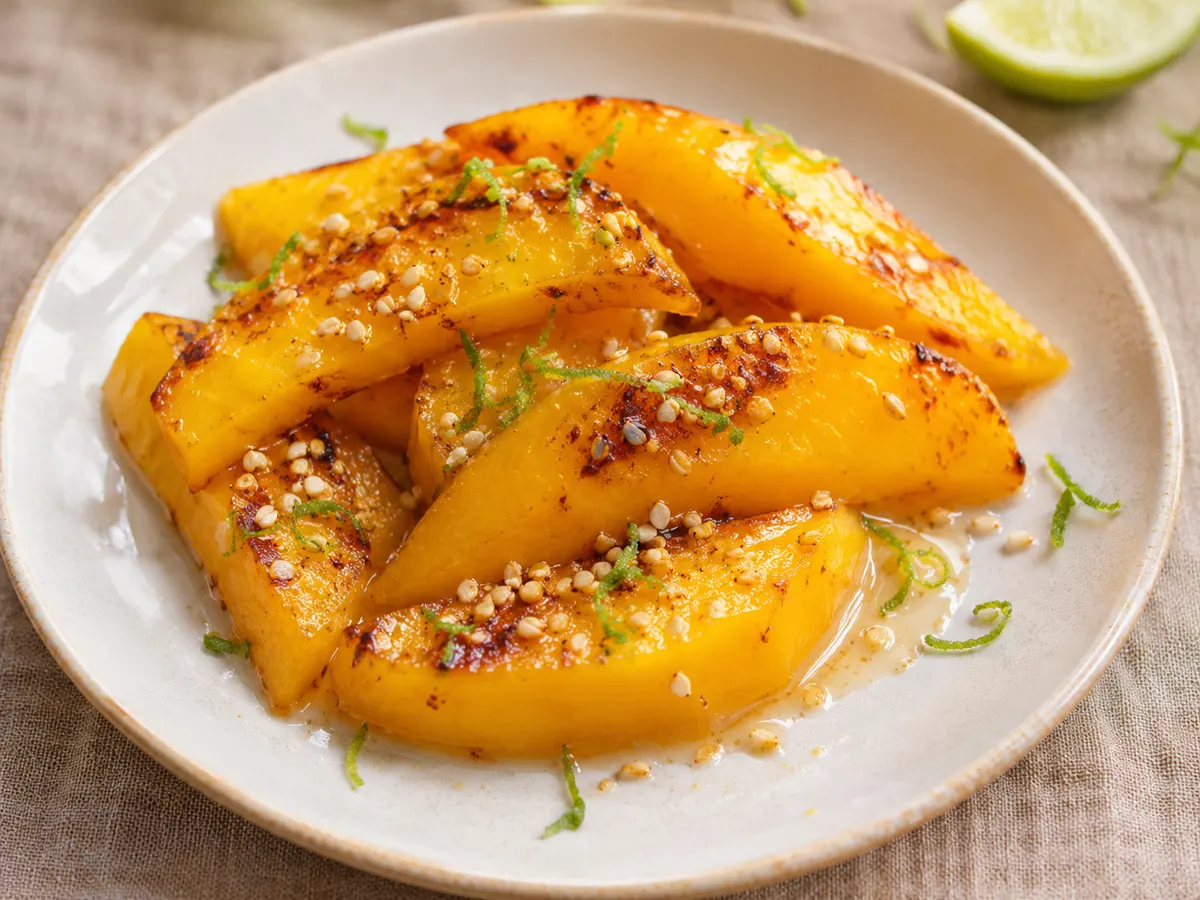
Ingredients
- 2 large ripe but firm mangoes, about 600g of flesh
- 1 lime
- 25g sesame seeds
- 15g sugar maximum
- 1 teaspoon neutral oil
- 2 tablespoons water
Preparation
Start by preparing the mangoes. Wash them carefully, then peel them using a peeler or a sharp knife. Detach the mango cheeks by following the pit, then cut each cheek into thick slices of about 1.5 cm. This thickness is ideal for the slices to maintain their shape during cooking without becoming soft. Set aside the mango slices on a plate while waiting to pan-fry them. This step takes about 5 minutes, ensuring a solid base for the rest of the recipe.
Move on to toasting the sesame seeds. In a dry pan, over medium heat, pour the 25g of sesame seeds. Toast them for about 2 minutes, stirring constantly so that they brown evenly and do not burn. As soon as they release a nutty aroma and turn a slightly golden color, remove them immediately from the heat and transfer them to a small bowl. It is important to remove them quickly to prevent them from blackening and developing bitterness. This quick step is essential for the taste.
Prepare to cook the mangoes. In the same pan (or another if you prefer), add the teaspoon of neutral oil and heat over medium heat. Arrange the mango slices in a single layer in the pan, without overlapping them, so that they can brown evenly. Cook each side for 2 to 3 minutes. The goal is to lightly brown them and warm them without reducing them to a compote. Watch the cooking carefully to maintain their shape.
Gently flip the mango slices with a spatula to cook the other side. Cooking should be gentle so that the mango becomes tender but remains firm in the center. If you wish to add sugar, now is the time. Sprinkle a maximum of 15g of sugar over the mango slices during the last minute of cooking, if the mango is not sweet enough for your taste. The sugar will lightly caramelize the surface without creating a thick syrup. This step takes about 5 minutes in total for both sides.
Once the mangoes are cooked and possibly lightly caramelized, remove the pan from the heat. Immediately add the 2 tablespoons of water and 1 tablespoon of freshly squeezed lime juice. Adding the liquid off the heat helps preserve the freshness and acidity of the lime, preventing it from evaporating or overcooking. Gently mix to coat the mango slices with this light and fragrant juice. The juice should be short and clear, not a dark or thick caramel.
For serving, arrange the warm mango slices on individual plates. Generously sprinkle the toasted sesame seeds over the mangoes. For an extra aromatic touch, you can grate a little lime zest (from the same lime used for the juice) just before serving. Serve this dessert warm; it is designed to be enjoyed at this temperature to reveal all its flavors.
Introduction
This contemporary dessert highlights mango, an emblematic fruit of Côte d'Ivoire, in a simple yet elegant preparation. The idea is to enhance its natural flavor and texture, without masking it with superfluous additions. Quick pan-frying concentrates the mango's aromas while maintaining a slight firmness, thus avoiding a compote-like texture. The balance between the sweetness of the fruit, the acidity of the lime, and the crunch of the sesame seeds creates a harmonious and surprising taste experience, far from traditional desserts. The mango is chosen ripe but firm to ensure perfect hold during cooking. The lime brings an essential note of freshness that contrasts with the richness of the fruit, while toasted sesame offers an additional textural and aromatic dimension, with its grilled notes. This dessert is designed to be served warm, allowing the flavors to fully express themselves without being altered by the cold. It is an invitation to rediscover mango from a new angle, in a creation that celebrates the richness of Ivorian products with a modern and delicate approach.
Cultural context
A contemporary creation based on products from the West African repertoire, proposed for this volume dedicated to Côte d'Ivoire. No exclusive regional origin or particular tradition is attributed to this formulation.
Institutional references FAO INFOODS: https://www.fao.org/infoods/infoods/tables-and-databases/faoinfoods-databases/en/ — Food composition and table for West Africa; no nutritional calculation for this formulation is announced. World Health Organization: https://www.who.int/teams/nutrition-and-food-safety/multisectoral-actions-in-food-systems/five-keys-to-safer-food-poster — Principles of cleanliness, food separation, cooking, and temperature control.
Tips
The quality of the mango is the cornerstone of this dessert. To choose the perfect mango, rely on its fragrance: a good mango should emit a fruity and sweet smell at its stem end. To the touch, it should be slightly soft, but not mushy, a sign that it is ripe without being overripe. Avoid mangoes with significant black spots or wrinkled skin, which could indicate an overripe or damaged fruit. If your mango is a bit firm, let it ripen for a few days at room temperature. A mango that is too green will not develop the sweet and fragrant flavors necessary for this dish, while a mango that is too soft will fall apart during cooking, losing its pleasant texture. Take the time to choose it well; it is the guarantee of a successful dessert.
Cooking the mangoes should be quick and controlled to prevent them from turning into a purée. The goal is to lightly brown them and warm them, while maintaining their shape and a certain firmness. Use a non-stick pan and do not overcrowd the pan; cook the slices in batches if necessary so that they are in a single layer. Medium heat is ideal for gentle caramelization without burning the fruit. Carefully monitor the color and texture: the slices should be tender but still slightly resistant under the spatula. If they start to soften excessively, remove them immediately from the heat. Cooking should not exceed 3 minutes per side to preserve the integrity of the mango.
The balance of flavors is essential in this dessert. Lime provides a refreshing acidity that counterbalances the natural sweetness of the mango. Feel free to adjust the amount of lime juice according to your preferences and the sweetness of your mango. If the mango is very sweet, a little more lime juice will enhance the whole. Lime zest, added at the end of preparation, brings an additional aromatic dimension, with its fragrant essential oils. Be sure to only take the green part of the zest to avoid the bitterness of the white part. This combination of juice and zest creates a complexity that elevates the dish beyond a simple pan-fried fruit.
For optimal storage, if you have leftovers, let the dessert cool completely at room temperature, then transfer it to an airtight container and place it in the refrigerator within two hours of preparation. It will keep for 24 to 48 hours. However, this dessert is at its peak when served warm and freshly prepared. The flavors are more vibrant and the textures more pleasant. Toasted sesame will lose its crunch over time in contact with the mango's moisture. If you plan to store it, it is best to add the sesame and lime zest just before serving, even if the mango has been gently reheated in a pan or microwave.
Planning
The selection of the mango is crucial for the success of this dessert. Opt for mangoes that are ripe, meaning fragrant and slightly soft to the touch, but still firm. A mango that is too soft would turn into a purée when cooked, while a mango that is too green would lack flavor and sweetness. Peeling should be done carefully to avoid wasting flesh, and the cheeks cut into slices about 1.5 cm thick ensure even cooking and a beautiful presentation. The regularity of the slices is essential so that all pieces cook uniformly and reach the same tenderness without falling apart. Toasting the sesame is a quick but fundamental step that intensifies its aroma and crunch. Watch the seeds carefully in the dry pan, as they burn quickly. Once golden and fragrant, remove them immediately from the heat and set aside so they do not continue to cook with the residual heat of the pan. The addition of sugar is optional and should be adjusted according to the natural sweetness of the mango and your preferences. If you decide to use it, incorporate it at the end of cooking to prevent it from caramelizing too quickly and masking the delicate flavor of the fruit. The lime juice, added off the heat, preserves its freshness and acidity, bringing a bright final touch.
Nutrition notes
This dessert highlights mango, a fruit rich in nutrients. It is known for its abundance of vitamins, especially vitamin C, which contributes to the proper functioning of the body, and vitamin A, essential for vision. Mango also provides dietary fiber, promoting good digestion. Sesame, for its part, is an interesting source of minerals like calcium and magnesium, as well as plant proteins and healthy fats. The neutral oil used for cooking is minimal, and sugar is optional and sparingly dosed, allowing you to fully enjoy the natural flavors of the fruit without excess. Lime adds an extra touch of vitamin C and welcome freshness. It is a dessert that combines gustatory pleasure with a balanced nutritional intake.
Conclusion
A simple and refined dessert, where mango reveals all its splendor. The freshness of lime and the crunch of sesame sublimate this emblematic fruit, offering a delicate and memorable taste experience.
Enjoy your meal
Enjoy your meal!