Cocoa and Cashew Rice Cream
A creamy and comforting dessert, blending the sweetness of rice with coconut milk, the intensity of cocoa, and the crunch of roasted cashews.
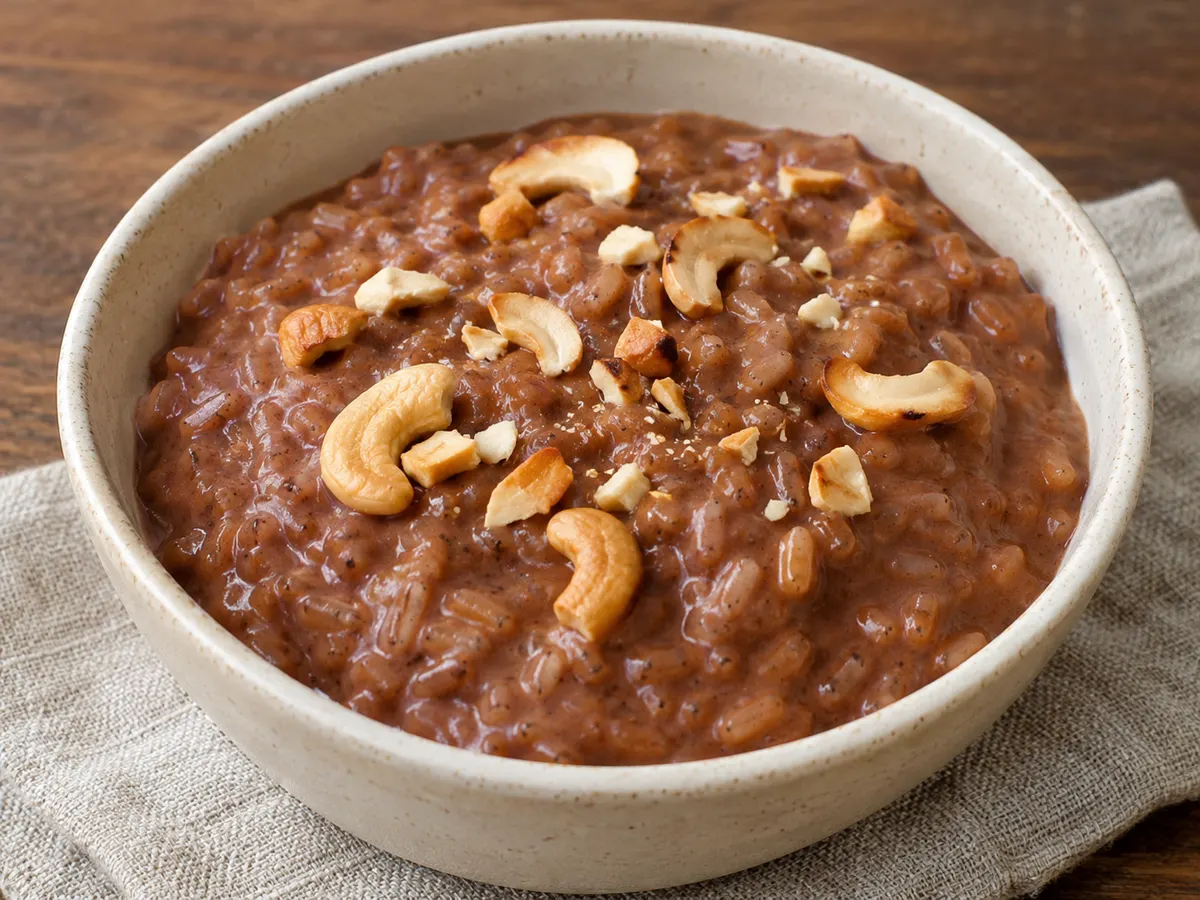
Ingredients
- 120 g round rice
- 500 ml unsweetened coconut milk
- 400 ml water
- 20 g unsweetened cocoa powder
- 35 g sugar
- 40 g unsalted cashews
- 1 small pinch of salt
Preparation
In a heavy-bottomed saucepan, combine the round rice, unsweetened coconut milk, water, and the small pinch of salt. Bring the mixture to a gentle simmer over medium heat. Once the liquid begins to simmer, reduce the heat to minimum and cook for 30 to 40 minutes. It is essential to stir frequently, every 3 to 5 minutes, to prevent the rice from sticking to the bottom of the pot and to ensure even cooking, until the rice is tender and the liquid has thickened to form a smooth and cohesive cream. Check the tenderness of the rice by tasting a grain; there should be no firm center.
While the rice is cooking, prepare the cocoa. In a small bowl, sift the unsweetened cocoa powder to avoid lumps. Take about 50 ml of the hot liquid from the rice pot and pour it over the sifted cocoa. Mix vigorously with a small spoon or a miniature whisk until you get a smooth and homogeneous paste, without any lumps.
Once the rice is cooked and the cream has thickened, incorporate the diluted cocoa paste into the saucepan. Mix well so that the cocoa is evenly distributed and colors the entire cream an intense chocolate brown. Then add the sugar. Continue cooking over very low heat for an additional 5 minutes, stirring constantly. This allows the sugar to dissolve completely and the cocoa flavors to fully infuse into the cream, while maintaining the desired consistency. The cream should remain smooth and unctuous.
During the last few minutes of the cream's cooking, prepare the cashews. In a small dry pan, roast the unsalted cashews over medium heat for about 3 minutes. Stir them constantly so they brown evenly without burning. They should release a nutty aroma and take on a light golden color. Once roasted, remove them immediately from the pan to stop cooking and let them cool for a few moments. This step intensifies their flavor and gives them an irresistible crunch.
Once the cashews have cooled, coarsely crush them. You can do this with a knife or by placing them in a freezer bag and gently hitting them with a rolling pin. The goal is to obtain pieces of different sizes, which will add an interesting texture to the cream. Then divide the hot rice cream into four small individual bowls. Let only the strongest steam dissipate for a few minutes, then quickly place the small portions in the refrigerator, without waiting an hour on the table. It is important not to cover them hermetically while they are hot to avoid condensation.
After initial cooling to room temperature, place the bowls of rice cream in the refrigerator for at least 2 hours. This resting time is essential for the cream to set to its final consistency and for the flavors to fully develop. Before serving, generously sprinkle each portion with roasted and crushed cashew pieces. The cream should be well chilled, with a firm but still creamy texture. Store leftovers in the refrigerator in an airtight container and consume within 24 hours for optimal quality, ensuring that the internal temperature does not exceed 4°C.
Introduction
This cocoa and cashew rice cream is a contemporary creation inspired by Ivorian flavors, offering a rich texture and a balanced aromatic profile. Round rice, chosen for its ability to release starch and create a creamy texture, is the pillar of this preparation, while coconut milk provides a plant-based creaminess and a slight exotic note, without weighing down the palate. It is a dessert that aims to be both gourmet and elegant, perfect for ending a meal on a sweet and fragrant note. The addition of unsweetened cocoa powder gives this cream a chocolatey depth, without the excess sugar that might be found in other preparations. This subtle bitterness is balanced by the right amount of sugar, allowing the flavors to fully express themselves. Cashew nuts, roasted just before being crushed, bring an essential textural dimension and a toasted flavor that contrasts pleasantly with the sweetness of the cream. This dessert is designed to be served chilled, offering a refreshing sensation and a complete taste experience, where each bite reveals a harmony of textures and flavors.
Cultural context
A contemporary creation using products from the West African repertoire, proposed for this volume dedicated to Côte d’Ivoire. No exclusive regional origin or particular tradition is attributed to this formulation.
Institutional References FAO INFOODS: https://www.fao.org/infoods/infoods/tables-and-databases/faoinfoods-databases/en/ — Food composition and table for West Africa; no nutritional calculation of this formulation is announced. World Health Organization: https://www.who.int/teams/nutrition-and-food-safety/multisectoral-actions-in-food-systems/five-keys-to-safer-food-poster — Principles of cleanliness, food separation, cooking, and temperature control.
Tips
For a perfectly smooth and lump-free rice cream, especially with cocoa, the sifting step is non-negotiable. Cocoa powder tends to form clumps when it comes into direct contact with hot liquid. By sifting it first, you break up these small clumps, which greatly facilitates its dissolution. Then, diluting it in a small amount of hot liquid taken from the rice cooking creates a homogeneous paste before incorporating it into the main mass. This method guarantees a uniform color and a silky texture, without unpleasant surprises under the tooth, and ensures that each bite offers a pleasant and flawless taste experience. Take the time to mix this paste well before adding it to the rice.
Cooking the round rice is the soul of this cream. To achieve an ideal texture, neither too liquid nor too compact, the secret lies in patience and constant stirring. Round rice gradually releases its starch, which naturally thickens the liquid. Low heat is imperative to prevent the rice from sticking to the bottom of the pot and to allow for even cooking. Stirring frequently, especially towards the end of cooking, prevents the formation of a crust at the bottom and ensures that the starch is evenly distributed, creating that characteristic creaminess. The rice should be tender to the core, without resistance, but the grains should remain distinct and not reduced to a puree. If the cream seems too thick, you can add a small amount of hot water or coconut milk to adjust the consistency.
Roasting cashews is a simple step that radically transforms their flavor and texture. By dry-roasting them in a pan, you enhance their natural aromas, giving them a depth and a toasted note that contrasts wonderfully with the sweetness of the cream. However, roasting requires careful monitoring as cashews can go from perfectly golden to burnt in an instant. Use a heavy-bottomed pan and stir them constantly to ensure even browning. As soon as they release a nutty aroma and take on a light golden hue, remove them immediately from the pan to stop cooking. Let them cool completely before crushing them, as they will become crispier as they cool.
To cool this cooked rice cream, divide it promptly among small, shallow bowls. Let only the strongest steam escape, then refrigerate the portions without leaving them on the worktop for an hour. Avoid keeping the whole hot mixture in a thick saucepan, where it would cool slowly. Protect the bowls without sealing a large, very hot mass, then cover them once lukewarm. Allow about two hours in the refrigerator for the desired consistency. Refrigerate the rice within two hours of cooking and preferably consume it within twenty-four hours. Keep the chopped cashews separate and add them when serving to retain their crunch.
Planning
The success of this rice cream relies on a few key points, starting with the choice of rice. Round rice is essential to achieve the desired texture, as it releases enough starch to naturally thicken the cream. A quick rinse of the rice is optional; if you want a creamier texture, do not rinse it to preserve the surface starch. Slow cooking over low heat is also crucial. It is important to stir regularly, especially towards the end of cooking, to prevent the rice from sticking to the bottom of the pot and to ensure even heat distribution, guaranteeing uniform cooking and a perfectly creamy texture. Unsweetened coconut milk is an essential ingredient that brings richness and a distinct flavor to the cream. It is important not to substitute it with a light version, as this would alter the final texture and taste of the dessert. Cocoa powder should be sieved before being incorporated to avoid lumps, ensuring a smooth and homogeneous cream. Roasting the cashews is a simple step that makes all the difference in terms of flavor and crunch; be sure to watch them carefully to prevent burning. Finally, cooling time is essential for the cream to set to its final consistency and for the flavors to fully develop.
Nutrition notes
Rice and sugar provide carbohydrates, while coconut milk and cashews contribute fat. Coconut milk contains saturated fatty acids and is not nutritionally equivalent to cow’s milk. Cashews also provide some plant protein. No precise calorie value is given for this dessert without calculating the actual products and portions served. Take the added sugar into account and tell diners that the dessert contains cashews if they need information about this allergen.
Conclusion
This cocoa and cashew rice cream is a modern and gourmet dessert, perfect for a sweet end to a meal. Its creamy texture, balanced flavors, and crunch make it a delicious and comforting experience.
Enjoy your meal
Enjoy your meal!