Small coconut tapioca puddings
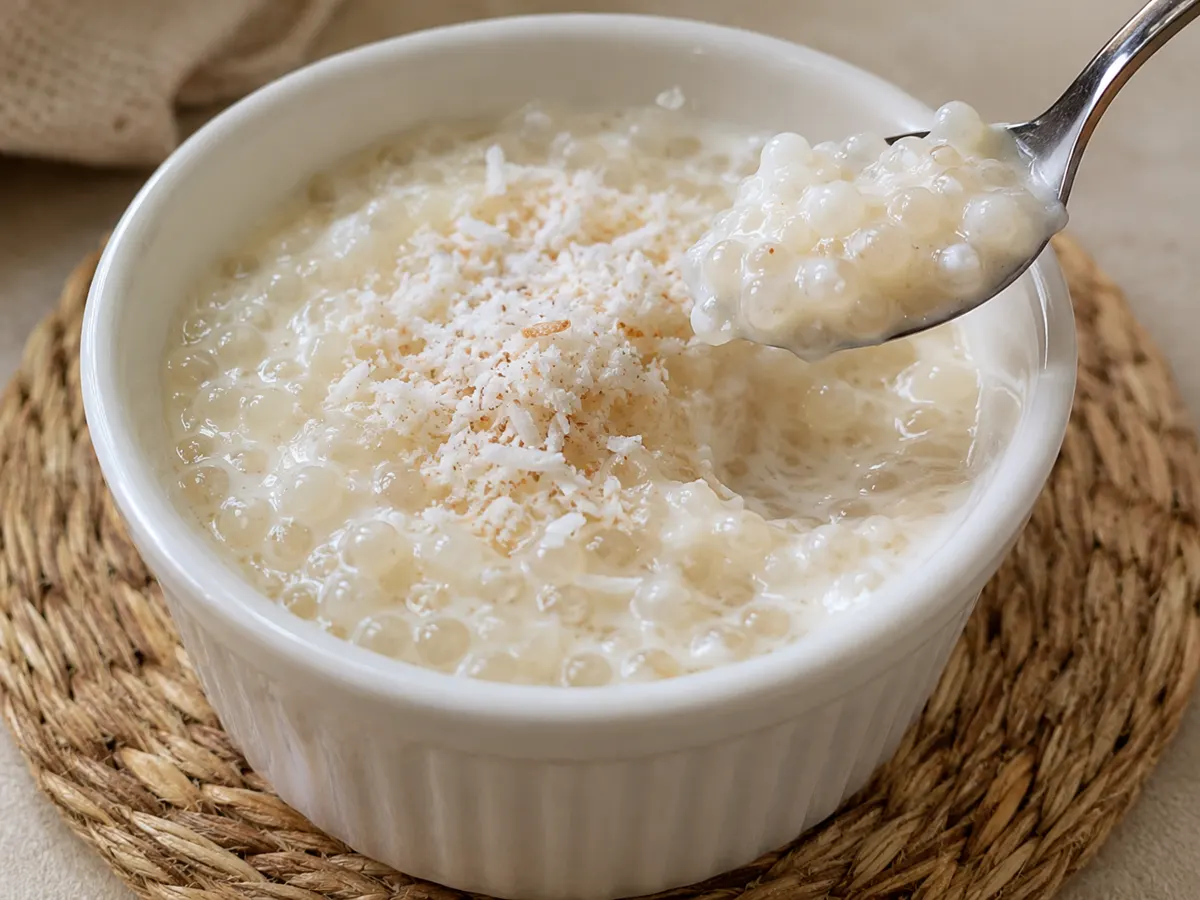
Discover a contemporary Ivorian sweet treat: creamy coconut tapioca puddings, delicately flavored with vanilla.
Ingredients
- 90 g small food-grade tapioca pearls
- 400 ml unsweetened coconut milk
- 400 ml water
- 35 g sugar
- 25 g unsweetened shredded coconut
- 1 small vanilla bean
- 1 small pinch of salt
Preparation
In a heavy-bottomed saucepan, combine the tapioca pearls, coconut milk, water, sugar, and a pinch of salt. Split the vanilla bean in half lengthwise and scrape out the seeds with the tip of a knife. Add the seeds and the split bean to the mixture. Follow the instructions for the specific tapioca pearls used: if they require pre-soaking, do so according to the package and add this time to the planned cooking duration.
Bring the mixture to a gentle boil over medium heat, stirring constantly with a wooden spatula to prevent the pearls from sticking. Once boiling, reduce the heat to low and continue cooking for 20 to 25 minutes, stirring very regularly. The goal is to maintain a gentle simmer without the bottom sticking. Constant stirring helps the pearls cook evenly and prevents lumps, ensuring a smooth and homogeneous pudding texture.
During cooking, observe the tapioca pearls carefully. They should become translucent and swell. It is imperative that there is no white or opaque center left, which indicates that the starch is fully cooked. If after 25 minutes the pearls are not entirely translucent, extend the cooking for a few more minutes, adding a splash of hot water or coconut milk if necessary to maintain a fluid consistency. The final texture should be that of a creamy pudding, not too thick, as it will continue to thicken as it cools.
Once the tapioca pearls are perfectly translucent and tender, remove the saucepan from the heat. Remove the empty vanilla bean from the pudding. Immediately stir in 15 g of unsweetened shredded coconut into the hot pudding. Mix gently to distribute the coconut evenly. This step adds a subtle texture and enhances the coconut flavor, while allowing the coconut to hydrate slightly in the residual heat of the pudding, thus releasing its aromas.
Pour the hot pudding into four shallow, heat-resistant ramekins. Allow only the strongest steam to dissipate for a few minutes, then quickly refrigerate the small portions. Do not let a large mass cool slowly on the table and do not exceed two hours out of the cold after cooking. Protect the containers without enclosing a still-burning mass; cover them once lukewarm and place them so that air can circulate around them.
Once the ramekins are lukewarm, cover them individually with plastic wrap and place them in the refrigerator for at least 2 hours to cool completely and for the pudding to set to its final consistency. Before serving, sprinkle the remaining 10 g of shredded coconut on top of each pudding. The pudding should be consumed fresh, with a spoon, and stored in the refrigerator within 2 hours of preparation, for a maximum of 2 to 3 days.
Introduction
This dessert, though simple in appearance, is a celebration of delicate textures and flavors. It is part of an effort to renew Ivorian pastry, exploring familiar ingredients from a new angle. The use of tapioca, derived from cassava, is a nod to the importance of this root in the local diet, but here transformed into fine pearls for a refined taste experience. The goal is to create a smooth and light pudding, without artifice, where each ingredient plays an essential role in the balance of taste and consistency. Coconut and vanilla bring exotic and warm notes, inviting a sensory journey. This pudding is designed to be savored with a spoon, offering a melting and pearly texture, far from gelatins or egg coagulations that would alter its purity. It is an invitation to rediscover tapioca, not as a simple thickener, but as the main actor in an elegant and comforting dessert, perfect for ending a meal on a sweet and fragrant note. The simplicity of its preparation hides a richness of flavors that will pleasantly surprise palates.
Cultural context
A contemporary creation based on West African ingredients, proposed for this volume dedicated to Côte d’Ivoire. No exclusive regional origin or particular tradition is attributed to this formulation.
Institutional references FAO INFOODS: https://www.fao.org/infoods/infoods/tables-and-databases/faoinfoods-databases/en/ — Food composition and table for West Africa; no nutritional calculation of this formulation is announced. World Health Organization: https://www.who.int/teams/nutrition-and-food-safety/multisectoral-actions-in-food-systems/five-keys-to-safer-food-poster — Principles of cleanliness, food separation, cooking, and temperature control.
Tips
For perfect tapioca cooking, the key is patience and observation. The cooking times indicated on packages are averages, and pearl size can vary. It is therefore essential to monitor the transformation of the pearls: they must become entirely translucent, with no white spot in the center. If you notice that the mixture becomes too thick before the pearls are cooked, do not hesitate to add a little more hot water or coconut milk, spoon by spoon, to maintain a fluid consistency and allow the pearls to cook through. Constant stirring is also vital to prevent the pearls from sticking to the bottom of the pot and burning, which would irrevocably alter the taste and texture of the pudding. Gentle and prolonged cooking is preferable to fast and intense cooking.
The vanilla bean is a precious ingredient that can be reused. After removing the bean from the pudding, rinse it gently and let it air dry completely. Once dry, you can place it in a jar of powdered sugar to create your own homemade vanilla sugar, or add it to other preparations such as compotes, creams, or infusions to give them a subtle fragrance. This tip maximizes the use of this expensive ingredient and avoids waste, while adding a natural aromatic touch to other dishes. Make sure it is perfectly dry before storing it to prevent mold.
Rapid cooling is a step for food safety, especially with coconut milk-based desserts. After pouring the pudding into ramekins, it is important to let it cool to room temperature for about 30 minutes, but no more than two hours. Then, it must be refrigerated without delay. To speed up cooling, you can place the ramekins in an ice water bath before putting them in the refrigerator. This method quickly brings the pudding to a safe temperature, limiting bacterial proliferation and ensuring optimal preservation of the dessert's freshness and flavor. Never leave a coconut milk-based dish at room temperature for an extended period.
The final presentation of the pudding is simple but elegant. The shredded coconut added just before serving not only provides a pleasant visual touch but also a slightly crunchy texture that contrasts with the softness of the pudding. For an even more refined touch, you can lightly toast the remaining shredded coconut in a dry pan over low heat for a few minutes, until it is lightly golden and fragrant. Let it cool completely before sprinkling it over the puddings. This will intensify its taste and aroma, offering an additional dimension to this already delicious dessert. Be careful not to burn it, as it will brown quickly.
Planning
The success of this pudding relies on the quality of the tapioca pearls and careful cooking. It is crucial to use small, processed food-grade tapioca pearls, not tapioca flour or raw cassava root. The manufacturer's instructions on the package regarding cooking time are a good starting point, but visual observation remains the best indicator. The pearls should become translucent, with no hard or opaque center, which indicates they are perfectly cooked and tender. Gradually mixing the liquids and stirring regularly are essential to prevent the pearls from sticking to the bottom of the pot and to ensure even cooking. Sugar and vanilla are added from the beginning to infuse the pearls with their aromas during cooking. The amount of liquid may require a slight adjustment at the end of cooking, as absorption varies by tapioca brand. The goal is to achieve a creamy pudding consistency that will thicken slightly as it cools. Rapid cooling is paramount for food safety, especially with dairy products like coconut milk.
Nutrition notes
This coconut tapioca pudding offers an energy source thanks to the complex carbohydrates of tapioca, which is an easily digestible starch. Coconut milk provides healthy lipids, contributing to a feeling of satiety and supplying medium-chain fatty acids. Shredded coconut adds dietary fiber, beneficial for digestion, as well as minerals. Sugar is present in measured quantities to balance flavors without excess. It is a dessert that, consumed in moderation, can be part of a balanced diet, offering gustatory pleasure without heaviness.
Conclusion
These small coconut tapioca puddings are an invitation to sweetness. Simple and elegant, they celebrate Ivorian flavors with a contemporary touch, offering a comforting and delicately fragrant dessert.
Enjoy your meal
Enjoy your meal!