Pan-fried plantains with sesame and onions
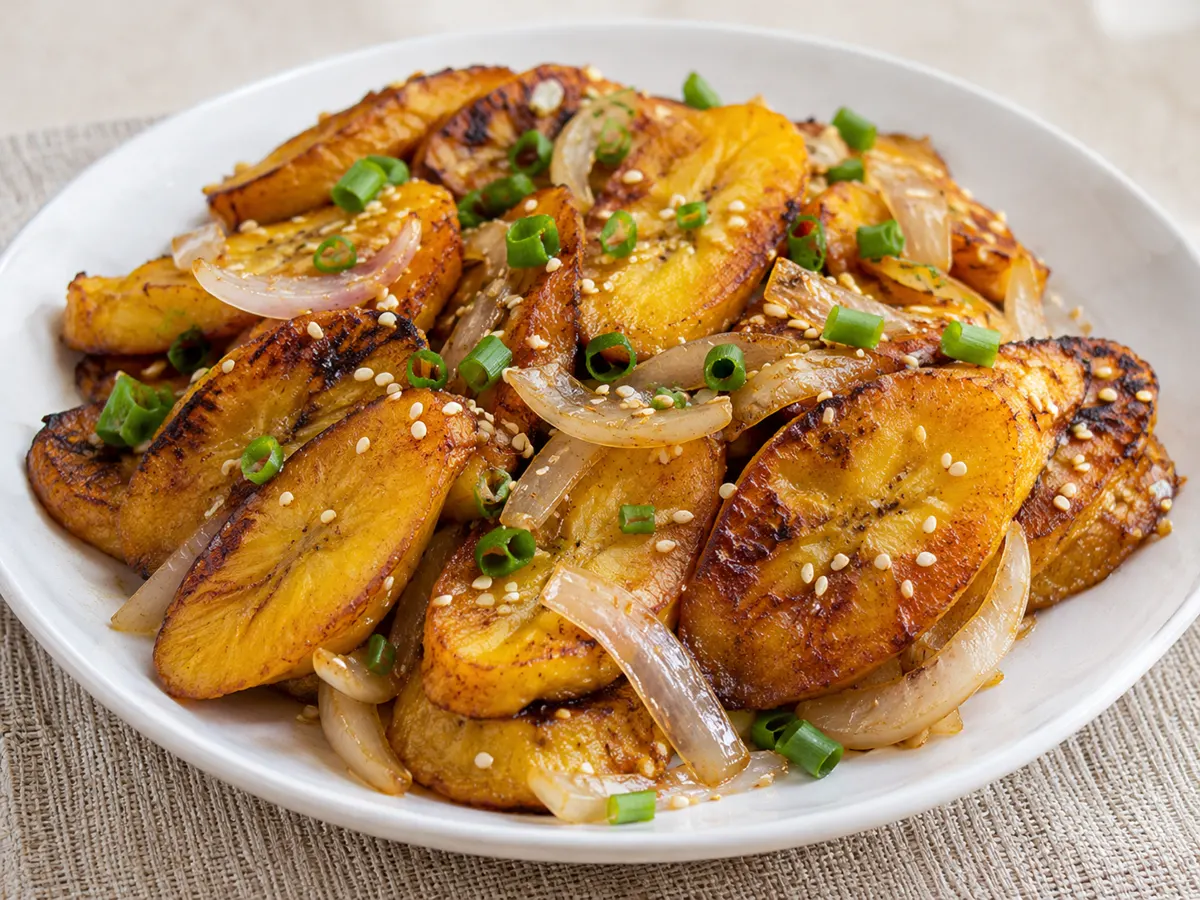
Pan-fried ripe plantains, melting onions, and toasted sesame: a contemporary variation with familiar textures and cooking methods.
Ingredients
- 4 ripe but firm plantains
- 2 onions
- 30 g sesame seeds
- 2 tablespoons oil
- 1 tablespoon lime juice
- 100 ml water (reserve)
- 10 g chives
- 2 g salt maximum
- Black pepper to taste
Preparation
Peel the onions and slice them thinly. Wash the chives, remove damaged parts, and chop them. Prepare the plantains by peeling them, then cut them into regular oblique slices. Separately measure the two tablespoons of oil to distribute them between the onions and the fruit. Also prepare the lime juice and a small container to reserve the toasted sesame.
Place the sesame in a dry pan and heat gently for about two minutes. Stir very regularly to distribute the heat. The seeds should become lightly golden and release a toasted aroma, without blackening. Immediately pour them into the reserved container: the heat from the bottom of the pan would continue to color them even after turning off the heat. Let them wait aside during the subsequent cooking.
Pour one tablespoon of oil into the pan and add the onions. Cook them for twelve to fifteen minutes over medium-low heat, stirring regularly. They should become tender, with a slight coloration. If they brown before softening, add one or two spoonfuls of the reserved water and reduce the heat. Then set them aside on a plate; do not leave a thick layer at the bottom while cooking the plantains.
Add the second tablespoon of oil to the pan. Arrange the plantain slices in a single layer and let them cook over medium heat. Flip them when one side becomes golden and detaches easily, then continue on the other side. Count about eight to twelve minutes depending on their thickness and ripeness. If the center remains firm while the surface colors quickly, lower the heat and add a spoonful of water, covering briefly.
Check the tenderness of a slice by splitting it with a fork. When the plantains are cooked through to the center, return the onions to the pan and add some of the salt and black pepper. Gently lift the slices with a spatula to distribute the onion strips, without crushing them. Reheat the mixture for one to two minutes if the onions have cooled while waiting.
Turn off the heat, add the lime juice, toasted sesame, and chives. Mix carefully one last time, then taste a small portion to adjust the salt within the specified limit. Serve immediately, distributing the onions and seeds among the four portions. The pan-fried dish should remain slightly liquid, with tender slices, lightly golden sides, and seeds still perceptible to the bite.
Introduction
Ripe plantain and onion both become sweeter when cooked, but they don't require the same heat or time. In this pan-fried dish, the onions are first slowly tenderized and set aside. The plantain slices then brown without being covered by a moist topping. Toasted sesame joins the dish at the end of cooking to retain its crunch. A few drops of lime juice and chives provide a livelier finish, without a heavy sauce.
This contemporary variation uses a small, measured amount of oil. It does not replicate a classic deep-fried alloco version and does not claim a particular regional origin. The choice of fruit matters more than seeking a very dark color: a yellow plantain with dark spots, still firm to the touch, can become tender while keeping clean slices. A completely soft fruit is difficult to move with a spatula; a green plantain requires a different preparation and will not yield the same sweetness.
Cultural context
A contemporary creation based on West African ingredients, presented for this volume dedicated to Côte d’Ivoire. No exclusive regional origin or particular tradition is attributed to this formulation.
Institutional references FAO INFOODS: https://www.fao.org/infoods/infoods/tables-and-databases/faoinfoods-databases/en/ — Food composition and table for West Africa; no nutritional calculation for this formulation is announced. World Health Organization: https://www.who.int/teams/nutrition-and-food-safety/multisectoral-actions-in-food-systems/five-keys-to-safer-food-poster — Principles of cleanliness, food separation, cooking, and temperature control.
Tips
The browning of ripe plantain can progress quickly because its flesh contains sugars. Very high heat does not guarantee a better crust: it can result in a bitter surface while the center remains firm. Adjust the heat as soon as the first sides take on a deep golden hue. If some black marks appear, remove the affected pieces and carefully wipe away residues before continuing with a less hot pan.
For cooking in multiple batches, distribute the second tablespoon of oil among the batches instead of pouring new oil each time. Reserve the first slices in a warm dish, without stacking them heavily. The common finishing with onions then allows the portions to be reheated to the same temperature. A wide spatula is more suitable than narrow tongs, which can tear already very tender flesh.
Sesame is an allergen that must be announced to concerned guests. Removing it from the surface after serving is not enough to make the preparation suitable for an allergic person. If you are preparing another version without sesame, use clean equipment and avoid contact with toasted seeds. This modification should be decided before cooking. For the recipe described here, the seeds are part of the seasoning and the final texture.
The pan-fried dish is best when the plantains have just been combined with the onions. However, you can prepare the onions in advance, cool them quickly, and then keep them in the refrigerator. Reheat them completely before finishing. Leftovers should be refrigerated within two hours and consumed within twenty-four to forty-eight hours. Reheat gently to avoid burning an already golden surface, and add fresh chives only at serving if you have reserved some.
Planning
Wash the outside of the plantains before peeling them. Score the skin lengthwise and peel it off with your fingers or the tip of a knife, without cutting deeply into the flesh. Cut oblique slices about one and a half centimeters thick. Regular thickness facilitates even cooking. Blot the surfaces if they are damp, to avoid oil splatters when they hit the pan.
Choose a wide pan with a bottom that allows the slices to be arranged in a single layer. A non-stick pan in good condition facilitates cooking with little oil. If the diameter is insufficient, cook in two batches rather than stacking the pieces. Keep the indicated water nearby: it serves as a reserve to tenderize the core or protect the onions, without having to be poured entirely. The sesame is toasted separately, as it can burn before the plantains are ready.
Nutrition notes
Plantain primarily provides carbohydrates. Sesame contributes to lipid intake, and onions diversify the vegetables on the plate, but this side dish alone does not constitute a complete meal. The amount of protein in the menu will depend on the other foods served. The oil is measured to maintain a formulation reference, without attributing a caloric value or an uncalculated dietary qualifier to the dish. The ripeness and size of the fruits modify the portions actually consumed.
Conclusion
Enjoy your meal: serve the plantains while still hot, when their core is tender and the sesame retains its crunch. A small amount of lime juice is enough to enhance the onions without masking the sweetness of the fruit or turning the pan-fried dish into a soggy preparation.
Enjoy your meal
Enjoy your meal!