Spinach and Attiéké Rolled Omelette
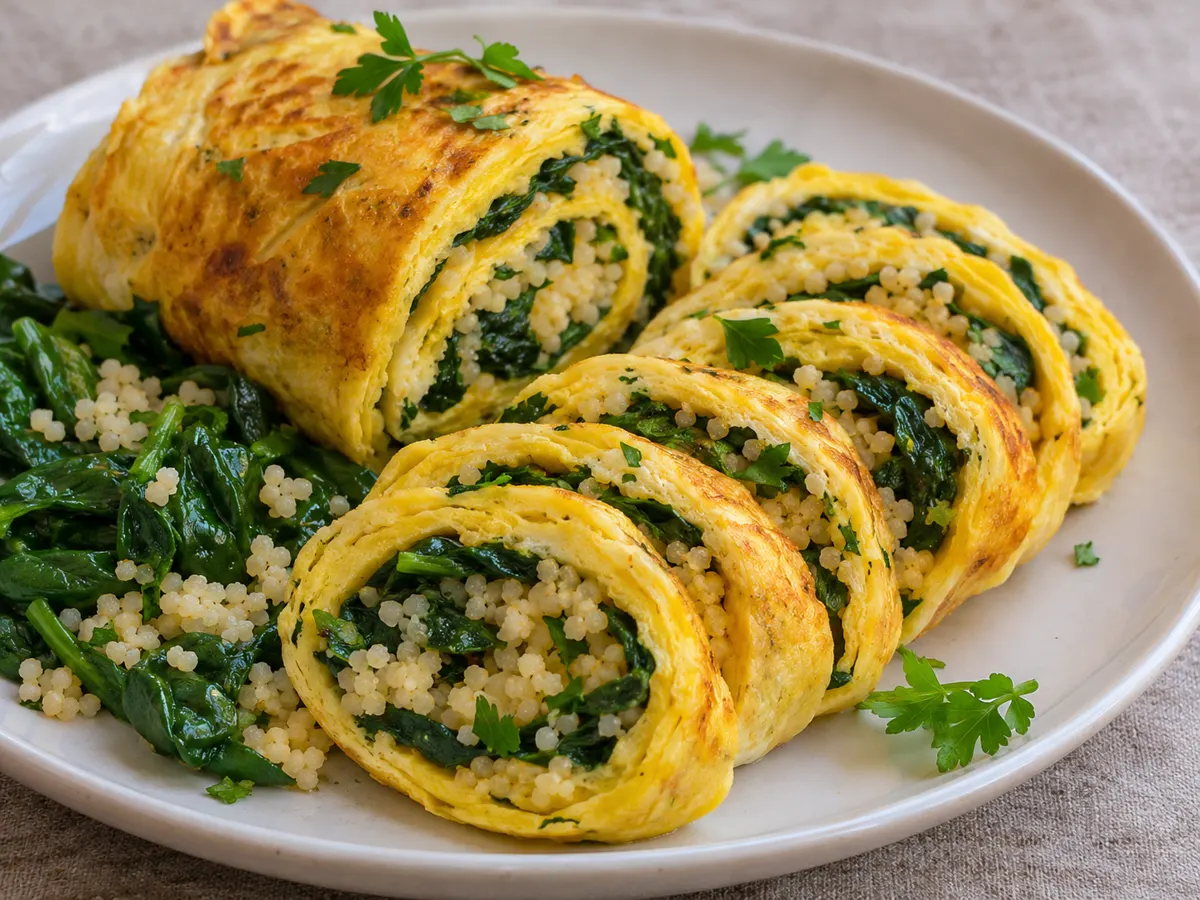
A thin and fluffy omelette, filled with fresh spinach and attiéké, carefully rolled for an elegant and flavorful main dish.
Ingredients
- 6 eggs
- 250 g cooked attiéké
- 250 g fresh spinach
- 1 small onion
- 2 tablespoons oil
- 2 tablespoons water
- 10 g parsley
- 3 g salt maximum
- Black pepper to taste
Preparation
Prepare the spinach filling: Wash and meticulously drain the fresh spinach. Peel and finely slice the small onion. In a pan, heat one tablespoon of oil over medium heat. Sauté the sliced onion for about 5 minutes, until translucent and slightly softened. Then add the drained spinach and cook for 3 minutes, stirring regularly, until wilted. Remove from heat and press very firmly in a colander to remove any excess water.
Prepare the attiéké: If your attiéké is not already cooked and hot, follow the package instructions to reheat it. The goal is to obtain well-separated and hot attiéké grains. Once reheated, gently fluff it with a fork so that it is light and airy. Keep the attiéké warm while you prepare the omelette, so that it retains its ideal texture and temperature for rolling. Cold or compact attiéké would make rolling more difficult.
Prepare the omelette mixture: Preheat your oven to 180 °C (thermostat 6). In a large bowl, crack the 6 eggs. Add the 2 tablespoons of water, salt (up to 3 g), and finely chopped fresh parsley. Season with pepper to your taste. Vigorously beat the mixture with a whisk for 2 to 3 minutes, until you obtain a homogeneous and slightly frothy preparation. Incorporating air will make the omelette lighter and easier to roll.
Cook the omelette: Line a rectangular baking sheet of about 25x30 cm with parchment paper. Lightly brush the paper with one tablespoon of oil to prevent the omelette from sticking. Pour the omelette mixture onto the parchment paper and spread it evenly to obtain a thin layer. Bake for 10 to 12 minutes. The omelette should be set and lightly golden on the edges, with a firm but flexible center, reaching an internal temperature of 71 °C. Do not overcook it, as it would become brittle.
Fill and roll: Once the omelette is cooked, remove it from the oven and let it cool for 2 to 3 minutes on the baking sheet. Meanwhile, mix the drained spinach with the hot attiéké. Spread this filling evenly over the entire surface of the warm omelette, leaving a small border free on one of the long sides. Using the parchment paper, gently roll the omelette onto itself, starting from the most filled side, to form a tight and regular roll. Be careful not to incorporate the paper into the roll.
Rest and serve: Once the omelette is rolled, let it rest for 5 minutes, still wrapped in parchment paper, on the baking sheet. This resting time allows the flavors to diffuse and the omelette to hold its shape well. Gently unroll it, then cut it into 4 equal parts or slices of about 2-3 cm thick. Serve the spinach and attiéké rolled omelette hot or warm, without delay, to fully enjoy its fluffy texture and aromas. Storage beyond two hours at room temperature is not recommended.
Introduction
This spinach and attiéké rolled omelette is a contemporary proposal that reinterprets familiar flavors of Ivorian cuisine. The idea is to present attiéké, this beloved cassava couscous, in a new form, associating it with the sweetness of spinach and the richness of eggs. It is a way to explore the versatility of local ingredients and create dishes that surprise with their originality while remaining rooted in a certain authentic taste. The absence of cheese or milk in this recipe highlights the purity of flavors and the delicate texture of the omelette. The conception of this dish is part of a culinary creativity approach, seeking to offer new taste experiences. The omelette, baked in the oven, is intentionally thin to facilitate rolling and allow the flavors of spinach and attiéké to fully express themselves with each bite. Fresh parsley brings a herbaceous note that balances the whole. It is a dish that can be served warm, ideal for a light lunch or a refined dinner, and which testifies to the richness and innovative capacity of Ivorian gastronomy.
Cultural context
A contemporary creation based on West African ingredients, proposed for this volume dedicated to Côte d’Ivoire. No exclusive regional origin or particular tradition is attributed to this formulation.
Institutional References FAO INFOODS: https://www.fao.org/infoods/infoods/tables-and-databases/faoinfoods-databases/en/ — Food composition and table for West Africa; no nutritional calculation for this formulation is announced. World Health Organization: https://www.who.int/teams/nutrition-and-food-safety/multisectoral-actions-in-food-systems/five-keys-to-safer-food-poster — Principles of cleanliness, food separation, cooking, and temperature control. FoodSafety.gov: https://www.foodsafety.gov/food-safety-charts/safe-minimum-internal-temperatures — Institutional cooking temperature guidelines; durations depend on products and equipment. UNESCO: https://ich.unesco.org/fr/RL/les-savoir-faire-lies-a-la-fabrication-de-l-attieke-en-cote-d-ivoire-02086 — Context of attiéké manufacturing know-how inscribed in 2024; this reference does not certify the recipe's combinations.
Tips
To achieve a perfectly rolled omelette, precise cooking is paramount. An omelette that is too thick will be difficult to fold without cracking, while an omelette that is too dry or overcooked will become brittle. Aim for a uniform thickness across the baking sheet and carefully monitor the cooking time. The center should be just set, but still slightly soft to the touch. If the omelette seems too moist after the indicated time, extend cooking by a minute or two, but no more. A slight golden color on the edges is a good indicator of doneness. Using good quality parchment paper, lightly oiled, will greatly facilitate easy unmolding and smooth rolling.
Draining the spinach is a step that absolutely must not be overlooked. Waterlogged spinach would make the filling soggy, which would soften the omelette and make it difficult to roll. After cooking them, press them firmly in a colander or even between two sheets of paper towel to extract as much moisture as possible. You can even press them with the back of a spoon. This attention will ensure a flavorful filling and a pleasant texture for the entire dish. A dry filling also allows for better adhesion to the omelette when rolling.
Serving temperature is essential to fully appreciate this rolled omelette. It is best hot or warm, as the flavors of spinach and attiéké are more pronounced and the texture of the omelette is fluffier. If you prepare the dish in advance, it is best to gently reheat it in the oven at a low temperature (around 150 °C) for a few minutes before serving, rather than in the microwave which could alter the texture of the omelette. Avoid letting it cool completely before serving, as it would lose its fluffiness and appeal. The freshness of the ingredients is also a guarantee of success.
For optimal storage of leftovers, if any, it is imperative to refrigerate them quickly, ideally within two hours of preparation. Place the rolled omelette slices in an airtight container and store them in the refrigerator for a maximum of one to two days. Beyond that, taste quality and food safety could be compromised. Before consuming, gently reheat in the oven or in a pan over low heat to regain a pleasant texture. Avoid freezing this dish, as the texture of the omelette and attiéké could be altered after thawing, becoming less pleasant in the mouth.
Planning
The success of this rolled omelette relies on the meticulous preparation of each component. For the spinach, it is crucial to wash it very carefully to remove all traces of soil, then drain it perfectly. Excessive moisture would make the filling watery and difficult to incorporate into the omelette. The quick cooking of the onion and spinach aims to soften them while preserving their color and texture. The draining step after cooking is essential to prevent water from soaking the omelette, which would compromise its structure and rolling. A well-drained filling is the key to a successful roll. Regarding the attiéké, it is important to reheat it according to package instructions so that it is hot and the grains are separated. Cold or clumped attiéké would not mix harmoniously with the spinach and would make the filling less pleasant in the mouth. The eggs should be vigorously beaten with water, salt, and parsley to incorporate air, which will ensure a light and fluffy omelette. Oiled parchment paper is essential for easy unmolding and smooth rolling. Make sure to position it well on the baking sheet so that the omelette cooks evenly and does not stick.
Nutrition notes
This rolled omelette is an interesting source of essential nutrients. Spinach is rich in vitamins K and A, folic acid, and minerals like iron and potassium, contributing to good vitality. Attiéké, made from cassava, provides easily digestible carbohydrate energy, is gluten-free, and contributes to a feeling of satiety. The combination forms a balanced dish that supports general well-being, without excessive fat intake, thanks to oven baking and moderate oil use.
Conclusion
This rolled omelette is an invitation to rediscover Ivorian flavors in a new light. An elegant, tasty, and balanced dish, perfect for a convivial and original meal. A beautiful expression of culinary creativity.
Enjoy your meal
Enjoy your meal!