Braised beef with squash and soumbala
A comforting dish where braised beef combines with the sweetness of squash and the unique flavors of soumbala, for a rich and balanced taste experience.
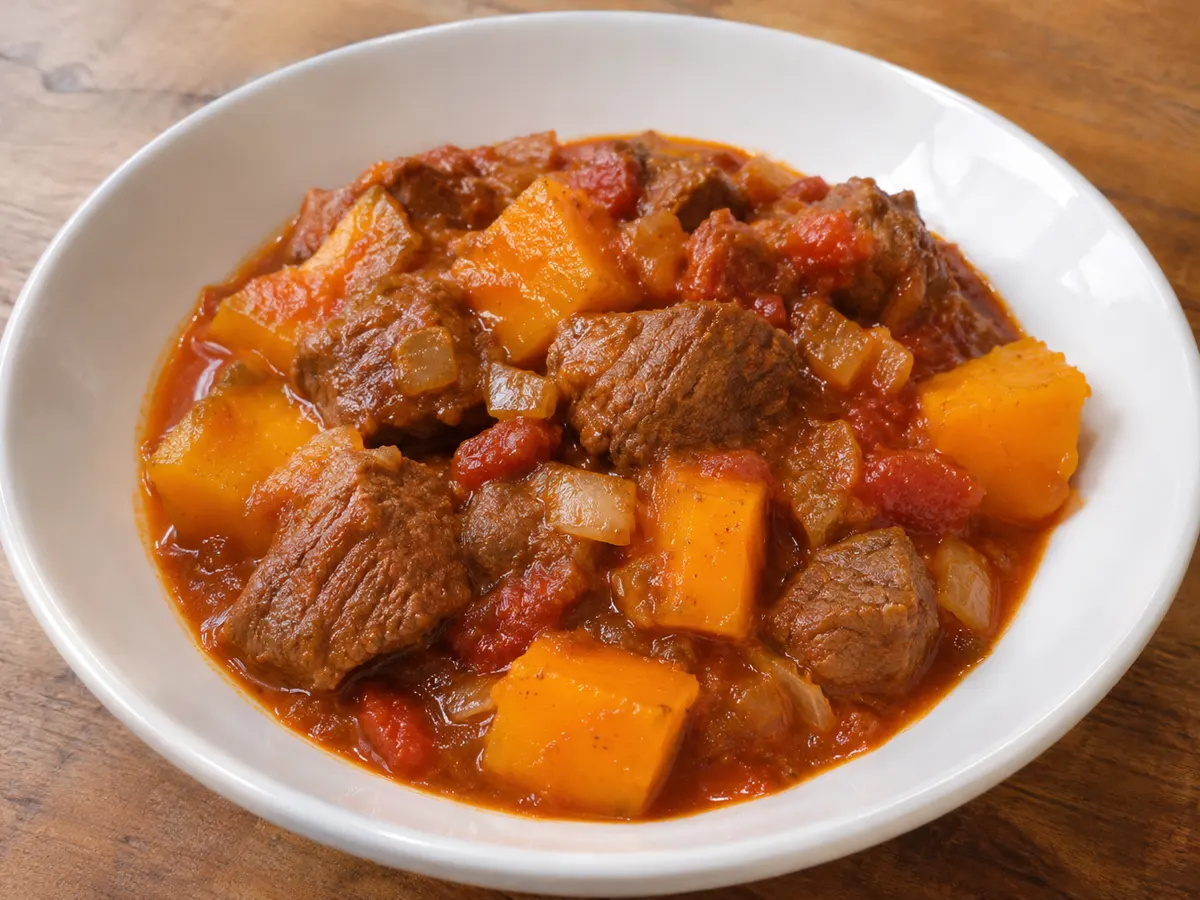
Ingredients
- 600 g braising beef
- 500 g squash flesh
- 2 tomatoes
- 1 onion
- 2 cloves garlic
- 10 g edible soumbala
- 2 tablespoons oil
- Approximately 800 ml hot water
- 1 bay leaf
- Maximum 3 g salt
- Black pepper to taste
Preparation
Start by preparing the beef. Cut the 600 g of braising beef, ideally chuck, into cubes of about 3 cm. In a Dutch oven or a large, heavy-bottomed pot, heat one tablespoon of oil over medium-high heat. Brown the beef pieces in small batches for about 8 minutes, until well colored on all sides. Remove the meat and set aside. Browning prepares the taste of the sauce; the complete cooking of the meat then continues in the liquid.
In the same pot, add the second tablespoon of oil if necessary. Sauté the chopped onion for 5 minutes until translucent. Then add the minced garlic cloves and diced tomatoes. Simmer this mixture for about 8 minutes, stirring regularly, until the tomatoes begin to break down and the bottom of the pot takes on a nice color. This process creates a rich aromatic base for the sauce.
Return the browned beef to the pot with the vegetables. Pour in about 600 ml of hot water, add the bay leaf and a pinch of salt (about 1 g to start). Bring to a boil, then reduce the heat to minimum, cover, and let simmer gently for 90 to 120 minutes. The beef should become very tender. Check the tenderness of the meat with a fork; it should shred easily. The final indicator is well-cooked and tender meat to the core, whose fibers yield easily.
While the beef is simmering, prepare the soumbala and squash. Finely crumble the 10 g of soumbala. Cut the 500 g of squash flesh into cubes of about 3 cm, similar in size to the beef pieces. These anticipated preparations will allow you to integrate these ingredients at the opportune moment without interrupting the cooking process of the dish. Ensure the squash is firm and blemish-free for better texture and flavor.
When the beef is almost tender, about 20 minutes before the estimated total cooking time, add the crumbled soumbala and squash cubes to the pot. Mix gently to distribute the soumbala well and immerse the squash in the sauce. Continue cooking, covered, for an additional 15 to 20 minutes, or until the squash is tender but retains a slight firmness. Check the tenderness of the squash with the tip of a knife rather than an arbitrary temperature threshold.
Taste the sauce and adjust the seasoning with the remaining salt (up to 3 g total) and black pepper to your liking. If the sauce is too thick, add a little of the remaining hot water (up to 200 ml) to achieve the desired consistency. If it is too liquid, let it simmer uncovered for a few minutes to reduce slightly. Serve this braised beef hot. For optimal preservation, cool the dish quickly (less than two hours) and refrigerate it in an airtight container. It will keep for 2 to 3 days in the refrigerator.
Introduction
This braised beef with squash and soumbala is a contemporary culinary proposal, inspired by Ivorian flavors, that highlights emblematic ingredients in an accessible and flavorful preparation. The goal is to create a balanced dish, where the richness of the beef and the sweetness of the squash are enhanced by the aromatic complexity of soumbala, without masking the intrinsic flavors of each component. The design of this recipe focused on the harmony of textures and tastes. The beef, chosen for its ability to become incredibly tender after long cooking, is paired with squash, which brings a natural creaminess and a slight sweetness. Soumbala, meanwhile, is introduced at the end of cooking to preserve its distinctive aromas and enrich the sauce without dominating it.
Cultural context
A contemporary creation based on West African ingredients, proposed for this volume dedicated to Côte d’Ivoire. No exclusive regional origin or particular tradition is attributed to this formulation.
Institutional References FAO INFOODS: https://www.fao.org/infoods/infoods/tables-and-databases/faoinfoods-databases/en/ — Food composition and table for West Africa; no nutritional calculation of this formulation is announced. World Health Organization: https://www.who.int/teams/nutrition-and-food-safety/multisectoral-actions-in-food-systems/five-keys-to-safer-food-poster — Principles of cleanliness, food separation, cooking, and temperature control. FoodSafety.gov: https://www.foodsafety.gov/food-safety-charts/safe-minimum-internal-temperatures — Institutional cooking temperature guidelines; durations depend on products and equipment.
Tips
Browning the beef is a fundamental step that should not be overlooked. To achieve a beautiful golden crust and develop deep flavors, it is essential not to overcrowd the pot. Brown the meat pieces in small batches, ensuring they have enough space to brown rather than boil. High heat at the beginning allows for quick searing of the surface, then slightly lower the heat to prevent the meat from burning. This Maillard reaction, which transforms sugars and proteins into aromatic compounds, is the key to a rich and complex sauce. Take the necessary time for this step, as it will greatly influence the final taste of your stew.
Soumbala is a powerful and unique ingredient. To integrate it harmoniously into your dish, it is best to crumble it very finely before adding it. This allows for better dissolution in the sauce and a more homogeneous diffusion of its aromas. Soumbala brings an umami depth and earthy notes that pair perfectly with beef and squash. It is important to add it towards the end of cooking to preserve its aromatic qualities and prevent it from dominating the dish. If you are not familiar with its taste, start with a small amount and adjust according to your preferences, but do not replace it with another condiment, as its flavor profile is inimitable.
Managing the consistency of the sauce is an art in preparing stews. During long cooking, evaporation can vary. It is advisable to regularly monitor the liquid level and adjust if necessary. The remaining hot water (200 ml) is your ally for this. If the sauce becomes too thick, add it gradually to regain a creamy texture that coats the meat and squash well. Conversely, if the sauce is too liquid at the end of cooking, remove the lid and let it simmer over low heat for a few minutes to reduce and concentrate. A well-balanced sauce is the signature of a successful stew.
Storing leftovers is an important food safety consideration. After cooking, it is imperative to cool the braised beef as quickly as possible, ideally within two hours of the end of cooking. To speed up this process, you can divide the dish into smaller portions and place them in shallow containers. Once cooled, transfer the dish to an airtight container and refrigerate it. It will keep safely for 2 to 3 days in the refrigerator. When reheating, ensure the dish reaches an internal temperature of at least 74 °C to thoroughly reheat the entire dish. Only reheat leftovers once to maintain quality and safety.
Planning
The success of this braised beef relies on the quality of the ingredients and adherence to the cooking steps. The choice of beef for braising is crucial: cuts like chuck, neck, or top blade are ideal as they contain enough collagen to become tender and flavorful after long, slow cooking. It's important to cut the meat into uniform cubes, about 3 cm, to ensure even cooking. The initial browning of the beef is a key step that develops complex aromas through the Maillard reaction, greatly contributing to the depth of the final sauce. Do not overcrowd the pan to allow the meat to brown rather than boil. Soumbala, a fermented condiment made from néré seeds, is a powerful ingredient. Its taste is unique and should not be replaced by a bouillon cube or another flavor enhancer. It is best to crumble it finely before adding it so that it dissolves well in the sauce and diffuses its flavors evenly. The squash, on the other hand, should be cut into cubes of similar size to the beef for harmonious cooking and balanced presentation. Adjusting the amount of water during cooking is essential to obtain a creamy and well-bound sauce, without being too liquid. Patience is key for a perfect stew, where each ingredient has time to release its flavors and fully integrate into the dish.
Nutrition notes
This braised beef with squash and soumbala is a nourishing and balanced dish. Soumbala, a fermented condiment, contributes not only to the flavor but also to the intake of micronutrients and bioactive compounds. The whole constitutes a complete meal, providing energy and vitality, without being heavy, and contributes to a varied and healthy diet.
Conclusion
This braised beef with squash and soumbala offers a contemporary culinary exploration. It combines the tenderness of beef, the sweetness of squash, and the depth of soumbala in a comforting and flavorful dish, perfect for a convivial meal.
Enjoy your meal
Enjoy your meal!