Carrot, peanut and coconut milk soup
A creamy and fragrant soup, combining the sweetness of carrots with the richness of peanuts and the subtlety of coconut milk, for a comforting starter.
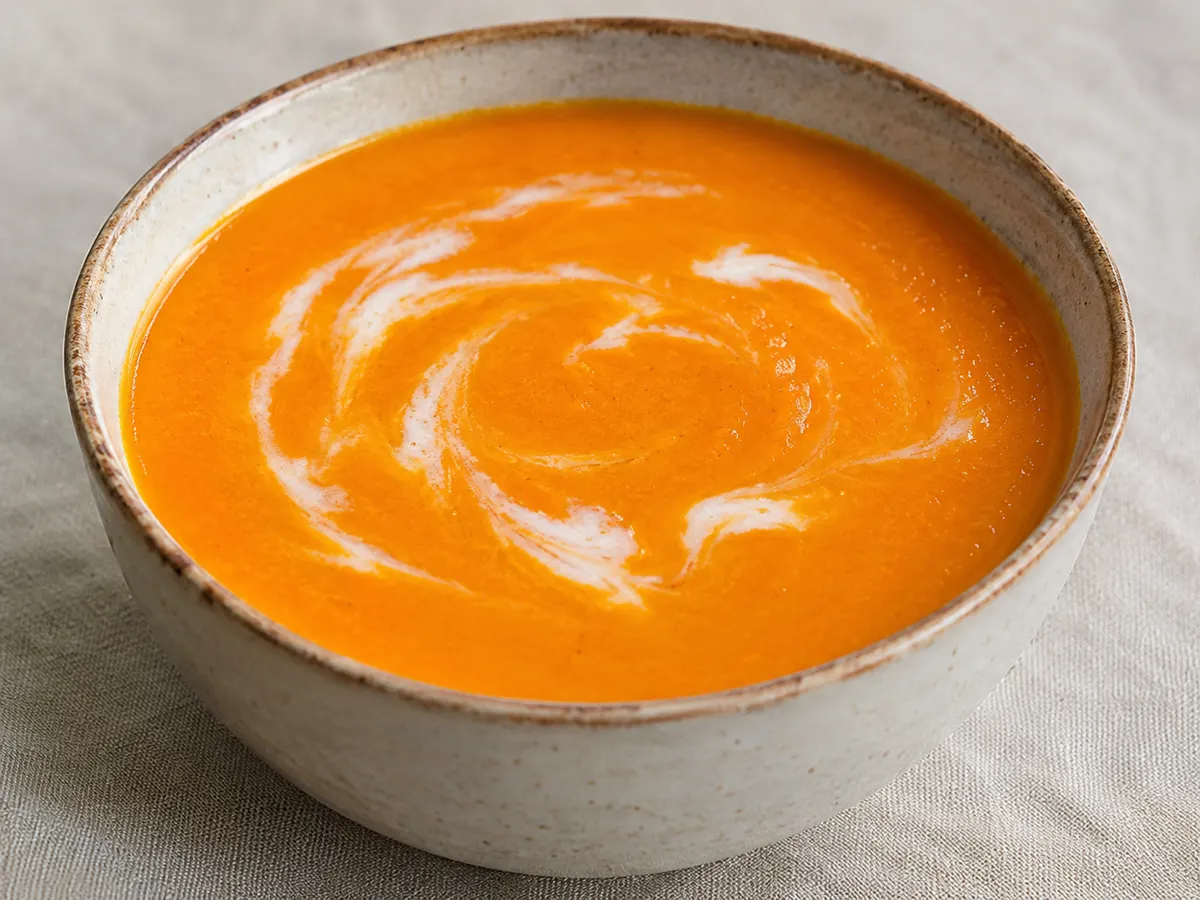
Ingredients
- 700 g peeled carrots
- 1 onion
- 50 g pure unsweetened peanut paste
- 200 ml unsweetened coconut milk
- 700 ml water
- 15 g fresh ginger
- 1 tablespoon oil
- 1 tablespoon lime juice
- 3 g salt maximum
- Black pepper to taste
Preparation
Start by preparing the vegetables. Peel and finely slice the onion. Peel the carrots and cut them into rounds about 0.5 cm thick to ensure even cooking. Finely grate the fresh ginger. In a heavy-bottomed saucepan, heat the oil over medium heat. Add the sliced onion and sweat it for about 5 minutes, until it becomes translucent and slightly softened, without excessive browning.
Add the carrot rounds and grated ginger to the saucepan with the onions. Mix well to coat the vegetables with oil and let them sauté for 2 to 3 minutes, stirring occasionally. Then pour in the 700 ml of water. Bring to a boil, then reduce the heat, cover, and simmer for 25 minutes. The carrots should be very tender, easily mashable with a fork, indicating they are ready for the next step.
While the carrots are simmering, take about 100 ml of the hot cooking broth into a small bowl. Add the pure peanut paste to this hot broth and mix vigorously with a fork or a small whisk until you get a smooth and homogeneous paste, without lumps. This technique allows the peanut paste to dissolve gradually and prevents it from forming clumps once added to the soup.
Once the carrots are tender, incorporate the diluted peanut paste mixture into the saucepan. Also add the unsweetened coconut milk. Mix gently and let simmer over low heat for an additional 5 minutes, stirring occasionally so that the flavors blend and the soup thickens slightly. Make sure the soup does not boil too vigorously to prevent the coconut milk from separating.
Remove the saucepan from the heat. Using an immersion blender, blend the soup directly in the saucepan until it reaches a perfectly smooth and velvety texture. If using a stand blender, transfer the soup in small quantities, being careful not to fill the blender beyond half its capacity to avoid hot liquid overflows. Blend until there are no pieces of carrot or onion left.
Taste the soup and adjust the seasoning with salt (up to 3 g maximum) and black pepper according to your preference. Incorporate the tablespoon of lime juice. The lime juice is added at the end of cooking to preserve its freshness and acidity, which balance the richness of the soup. If the soup is too thick for your liking, you can add a little hot water to adjust the desired consistency. Serve immediately in warm bowls.
Introduction
This carrot, peanut, and coconut milk soup is a culinary proposition that explores Ivorian flavors with a contemporary approach. The balance between the natural sweetness of carrots, the velvety texture of peanuts, and the exotic note of coconut milk is at the heart of this preparation, aiming to surprise and delight the palate. The objective of this recipe is to demonstrate how simple and accessible ingredients can be transformed into a refined and comforting dish. We sought to create a harmony of flavors and textures, where each component plays an essential role without masking the others. This soup is designed to be an elegant starter, capable of integrating into various meals, while offering a touch of originality and warmth. It embodies a modern vision of Ivorian cuisine, open to innovations and bold associations.
Cultural context
A contemporary creation based on West African ingredients, proposed for this volume dedicated to Côte d’Ivoire. No exclusive regional origin or particular tradition is attributed to this formulation.
Institutional references FAO INFOODS: https://www.fao.org/infoods/infoods/tables-and-databases/faoinfoods-databases/en/ — Food composition and table for West Africa; no nutritional calculation for this formulation is announced. World Health Organization: https://www.who.int/teams/nutrition-and-food-safety/multisectoral-actions-in-food-systems/five-keys-to-safer-food-poster — Principles of cleanliness, food separation, cooking, and temperature control.
Tips
To achieve a perfectly velvety soup texture, the blending step is crucial. After removing the saucepan from the heat, use an immersion blender and blend the soup in pulses, tilting the saucepan slightly so that the blender can reach all parts. If using a stand blender, work in small portions to avoid hot liquid splashes. Make sure to close the lid tightly and hold it firmly, leaving a small opening for steam to escape. Blend until no fibers are visible, thus ensuring maximum creaminess and a pleasant taste experience. Insufficient blending would leave chunks, altering the desired texture.
The balance of flavors is essential in this soup. Peanut paste brings richness and creaminess, while coconut milk softens and flavors. Ginger and onion are the background aromatic notes. Lime juice, added at the end of cooking, is a natural flavor enhancer that cuts through the richness of the peanut and coconut, bringing a welcome freshness. Do not hesitate to taste the soup before adding lemon and salt, then adjust gradually. If the soup seems a little bland, an extra pinch of salt or a dash of lemon can make all the difference. The goal is to achieve a harmony where no flavor dominates excessively.
Storing the soup is simple but requires some precautions. Once cooled, transfer the soup to an airtight container and place it in the refrigerator within two hours of finishing cooking. It will keep for 3 to 4 days. To reheat, pour the desired amount into a saucepan and heat over low heat, stirring regularly to prevent it from sticking to the bottom. If the soup has thickened during refrigeration, you can add a little hot water or broth to restore the desired consistency. Avoid reheating and cooling it multiple times, as this could alter its quality and food safety.
Adjusting the consistency is a matter of personal preference. This soup is designed to be moderately thick and velvety. If you find it too thick after blending, you can add a little hot water, vegetable broth, or even a little more coconut milk to thin it out. Add the liquid gradually, mixing well after each addition and checking the consistency. Conversely, if you prefer a thicker soup, you can slightly extend the cooking time after adding the peanut and coconut milk, letting it reduce gently. However, be careful not to reduce it too much to avoid excessively concentrating the flavors and getting a pasty texture.
Planning
The success of this soup relies on the quality of the ingredients and adherence to the steps. It is crucial to choose fresh, firm carrots, as they form the aromatic and textural base of the dish. Fresh onion and ginger provide pungent and fragrant notes that balance the sweetness of the carrots and the richness of the peanut. The oil used to sweat the onion must be of good quality, as it helps develop the flavors from the beginning of cooking. The peanut paste must be pure, without sugar or additives, to ensure an authentic taste and avoid an overly sweet or altered flavor. Unsweetened coconut milk is also a key element, providing creaminess and a slight exotic touch without dominating. Water is the main cooking liquid, allowing the carrots to cook tenderly and infuse their flavors. Lime juice is added at the end of cooking to provide a hint of acidity that awakens the taste buds and balances the richness of the soup. Salt and black pepper are adjusted to taste, but it is advisable to start with the indicated amount and adjust gradually. Caution is advised when handling hot soup, especially during the blending step, to avoid splashes.
Nutrition notes
This carrot, peanut, and coconut milk soup offers an interesting combination of nutrients. Carrots are known for their richness in beneficial compounds, contributing to a balanced diet. Peanut paste, for its part, provides a source of energy and satiety, thanks to its composition. Coconut milk, in addition to its pleasant flavor, contributes to the creaminess of the dish. Fresh ginger adds a distinctive aromatic touch. All the ingredients combine to create a comforting and nourishing dish, contributing to general well-being without any specific health promises. It is a tasty way to incorporate vegetables and legumes into the diet.
Conclusion
This soup is an invitation to discover revisited Ivorian flavors. Its velvety texture and balanced aromas make it a comforting and characterful starter, perfect for awakening the taste buds.
Enjoy your meal
Enjoy your meal!