Attiéké, papaya and shrimp salad
A fresh and colorful salad, combining attiéké semolina, pearly shrimp, the sweetness of papaya, and the crunch of cucumber.
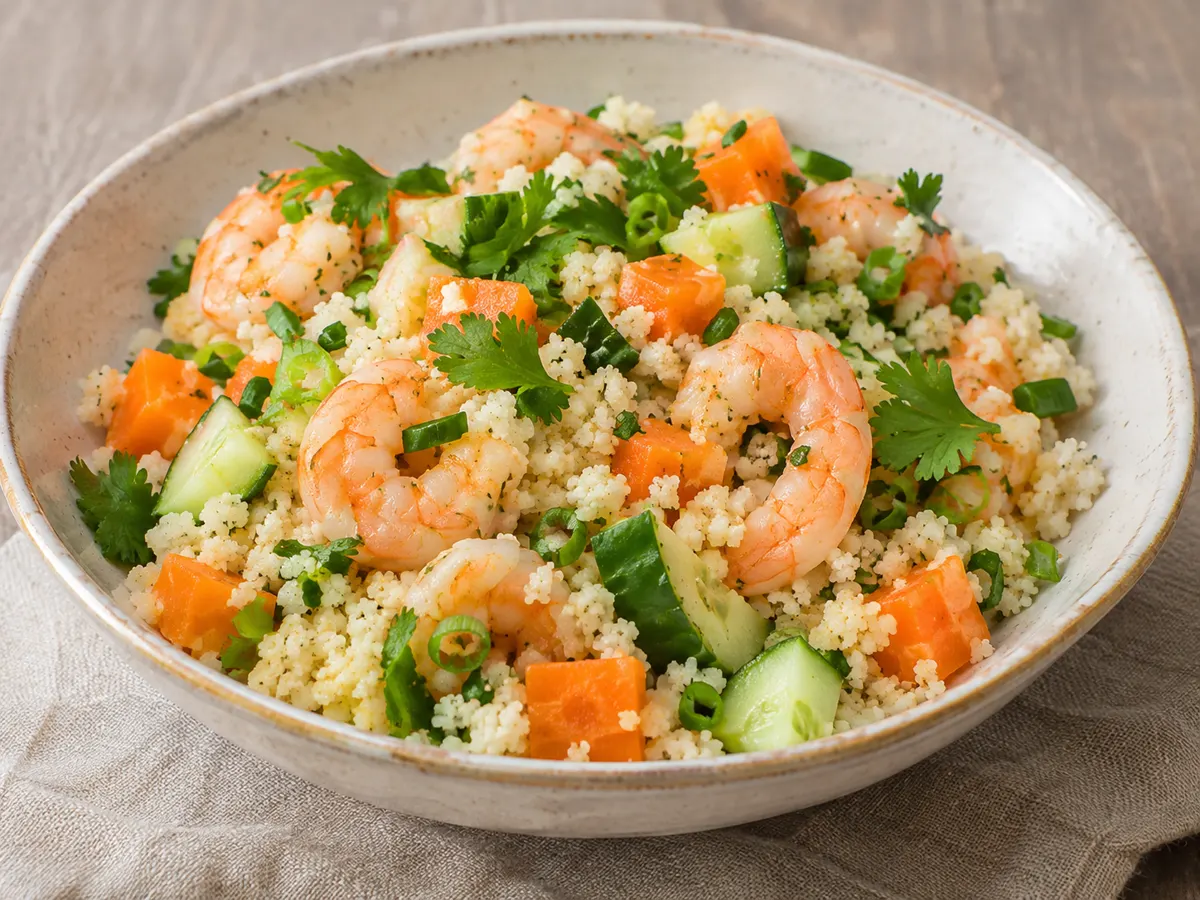
Ingredients
- 400 g cooked attiéké
- 350 g raw peeled shrimp
- 300 g ripe but firm papaya flesh
- 1 cucumber
- 2 spring onions
- 1 lime
- 2 tablespoons oil
- 10 g fresh cilantro
- 2 g salt maximum
- Black pepper to taste
Preparation
Start by cooking the shrimp. Bring a pot of water to a simmer. Plunge the peeled shrimp into it and cook for 3 to 5 minutes, depending on their size. They should turn pearly and opaque, and reach an internal temperature of 63 °C. Drain them immediately and plunge them into an ice bath to stop cooking and ensure rapid cooling. Once cold, drain them again and set aside in the refrigerator.
While the shrimp are cooling, prepare the attiéké. Follow the instructions on the package to reheat it. Once hot, spread it in a thin layer on a baking sheet or a large dish to cool quickly. The goal is to reach room temperature in about 15 minutes. This cooling is useful to prevent the attiéké from becoming sticky and to quickly cool the semolina before assembly.
While the attiéké is cooling, prepare the vegetables and fruits. Wash the cucumber, remove the ends, and cut it into small dice. Peel the papaya, remove the seeds, and cut the flesh into cubes similar in size to the cucumber. Wash and finely chop the spring onions and fresh cilantro. Make sure all these elements are ready and well-drained before moving on to the next step.
In a large salad bowl, combine the cooled attiéké, cold shrimp, diced papaya and cucumber, and chopped spring onion. Be careful not to over-handle the papaya, as its flesh is delicate and could get crushed. The goal is to have a homogeneous mixture where each ingredient retains its shape and texture. This step prepares the dish to receive the final seasoning.
Prepare the dressing. In a small bowl, mix the freshly squeezed lime juice with the oil. Add the salt, respecting the maximum quantity of 2 grams, and freshly ground black pepper to your taste. Whisk lightly to emulsify the mixture. This simple but fragrant vinaigrette will provide the necessary acidity and fat to bind all the flavors of the salad.
Pour the dressing over the ingredients in the salad bowl. Add the chopped fresh cilantro. Gently mix everything using two spoons or spatulas, lifting the ingredients rather than crushing them, to coat all elements well without damaging the papaya. Taste and adjust the seasoning if necessary. Serve the salad fresh, but not chilled, to appreciate all its nuances of flavors.
Introduction
This attiéké, papaya, and shrimp salad is a culinary proposal that celebrates freshness and vibrant flavors, while embracing a contemporary approach to Ivorian cuisine. Attiéké, a fermented cassava semolina, provides a light and textured base, ideal for absorbing the aromas of a delicate vinaigrette. The combination with papaya, chosen ripe but firm, brings a sweet and slightly exotic note, balanced by the zest of lime and the freshness of herbs. The shrimp, cooked just enough to retain their tenderness, add a marine and protein dimension, while cucumber and spring onions provide a refreshing crunch. It's a starter that awakens the taste buds with its contrasts of textures and flavors, inviting a light and characterful tasting.
Cultural context
A contemporary creation based on West African ingredients, proposed for this volume dedicated to Côte d’Ivoire. No exclusive regional origin or particular tradition is attributed to this formulation.
Institutional References FAO INFOODS: https://www.fao.org/infoods/infoods/tables-and-databases/faoinfoods-databases/en/ — Food composition and table for West Africa; no nutritional calculation for this formulation is announced. World Health Organization: https://www.who.int/teams/nutrition-and-food-safety/multisectoral-actions-in-food-systems/five-keys-to-safer-food-poster — Principles of cleanliness, food separation, cooking, and temperature control. FoodSafety.gov: https://www.foodsafety.gov/food-safety-charts/safe-minimum-internal-temperatures — Institutional cooking temperature guidelines; durations depend on products and equipment. UNESCO: https://ich.unesco.org/fr/RL/les-savoir-faire-lies-a-la-fabrication-de-l-attieke-en-cote-d-ivoire-02086 — Context of attiéké manufacturing know-how inscribed in 2024; this reference does not certify the recipe's combinations.
Tips
The texture of the attiéké is paramount for this salad. After reheating it according to package instructions, it is imperative to cool it quickly and completely. Spread it in a thin layer on a large baking sheet or tray, and if possible, place it in the refrigerator for 15 minutes. This prevents it from continuing to cook and becoming pasty, and ensures it remains light and granular. Attiéké that is too hot or poorly cooled will alter the freshness of the salad and could compromise food safety by promoting bacterial growth, especially in the presence of fruits and crustaceans. Make sure it is at room temperature or slightly cool before assembling it with the other ingredients.
Shrimp cooking must be precise to guarantee their tenderness and flavor. Plunge them into gently simmering water, without vigorous boiling, which could damage them. Watch carefully: as soon as they change color to become pearly and opaque, and their flesh is firm to the touch, remove them immediately. Overcooking will make them rubbery and less pleasant to eat. Rapid cooling in ice water is a key step to stop cooking and preserve their delicate texture. Once cooled, drain them thoroughly to avoid adding excess water to the salad, which could dilute the flavors of the dressing.
The choice of papaya is useful for the balance of this salad. Opt for a ripe papaya that is still firm to the touch. A papaya that is too soft would easily crush during mixing and make the salad less visually and texturally appealing. Its natural sweetness should be present, but not excessive, so as not to overpower the other flavors. Cut it into regular cubes, similar in size to the cucumber dice, for better harmony in the mouth and an balanced distribution of flavors. The delicacy of the papaya requires gentle and careful mixing so as not to mash it, which would alter the aesthetics and texture of the salad.
The preservation of this salad is essential, given the presence of crustaceans and fresh fruits. Once prepared, the salad should be consumed within 24 hours and must be stored in the refrigerator. Crustaceans are very perishable products, and mixing them with fresh fruits and vegetables creates an environment conducive to bacterial growth if temperature conditions are not respected. Never leave the salad at room temperature for more than two hours. Lime juice contributes to the flavor but should in no way be considered a sufficient preservative. Prepare the salad just before serving or a few hours in advance so it has time to chill, but do not store it beyond the recommended time.
Planning
The success of this salad relies on the quality of the ingredients and precise execution. The attiéké, already cooked, must be reheated according to package instructions, then rapidly cooled. Spread it in a thin layer on a baking sheet or large dish to speed up this process, which will prevent it from continuing to cook and becoming pasty, while ensuring optimal food safety before assembly with other fresh components. Effective cooling is useful for the final texture and preservation. The shrimp, meanwhile, require careful cooking. Plunge them into simmering water and remove them as soon as they turn pearly and opaque, a sign of perfect cooking. Overcooking would make them rubbery. Rapid cooling of the shrimp is also essential to stop cooking and maintain their delicate texture. The final assembly must be done carefully, mixing gently so as not to crush the papaya, which is more fragile than the other elements. The balance of flavors is achieved by seasoning with lime, oil, salt, and pepper, enhanced by the freshness of the cilantro.
Nutrition notes
This attiéké, papaya, and shrimp salad offers an interesting combination of nutrients. Attiéké, made from cassava, provides an energy source in the form of complex carbohydrates, easily assimilated. Shrimp are an excellent source of lean protein, essential for tissue building and repair, and also contain important minerals. Cucumber, full of water, contributes to hydration and adds a touch of freshness. The oil used provides essential fatty acids, while cilantro and lime enrich the dish with flavors and beneficial plant compounds. It is a balanced, light, and refreshing dish, ideal for a starter or a light meal.
Conclusion
A contemporary salad that combines the lightness of attiéké, the sweetness of papaya, and the delicacy of shrimp, offering a fresh and balanced taste experience.
Enjoy your meal
Enjoy your meal!