Black-eyed peas with roasted tomatoes and melting peppers
A flavorful vegetarian dish where black-eyed peas meet the sweetness of roasted tomatoes and the tenderness of melting peppers, enhanced with thyme and parsley.
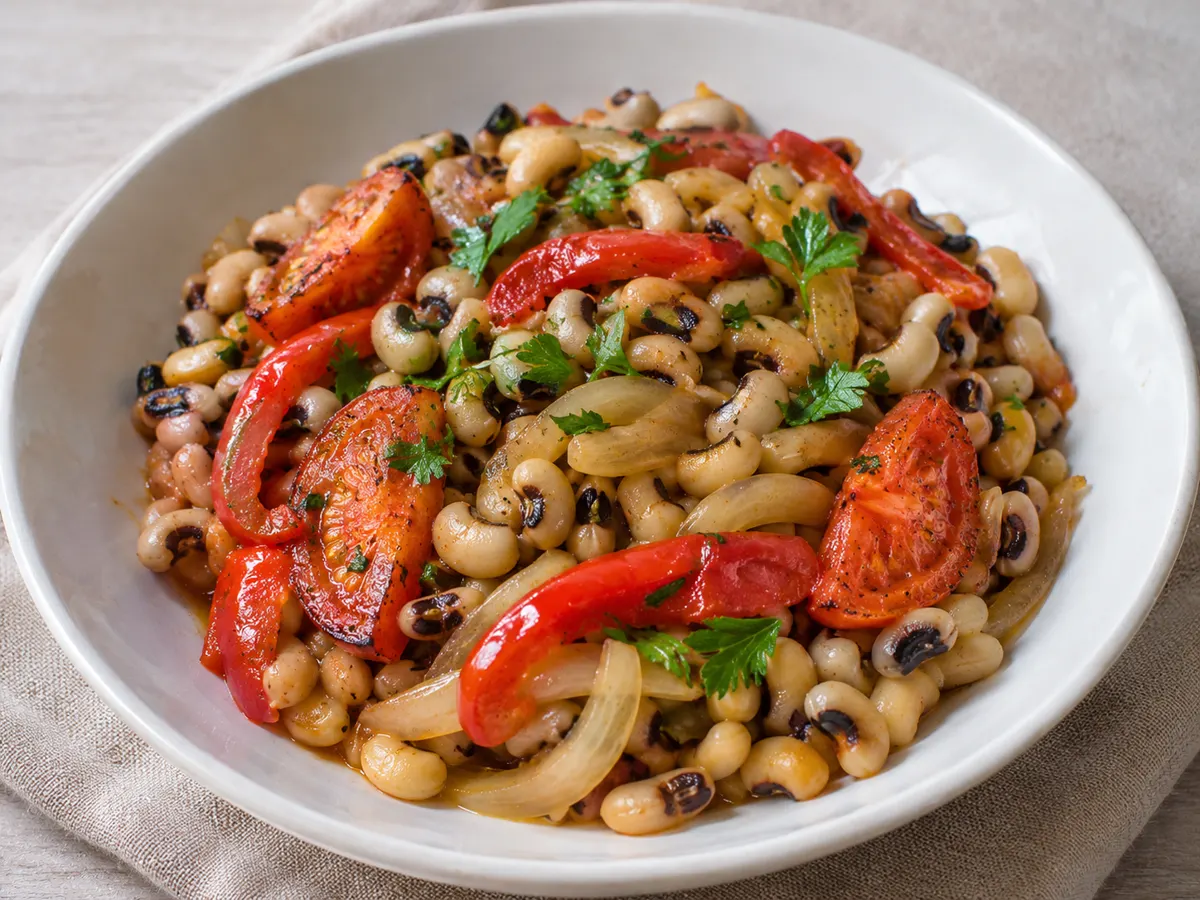
Ingredients
- 600 g cooked and drained black-eyed peas
- 600 g tomatoes
- 2 red bell peppers
- 1 onion
- 2 cloves garlic
- 2 tablespoons oil
- 150 ml water
- 1 teaspoon thyme
- 10 g parsley
- 3 g salt maximum
- Black pepper to taste
Preparation
Preheat your oven to 190°C (375°F). Wash the tomatoes, cut them into quarters, and arrange them on a baking sheet lined with parchment paper. Drizzle with one tablespoon of oil and sprinkle with half of the thyme. Bake for 35 to 40 minutes, or until the tomatoes are tender and slightly caramelized at the edges. Watch carefully so the juices don't burn; they are essential for the dish's flavor. Set aside the roasted tomatoes and their cooking juices.
While the tomatoes are roasting, prepare the other vegetables. Peel and finely slice the onion. Wash the red bell peppers, remove the seeds and white membranes, then cut them into thin strips. Peel and finely chop the garlic cloves. These preparation steps are important to ensure even cooking and good integration of flavors in the final dish.
In a large pan or Dutch oven, heat the second tablespoon of oil over medium heat. Add the sliced onion and sauté for about 5 minutes, until translucent and lightly golden. Stir regularly to prevent burning. This step helps develop the sweetness of the onion, which will serve as an aromatic base.
Add the red bell pepper strips to the pan with the onion. Pour in 50 ml of water to aid cooking and cover. Simmer for about 15 minutes over low heat, or until the peppers are very tender and melting. Stir occasionally and add a little water if necessary to prevent the vegetables from sticking. The peppers should be almost confit.
Stir the chopped garlic and the remaining thyme into the pan with the melting peppers. Cook for 1 minute, just long enough to release the garlic's aromas without burning it. Then add the cooked and drained black-eyed peas, along with the roasted tomatoes and all their precious cooking juices. Mix gently to coat all ingredients well.
Pour in the remaining 100 ml of water, season with salt (3g maximum) and pepper to your taste. Simmer over low heat for about 10 minutes, stirring occasionally, so that all the flavors meld together and the dish is heated through. The final texture should be that of whole grains coated in a thick, non-liquid sauce. Chop the fresh parsley and stir it in just before serving to add a touch of freshness and color. The black-eyed peas should be piping hot, reaching an internal temperature of 74°C (165°F) for optimal consumption.
Introduction
This black-eyed pea dish with roasted tomatoes and melting peppers is a perfect illustration of contemporary Ivorian culinary creativity. The idea is to transform black-eyed peas (niébé), often perceived as a rustic side dish, into a centerpiece of a balanced and gourmet meal, by bringing smoky and sweet notes through the roasting of tomatoes and the slow cooking of peppers. This approach prioritizes the depth of aromas and the diversity of textures. The preparation of this dish is part of an effort to promote legumes, essential for a healthy and sustainable diet. By choosing roasted tomatoes, we intensify their umami flavor and natural sweetness, creating a rich aromatic base that pairs ideally with the earthy character of black-eyed peas. The peppers, cooked until tender, provide a sweetness and silky texture that pleasantly contrasts with the grain of the black-eyed peas. The whole is enhanced by aromatic herbs that complete the taste balance, offering a culinary experience that is both comforting and refined, without ever straying from the spirit of generosity characteristic of Ivorian cuisine.
Cultural context
A contemporary creation based on West African ingredients, proposed for this volume dedicated to Côte d'Ivoire. No exclusive regional origin or particular tradition is attributed to this formulation.
Institutional References FAO INFOODS: https://www.fao.org/infoods/infoods/tables-and-databases/faoinfoods-databases/en/ — Food composition and table for West Africa; no nutritional calculation of this formulation is announced. World Health Organization: https://www.who.int/teams/nutrition-and-food-safety/multisectoral-actions-in-food-systems/five-keys-to-safer-food-poster — Principles of cleanliness, food separation, cooking, and temperature control.
Tips
Cooking black-eyed peas (niébé) is a fundamental step. If you are using dry black-eyed peas, pre-soaking is crucial. It not only reduces cooking time but also improves the digestibility of the legumes. Allow at least 8 hours of soaking, or even overnight, changing the water once or twice. For cooking, use a large pot of cold, unsalted water. Bring to a boil, then reduce the heat and simmer until the grains are tender but retain their shape. Cooking time varies depending on the freshness of the black-eyed peas, but generally ranges from 45 minutes to 1 hour 30 minutes. Drain them carefully after cooking to avoid introducing excess moisture into the final dish, which could dilute the concentrated flavors of the roasted and melting vegetables. Well-prepared black-eyed peas are the key to a successful dish.
To intensify the flavors of this dish, the choice and treatment of tomatoes are paramount. Opt for ripe and fleshy tomatoes, preferably varieties that hold up well to cooking and have a pronounced taste, such as Roma or beefsteak tomatoes. Roasting in the oven at 190°C (375°F) is not just simple cooking; it's a technique that concentrates the natural sugars of the tomatoes, giving them a sweet and slightly caramelized flavor, with deep umami notes. Do not neglect the juices that form on the baking sheet: they are full of flavor and must be reincorporated into the dish. If you notice the juices starting to blacken, add a splash of water to deglaze them and prevent them from burning, which would alter the final taste of the dish. Good management of this step guarantees a rich and complex aromatic base.
The balance of textures is essential in this dish. The contrast between the black-eyed peas, which should remain slightly firm to the bite, and the melting peppers is what makes this recipe so enjoyable. To achieve perfectly melting peppers, slow and gentle cooking is the best method. After sautéing the onion, add the pepper strips with a little water and cover the pan. The steam will help soften them without drying them out. Monitor the cooking and do not hesitate to add small amounts of water if necessary to maintain a moist environment and prevent the vegetables from sticking or burning. The goal is to achieve an almost confit texture, where the peppers melt in your mouth, providing a sweetness and creaminess that complements the black-eyed peas. This attention to textures elevates the dish beyond a simple combination of ingredients.
The preservation of this dish is important to ensure its food safety and maintain its taste qualities. Once the dish is prepared, if not consumed immediately, it is crucial to cool it quickly to prevent bacterial proliferation. Divide the black-eyed peas with tomatoes and peppers into small portions and spread them in shallow containers to speed up cooling. Place them in the refrigerator within two hours of the end of cooking. The dish will keep for up to 3 days in the refrigerator in airtight containers. To reheat, prefer gentle cooking in a pan or microwave, ensuring it reaches an internal temperature of 74°C (165°F). Avoid leaving it at room temperature for long periods after reheating. This dish is not suitable for canning at room temperature.
Planning
To achieve perfectly cooked and flavorful black-eyed peas (niébé), proper preparation beforehand is essential. If starting with dry black-eyed peas, soaking them for several hours, ideally overnight, is recommended to reduce cooking time and improve digestibility. After soaking, rinse them thoroughly and cook in a large quantity of unsalted water until tender but still slightly firm. Salt should be added at the end of cooking to prevent hardening the grains. Once cooked, drain them carefully to avoid excess moisture, which would dilute the flavors of the sauce. The final texture should be that of whole, non-pasty grains, ready to absorb the aromas of the vegetables. The quality of the tomatoes is paramount for the success of this dish. Choose ripe and fleshy tomatoes that will develop an intense and sweet flavor after roasting. The roasting process in the oven at 190°C (375°F) for 35 to 40 minutes is crucial: it concentrates the natural sugars of the tomatoes and gives them a slight caramelized note. Be careful not to burn the cooking juices that form at the bottom of the dish, as they are a valuable source of flavor and will be reincorporated into the dish. Adding a tablespoon of oil and thyme before roasting infuses the tomatoes with aromas from the start, creating a complex and harmonious flavor base.
Nutrition notes
This black-eyed pea dish with roasted tomatoes and melting peppers is a true concentrate of benefits. Black-eyed peas, as a legume, are an excellent source of plant-based protein, contributing to satiety and muscle mass maintenance. They are also rich in dietary fiber, promoting good digestion and helping to regulate intestinal transit. Red bell peppers, for their part, are packed with vitamins, especially vitamin C, and various phytonutrients. All the vegetables provide a variety of essential minerals and vitamins that support the proper functioning of the body. The use of vegetable oil in moderate amounts provides essential fatty acids. This dish is therefore a nutritious and balanced option, ideal for a varied diet.
Conclusion
This black-eyed pea dish with roasted tomatoes and melting peppers is an invitation to discover the richness of contemporary Ivorian flavors. A generous, balanced, and characterful vegetarian dish that warms hearts and taste buds.
Enjoy your meal
Enjoy your meal!