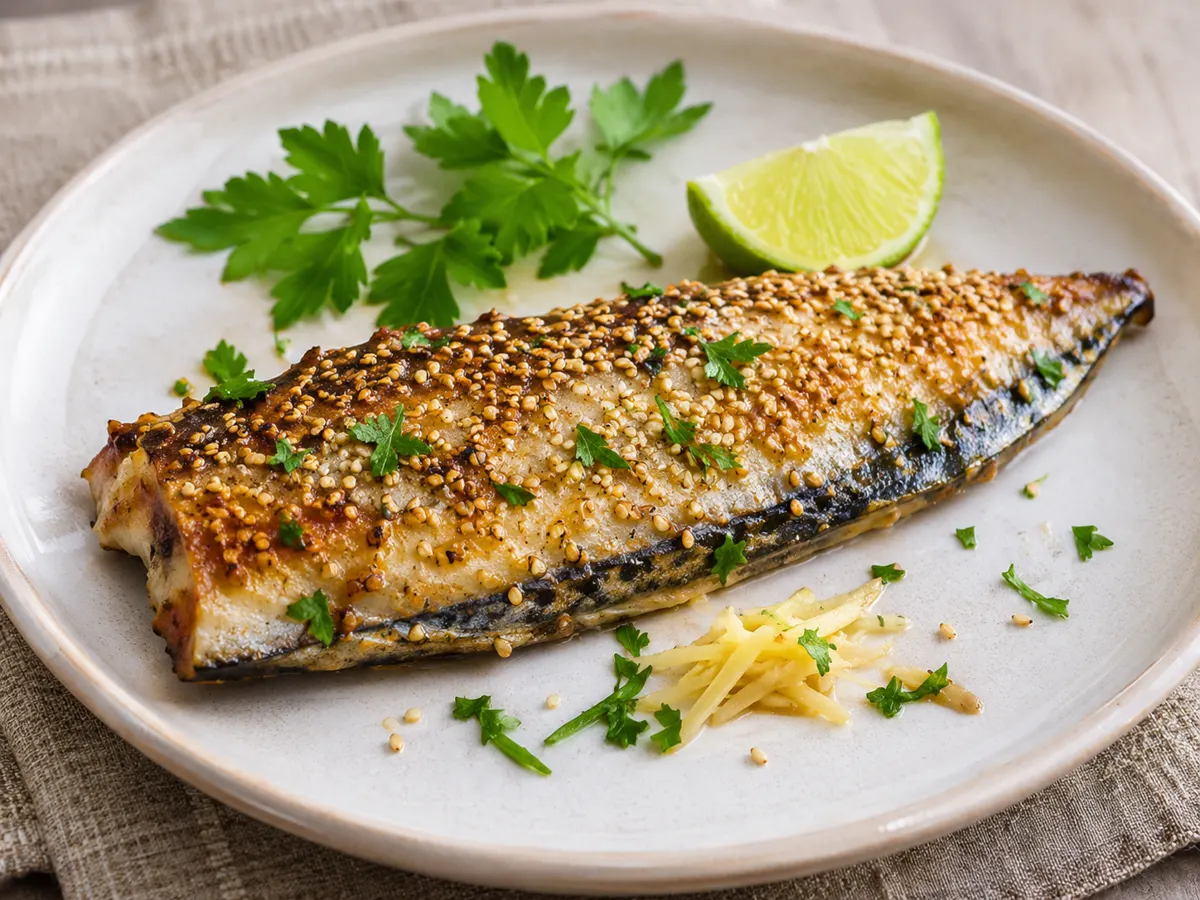
Baked Mackerel with Sesame and Ginger Crust
Delicately oven-roasted mackerel fillets, enhanced by a fragrant sesame and fresh ginger crust, for a refined culinary experience.
Ingredients
- 4 mackerel fillets, 150g each, boneless
- 50g sesame seeds
- 15g fresh ginger
- 1 lime
- 1 tablespoon oil
- 1 garlic clove
- 10g parsley
- 2g salt maximum
- Black pepper to taste
Preparation
Preheat your oven to 190 °C (thermostat 6-7). Prepare a baking sheet by lining it with parchment paper, then lightly brush the paper with some of the oil. Make sure the mackerel fillets are very dry and boneless. Place the fillets on the parchment paper, skin side down. Good preheating ensures quick and even cooking of the fish.
In a small bowl, prepare the aromatic paste. Finely grate the fresh ginger and garlic clove. Zest the lime and add it. Incorporate the remaining oil, salt (maximum 2g), and black pepper to your taste. Mix well to obtain a homogeneous paste. Then spread this paste in a thin, even layer over the flesh of each mackerel fillet. This layer will delicately flavor the fish and serve as a base for the sesame seeds.
Generously spread the sesame seeds over the aromatic paste, making sure to cover the entire surface of the flesh. Press firmly with the palm of your hand or the back of a spoon so that the seeds adhere well to the fish. This pressure is essential to form a solid crust and prevent the seeds from detaching during cooking. Good adhesion will ensure a crispy, golden texture, characteristic of this dish.
Bake the baking sheet in the preheated oven at 190 °C. Cook for 20 to 25 minutes, depending on the thickness of your fillets. The cooking time is indicative; the crucial point is to reach an internal temperature of 63 °C at the core of the fish. Carefully monitor the browning of the sesame seeds. If they start to brown too quickly or blacken, gently cover the fillets with a sheet of aluminum foil to prevent them from burning.
Check the mackerel's doneness by inserting the tip of a knife or a meat thermometer into the center of the fillet. The flesh should be opaque and flake easily with a fork. An internal temperature of 63 °C is a cooking benchmark to check with a clean thermometer. If the fish is not yet at temperature, extend cooking in intervals of 2 to 3 minutes. Overcooking would make the mackerel dry, while undercooking would be unpleasant and risky.
Once the mackerel is cooked, remove it from the oven. Squeeze the juice of the remaining lime over the hot fillets to add a touch of freshness and vibrancy. Finely chop the fresh parsley and sprinkle it over the fish just before serving. Parsley adds an herbaceous note and a vibrant color. Serve immediately to enjoy the crispy texture of the sesame crust and the tenderness of the fish. This dish pairs perfectly with a light side dish.
Introduction
This contemporary dish highlights mackerel, an often underestimated fish, transforming it into an elegant and flavorful creation. The idea is to combine the richness of its flesh with the crunchy texture and intense aromas of sesame and ginger, offering a new perspective on this seafood product. Mackerel, with its nutritional qualities and pronounced taste, lends itself wonderfully to this preparation, which enhances its natural flavors without masking them. The sesame and ginger crust is not just an aesthetic addition; it contributes to the balance of textures and flavors. Sesame brings a toasted note and a crispy texture, while fresh ginger offers a pungent and aromatic touch that awakens the palate. Lime zest and garlic complete this symphony of flavors, providing a welcome freshness and aromatic depth. This dish is designed to be both easy to make and impressive to serve, perfect for a weekday meal or a special occasion, demonstrating that contemporary Ivorian cuisine can be both innovative and accessible.
Cultural context
A contemporary creation based on products from the West African repertoire, proposed for this volume dedicated to Côte d’Ivoire. No exclusive regional origin or particular tradition is attributed to this formulation.
Institutional references FAO INFOODS: https://www.fao.org/infoods/infoods/tables-and-databases/faoinfoods-databases/en/ — Food composition and table for West Africa; no nutritional calculation for this formulation is announced. World Health Organization: https://www.who.int/teams/nutrition-and-food-safety/multisectoral-actions-in-food-systems/five-keys-to-safer-food-poster — Principles of cleanliness, food separation, cooking, and temperature control. FoodSafety.gov: https://www.foodsafety.gov/food-safety-charts/safe-minimum-internal-temperatures — Institutional benchmarks for cooking temperature; durations depend on products and equipment.
Tips
To ensure boneless mackerel fillets, even if you buy them already prepared, take the time to run your fingers over the flesh to detect and remove any residual bones with tweezers. This step, though meticulous, is essential for a pleasant and surprise-free eating experience. A perfectly deboned fillet significantly enhances the culinary experience. Additionally, make sure the fillets are very dry before applying the paste and sesame seeds; moisture would prevent good adhesion and a crispy crust. Use paper towels to gently pat both sides of the fish.
Mackerel cooking should be closely monitored to avoid overcooking, which would make the flesh dry and less flavorful. The 20 to 25 minute time is an indication, but fillet thickness can vary. The most reliable sign of perfect cooking is an internal temperature of 63 °C. If you don't have a thermometer, observe the flesh: it should be opaque and flake easily. If the sesame seeds start to brown too quickly, cover the fish with aluminum foil to protect them while allowing the fish to finish cooking through. A golden crust is desired, not burnt.
The choice of lime is important for the balance of flavors. A fresh, juicy lime will provide a lively acidity that contrasts wonderfully with the richness of the mackerel and the warmth of the ginger. Feel free to use the zest in the aromatic paste and fresh juice just before serving. The zest contains very fragrant essential oils that will infuse during cooking, while the fresh juice will add a touch of freshness and zest at the time of tasting. Avoid bottled lemon juices, which do not offer the same aromatic complexity.
This baked mackerel pairs very well with light side dishes that do not mask its flavors. Think of a crisp green salad with a simple vinaigrette, or steamed vegetables like green beans, broccoli, or asparagus. Plain white rice or light couscous can also complement the dish without making it heavy. The goal is to let the mackerel and its fragrant crust be the star of the meal. Avoid overly rich sauces or overly spicy side dishes that might compete with the delicate aromas of ginger and sesame.
Planning
The success of this mackerel recipe lies in the meticulous preparation of the fillets and the even application of the crust. It is essential to ensure that the mackerel fillets are perfectly deboned for a pleasant eating experience. If you buy whole fillets, take the time to check each piece with your fingers to remove any remaining bones. Once the fillets are ready, drying the skin is a crucial step: well-dried skin will allow for better contact with the oiled parchment paper and prevent the fish from sticking, thus facilitating serving and preserving the integrity of the crust. The oil on the parchment paper is not just a non-stick agent; it also contributes to even cooking of the skin. The aromatic paste, made of ginger, garlic, lime zest, and oil, should be thinly spread over the flesh of the fish. The goal is to create a thin but uniform layer that will serve as an adhesive base for the sesame seeds. Feel free to gently massage the flesh with this paste so that the flavors penetrate well. Then, the sesame seeds must be pressed firmly onto the flesh so that they adhere well and form a dense crust. This pressure ensures that the seeds will stay in place during cooking and develop a crispy, golden texture. The indicated amount of salt is a maximum; adjust to your taste, but remember that mackerel already has a pronounced flavor.
Nutrition notes
Mackerel is an exceptional fatty fish, known for its richness in omega-3 fatty acids, essential for the proper functioning of the body. These nutrients contribute to a balanced diet. It is also an excellent source of complete proteins, essential for tissue building and repair. Sesame, for its part, is a source of fiber and minerals like calcium and magnesium.
Conclusion
This sesame and ginger crusted mackerel is an invitation to rediscover a flavorful fish in a new light. A contemporary recipe, full of flavors and textures, perfect for a memorable meal.
Enjoy your meal
Enjoy your meal!