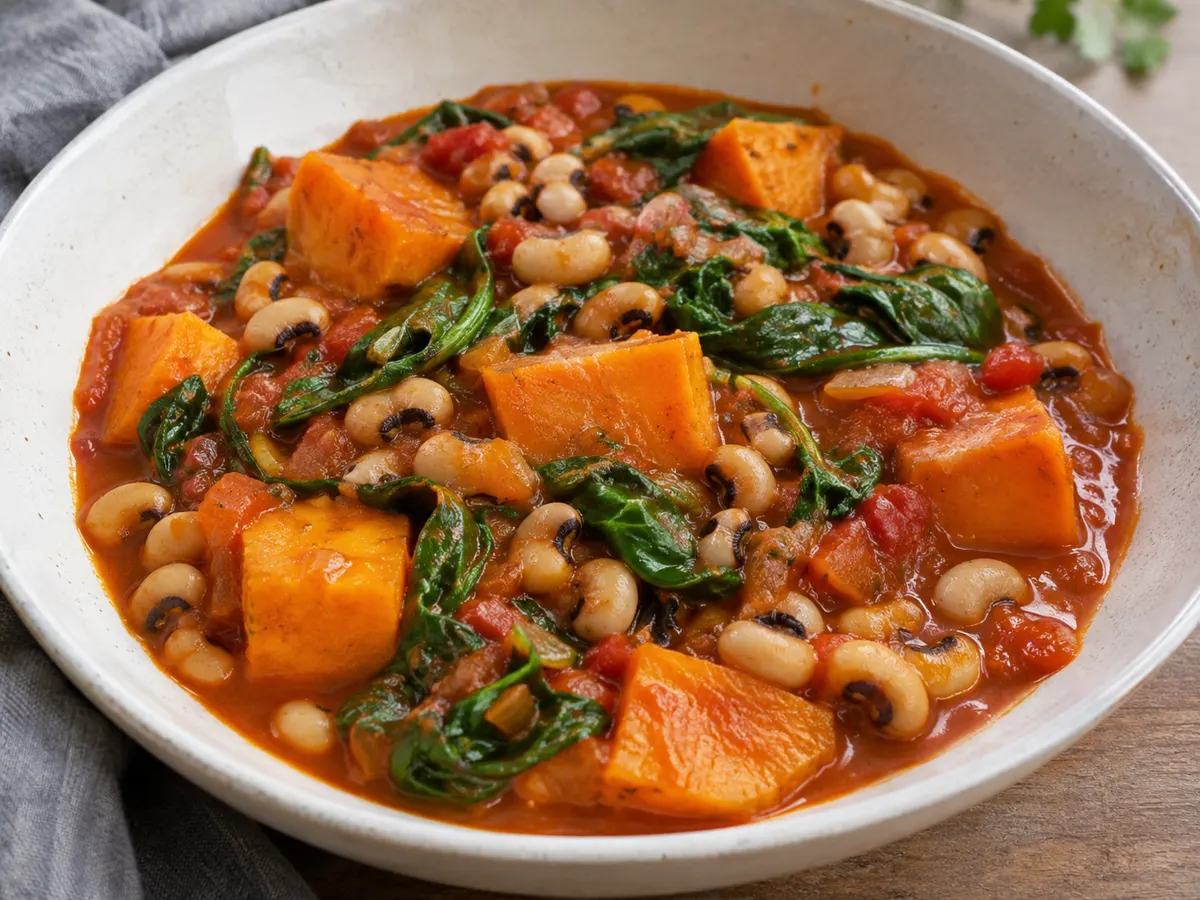
Sweet potato stew with black-eyed peas and green leaves
Melting sweet potato, black-eyed peas, and spinach in a ginger tomato sauce: a plant-based stew explained step-by-step, with texture tips.
Ingredients
- 600 g peeled sweet potato
- 450 g cooked and drained black-eyed peas
- 200 g fresh spinach
- 400 g tomatoes
- 1 onion
- 2 cloves garlic
- 15 g ginger
- 2 tablespoons oil
- 500 ml water
- 1 teaspoon sweet paprika
- 3 g salt maximum
- Black pepper to taste
Preparation
Peel the sweet potato, rinse it, and cut it into regular cubes. Peel and then slice the onion. Mince the garlic and grate the ginger. Wash the tomatoes and dice them. Drain the cooked black-eyed peas in a colander. Prepare all ingredients before turning on the heat, so you can monitor the tomato reduction without interrupting cooking for cutting.
Heat the oil in a heavy-bottomed pot. Add the onion and sauté for five to six minutes over medium-low heat. It should become soft without browning too much. Stir in the garlic, ginger, and paprika. Stir for one minute. If the aromatics start to stick, lower the heat and add a spoonful of water rather than letting them burn.
Add the tomatoes and part of the salt. Cook for eight to ten minutes, stirring regularly, until the pieces begin to break down and their juice reduces. This step builds the flavor of the sauce. Very watery tomatoes may require a few extra minutes. Do not pour all the water before this reduction, which would then be slower and less easy to observe.
Place the sweet potato cubes in the pot. Pour in about three hundred milliliters of water, mix, and bring to a simmer. Cover partially and cook for fifteen to twenty minutes depending on the variety. Stir carefully to avoid breaking the cubes. Add water in small quantities if the sauce becomes too thick while the center of the pieces remains firm.
When the sweet potato is almost tender, stir in the drained black-eyed peas. Continue for five to eight minutes to reheat the seeds to the center and allow them to absorb the flavor of the sauce. Then add the spinach in several handfuls. Mix gently after each addition, then cook for three to five minutes, until the leaves have wilted and the mixture is thoroughly hot.
Check the tenderness of a sweet potato cube and taste the sauce. Adjust salt and black pepper. If the stew is very liquid, simmer for a few minutes uncovered; if it seems too thick, add a little hot water. Serve in four deep plates, distributing the seeds, leaves, and pieces. Each portion should contain all three elements, with enough sauce to coat them.
Introduction
A stew can remain generous without multiplying ingredients. Here, sweet potato provides melting cubes, black-eyed peas bring tender seeds, and spinach adds a vegetal note at the end of cooking. Tomato serves as the base for the sauce rather than a simple garnish. A small amount of ginger and paprika accompanies the sweetness of the tuber. The desired texture is thick enough to coat a spoon, while retaining distinct pieces.
This version is a contemporary creation using products from the West African repertoire. It claims no particular traditional name or exclusive origin for the proposed combination. Its practical interest is to combine vegetables and already cooked legumes in the same pot. The indicated times start with tender, drained black-eyed peas. If you are starting from dry seeds, their preparation must be organized before this recipe and added to the total meal time. Spinach is chosen for simple food identification and brief cooking.
Cultural context
Contemporary variation on products from the West African repertoire, proposed for this volume dedicated to Côte d'Ivoire. No exclusive regional origin or particular tradition is attributed to this formulation.
Institutional references FAO INFOODS: https://www.fao.org/infoods/infoods/tables-and-databases/faoinfoods-databases/en/ — Food composition benchmarks; no nutritional calculation of this formulation is announced. World Health Organization: https://www.who.int/teams/nutrition-and-food-safety/multisectoral-actions-in-food-systems/five-keys-to-safer-food-poster — General principles of cleanliness, food separation, cooking, and temperature control.
Tips
A sauce that is too thick can result from already very tender sweet potato cubes breaking down during mixing. In this case, use a wide spatula and lift the ingredients rather than stirring vigorously with a spoon. Add a little hot water to restore a pleasant consistency. The preparation remains successful even if some pieces serve as a binder, as long as the others retain their shape.
The amount of liquid also depends on the container. A wide pot evaporates more than a narrow saucepan under the same lid. Keep a small reserve of hot water and check the bottom regularly. It is simpler to add a few spoonfuls during cooking than to salvage a burnt stew or to prolong cooking for a long time to evaporate excess water.
To prepare this dish the day before, stop before adding the spinach, cool quickly, then refrigerate. Reheat the base completely and add the fresh leaves when finishing the meal. Finished leftovers can be stored cold for twenty-four to forty-eight hours after rapid cooling. Reheat only once, stirring gently. The presence of vegetables and legumes does not exempt from controlling temperatures and waiting times.
For a more even serving, use a fairly large ladle and first lift the pieces from the bottom. The seeds tend to sink below the sweet potato cubes; distributing them in several small passes avoids a first plate that is mostly vegetable and a last one almost entirely composed of black-eyed peas. Then add the remaining sauce in comparable portions.
Planning
Sweet potatoes can have orange, yellow, or paler flesh. Their texture varies with the variety and age of the tuber: cut two to three centimeter cubes and monitor their cooking rather than mechanically prolonging the simmering. Small pieces quickly crumble and greatly thicken the sauce. Regular cubes make it easier to recognize when the center becomes tender.
Fresh spinach must be sorted and washed carefully with potable water to remove traces of soil. Remove very thick stems, then drain the leaves. This recipe does not use cassava leaves, taro, or wild plants; these products require identification and adapted methods that cannot be deduced from the short time given to spinach. A substitution must be chosen based on another documented recipe.
Nutrition notes
Black-eyed peas contribute to plant protein and fiber intake. Sweet potato here is an important source of carbohydrates, and spinach diversifies the vegetables consumed. The combination does not justify a therapeutic promise, a detoxifying qualifier, or a nutritional figure without calculation. The composition varies notably with the proportions actually taken from each plate. If you use canned black-eyed peas, take into account the salt already present in the product and adjust the amount added. Enjoy your meal: savor the hot stew, with tender cubes and a sauce that accompanies the seeds without masking them.
Conclusion
Serve at the indicated texture and adjust seasoning after tasting the cooked food.
Enjoy your meal
Enjoy your meal!