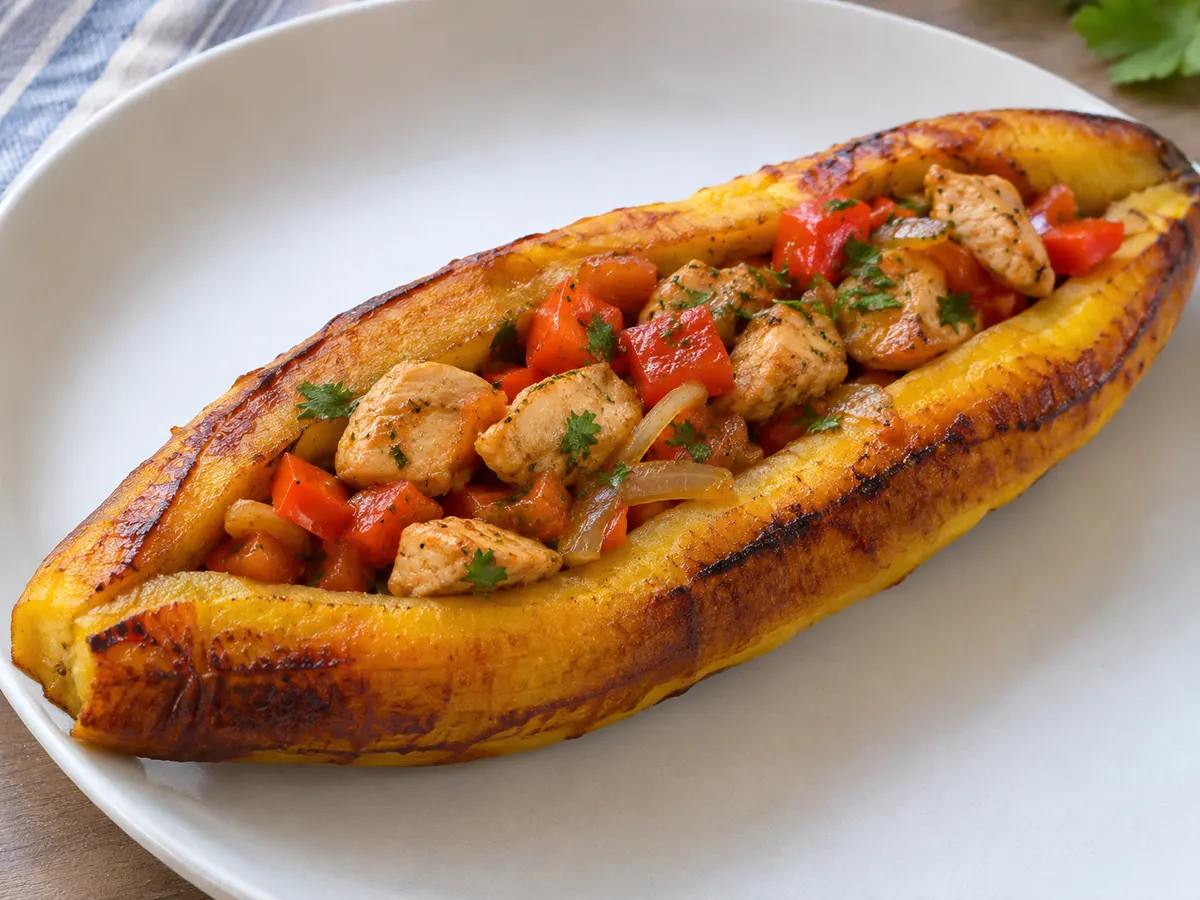
Baked plantains stuffed with chicken and bell pepper
Ripe plantains roasted then stuffed with chicken, bell pepper, and tomato: a contemporary baked variation, with a separately cooked filling.
Ingredients
- 4 ripe but firm plantains
- 400 g chicken breast
- 1 red bell pepper
- 1 onion
- 2 tomatoes
- 2 cloves garlic
- 2 tablespoons oil
- 1 teaspoon grated ginger
- 100 ml water
- 10 g parsley
- 3 g salt maximum
- Black pepper to taste
Preparation
Preheat the oven to 190 °C. Wash the outside of the plantains then dry them. Incise the skin lengthwise and carefully remove it. Brush the fruits with one tablespoon of oil, then place them in the dish. Bake for twenty-five to thirty-five minutes, turning them once. The flesh should begin to soften and show some colored areas, without being completely collapsed.
During this cooking, peel the onion and garlic. Chop them separately. Wash the bell pepper and tomatoes, remove the seeds from the bell pepper and cut the vegetables into small dice. Cut the chicken into cubes of about one centimeter. Keep the meat cold if you are not cooking it immediately. Also prepare the grated ginger to be able to chain the steps without leaving a hot pan.
Heat the second tablespoon of oil in a pan. Sauté the onion for four to five minutes, then add the chicken. Spread the cubes so that they heat evenly. Stir for five minutes, add the garlic and ginger, then continue for one minute. The chicken may not be fully cooked at this stage; cooking continues with the vegetables.
Add the bell pepper and tomatoes. Season with some of the salt and black pepper. Simmer for about twelve to fifteen minutes, stirring regularly. Pour in a little of the reserved water if the bottom sticks before the chicken and bell pepper are cooked. The filling should become less liquid. Check the chicken's doneness: the pieces should reach at least 74 °C in the center.
Remove the dish from the oven and stabilize the plantains with a spoon. Incise their flesh lengthwise without cutting all the way through. Gently spread the two edges to form an opening. Distribute the hot chicken filling into these four openings. If there is any sauce left, place it around rather than forcing the filling and tearing the fruits.
Return the dish to the oven for five to ten minutes, until everything is hot and the plantain is completely tender. Wash, dry, and chop the parsley. Add it after removing from the oven and check the seasoning of a small portion of the filling. Serve one plantain per person with a large spatula, keeping the chicken dice in the center. Optionally, complement with separately prepared vegetables.
Introduction
Ripe plantain can become the base for a savory filling when cooked whole before being opened. Its sweet flesh here accompanies chicken cut into small dice, bell pepper, and reduced tomato. Baking softens the fruit without requiring deep-frying. The goal is to keep the plantain firm enough to be moved, but tender enough to be scooped with a fork along with the filling. The chicken is prepared separately so that its cooking does not depend on that of the fruit.
This proposal is a contemporary variation and does not claim to be a specific traditional Ivorian dish. It plays on a sweet and savory combination, with simple seasoning. Choose plantains with yellow skin and dark marks, but whose flesh remains firm to the touch. A completely softened fruit is less suitable for shaping. It can be excellent in other preparations, while this recipe requires a flesh shell that retains its shape when served.
Cultural context
A contemporary variation around West African ingredients, proposed for this volume dedicated to Côte d’Ivoire. No exclusive regional origin or particular tradition is attributed to this formulation.
Institutional references FAO INFOODS: https://www.fao.org/infoods/infoods/tables-and-databases/faoinfoods-databases/en/ — Food composition data; no nutritional calculation for this formulation is announced. World Health Organization: https://www.who.int/teams/nutrition-and-food-safety/multisectoral-actions-in-food-systems/five-keys-to-safer-food-poster — General principles of cleanliness, food separation, cooking, and temperature control. FoodSafety.gov: https://www.foodsafety.gov/food-safety-charts/safe-minimum-internal-temperatures — Institutional cooking temperature guidelines; durations still need to be adjusted to the product and equipment.
Tips
A plantain that rolls in the dish can be stabilized on a small fold of baking paper compatible with the oven temperature. Do not cut a wide slice under the fruit: you would weaken its base and risk losing the filling during transfer. The central opening is made after the first cooking, when the flesh yields more easily under the knife tip.
If the filling remains too liquid, continue cooking it uncovered before filling the plantains. Adding breadcrumbs or flour would unnecessarily change the recipe and could result in a pasty texture. Conversely, a mixture that is too dry can be loosened with one or two spoonfuls of water, then gently reheated. The chicken should remain in small tender pieces, coated with vegetables, without a burnt crust.
For a meal prepared in advance, keep the cooked plantains and the filling separate, cooled quickly then refrigerated. Reheat the filling completely before assembly, then finish in the oven. Leftovers should be refrigerated within two hours and consumed within twenty-four to forty-eight hours. Reheat only once until the center is hot; a colored top does not prove that the inside has reached a sufficient temperature.
The filling should spread to the ends of the opening, without forming too high a mound in the center. This assembly allows for more even reheating and facilitates sharing with a fork. If a plantain splits despite precautions, serve it in a small deep plate and place the filling on top: the flavor remains the same, only the presentation changes.
Planning
Plantain is a cooking banana and should not be replaced by a dessert banana without adaptation. Cooking times depend on its ripeness and thickness. Four fruits of comparable size facilitate simultaneous cooking. Chicken is cut on a board reserved for raw foods, then hands, knife, and work surface are cleaned before handling ready-to-serve ingredients.
The bell pepper is cut into small dice to fit into the plantain's opening. The tomato sauce should be quite reduced: a watery filling would run into the dish and soak the flesh. Keep the indicated water as a reserve for cooking, without pouring it all in systematically. Prepare a baking sheet or oven-safe dish where the four plantains can rest without overlapping and without rolling onto their side.
Nutrition notes
Plantain mainly provides carbohydrates, while chicken contributes to protein intake. Bell pepper and tomato add vegetables to the filling; their quantity does not automatically replace all other components of the meal. Baking allows for measuring the oil used, but the portion and ripeness of the fruit influence the final composition. No caloric figures or medical effects are attributed to this preparation without appropriate calculation. Enjoy your meal: the best bite combines a little tender plantain, some chicken dice, and vegetables reduced enough to stay in place.
Conclusion
Serve at the indicated texture and adjust seasoning after tasting the cooked food.
Enjoy your meal
Enjoy your meal!