Tilapia and okra papillotes with ginger
Tilapia cooked en papillote with okra, tomato, and ginger: tender fillets and a slightly viscous sauce, with cooking steps and guidelines.
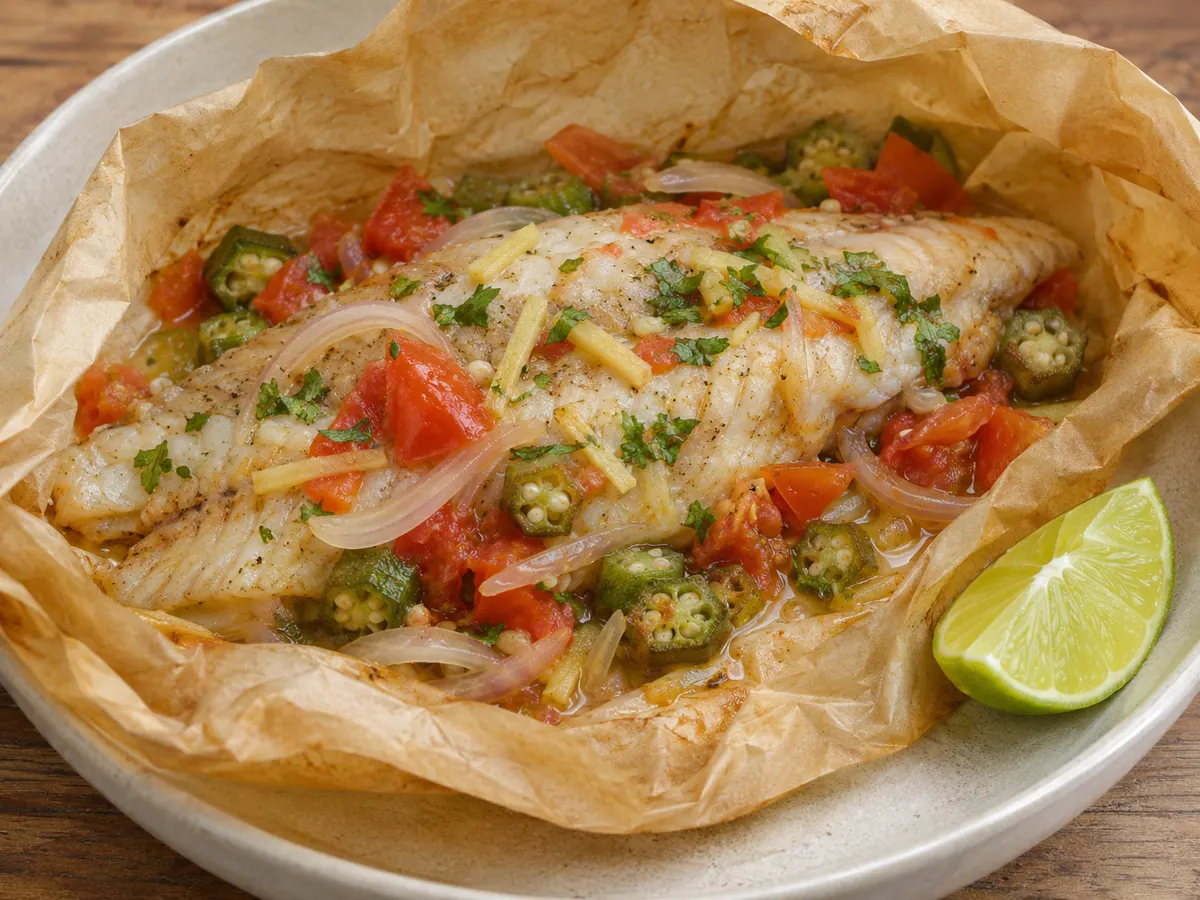
Ingredients
- 4 tilapia fillets, 150 g each
- 250 g okra
- 2 tomatoes
- 1 onion
- 20 g fresh ginger
- 1 lime
- 2 tablespoons oil
- 4 tablespoons water
- 10 g parsley
- 3 g salt maximum
- Black pepper to taste
Preparation
Preheat the oven to 190 °C. Prepare four large sheets of parchment paper. Wash the tomatoes and okra. Cut the tomatoes into small dice and the okra into regular pieces. Peel and finely slice the onion. Grate the ginger after peeling it. Combine the vegetables and ginger in a bowl reserved for ingredients that will be cooked.
Add one tablespoon of oil, some of the salt, and black pepper to the vegetables. Mix to distribute the seasoning. Place a quarter of this mixture in the center of each sheet of paper, forming a bed slightly wider than the fish fillet. Keep the edges of the sheets clean and clear so that you can close the packets without difficulty.
Pat the tilapia fillets dry with food-grade paper and check one last time for any bones. Place one fillet on each bed of vegetables. Drizzle the second tablespoon of oil and pour one tablespoon of water into each papillote. Do not pour all the lemon juice at this stage: the acidity will be easier to adjust after cooking.
Fold the paper over the filling and crimp the edges several times to create a stable seal. Also fold the ends upwards. Place the four papillotes on the rimmed baking sheet, without overlapping them. Bake for twenty to thirty minutes depending on the thickness of the fish and the precision of your oven. The presence of several packets should not prevent heat from circulating.
Carefully open a papillote, directing the steam away from your face and hands. Check the fillet in the center: the flesh should be opaque and separate easily, with no translucent areas. A clean thermometer should indicate at least 63 °C at the core of the piece. If necessary, close the packet and continue cooking for a few more minutes. The okra should be tender without having disappeared into the juice.
Wash, dry, and chop the parsley. Open the other papillotes with the same caution, then add the parsley and a few drops of lime juice. Present the rest of the lime separately. Serve the papillotes in deep plates or transfer their contents with a spatula. Distribute all the juice over the fish and vegetables before adding a separately prepared side dish.
Introduction
Cooking en papillote brings together fish, vegetables, and their juices in a sealed packet. The tilapia thus cooks in a humid atmosphere, without requiring a large amount of fat. The okra, cut into pieces, slightly thickens the juice released by the tomato. Ginger adds a lively note, complemented by lime at serving. The expected result is a tender, fully cooked fillet, accompanied by soft vegetables and a small amount of fragrant cooking liquid.
This version is a contemporary creation featuring fish and okra. It does not claim to represent an exclusive technique of Ivorian cuisine. The choice of parchment paper facilitates oven preparation and individual opening at the table. The packets should be large enough to contain the ingredients without tearing, and sealed well enough to retain steam. A deep plate for each guest can then collect all the juice, which can be served with rice or attiéké prepared separately.
Cultural context
A contemporary variation on West African ingredients, offered for this volume dedicated to Côte d’Ivoire. No exclusive regional origin or particular tradition is attributed to this formulation.
Institutional references FAO INFOODS: https://www.fao.org/infoods/infoods/tables-and-databases/faoinfoods-databases/en/ — Food composition guidelines; no nutritional calculation for this formulation is announced. World Health Organization: https://www.who.int/teams/nutrition-and-food-safety/multisectoral-actions-in-food-systems/five-keys-to-safer-food-poster — General principles of cleanliness, food separation, cooking, and temperature control. FoodSafety.gov: https://www.foodsafety.gov/food-safety-charts/safe-minimum-internal-temperatures — Institutional cooking temperature guidelines; durations should still be adjusted to the product and equipment.
Tips
An almost dry papillote often indicates a very lean fillet, less juicy tomatoes, or insufficient sealing. The initial tablespoon of water serves as a small steam reserve, but it does not replace a properly folded packet. To check the seal, gently lift the sides before baking: the filling should remain in the center and the paper should not open under its own weight.
If you prefer less viscous okra, keep the pieces quite thick and avoid stirring them extensively in the juice after cooking. This adaptation modifies the texture without completely eliminating the vegetable's character. Very long cooking is not a solution for dry okra: it further softens the pieces and can dry out the fish. Prioritize the correct cooking of the fillet.
Raw papillotes can be assembled a short time in advance and kept in the refrigerator on their baking sheet, provided the food is cold and the paper is intact. Bake them close to mealtime. Quickly cool leftovers and refrigerate them within two hours; consume them within twenty-four hours after thorough reheating. Do not keep fish on the table for a long time in its closed packet: it retains moisture without ensuring a safe temperature.
The paper should be cut generously to allow space above the fillet: a packet tight against the fish tears more easily when opened. Place each portion on its plate before unfolding the edges, to immediately collect the juice and avoid carrying an open paper over the table.
Planning
Ask for boneless fillets and check them carefully before cooking. If the fish has been frozen, thaw it in the refrigerator in a container that retains liquid, then pat it dry. The four fillets should have a comparable thickness. A very thin piece will cook faster than a thick back, even if their weights are similar. The indicated time is therefore a guide to be supplemented by checking the center.
Wash the whole okras and dry them before cutting off their ends. Cut them into pieces about one centimeter long. The slightly viscous texture is normal in this recipe; it should not be confused with product spoilage. The parchment paper must be compatible with the chosen temperature and not touch a heating element. Place the papillotes on a rimmed baking sheet to catch any leaks and facilitate their movement.
Nutrition notes
Tilapia provides protein, and its fat content depends on the fish used. Okra and tomato contribute to the meal's vegetable intake. Cooking en papillote allows for measuring oil and retaining juices on the plate, but it does not automatically qualify the dish as a diet food or attribute medical benefits to it. Any starchy side dish, if added, should be considered separately. Institutional food composition references can be used for a subsequent calculation based on the actual weights consumed. Enjoy your meal: open the packets carefully and savor the tender fish with its slightly viscous sauce.
Conclusion
Serve with the indicated texture and adjust seasoning after tasting the cooked food.
Enjoy your meal
Enjoy your meal!