Baked mackerel balls with cucumber attiéké
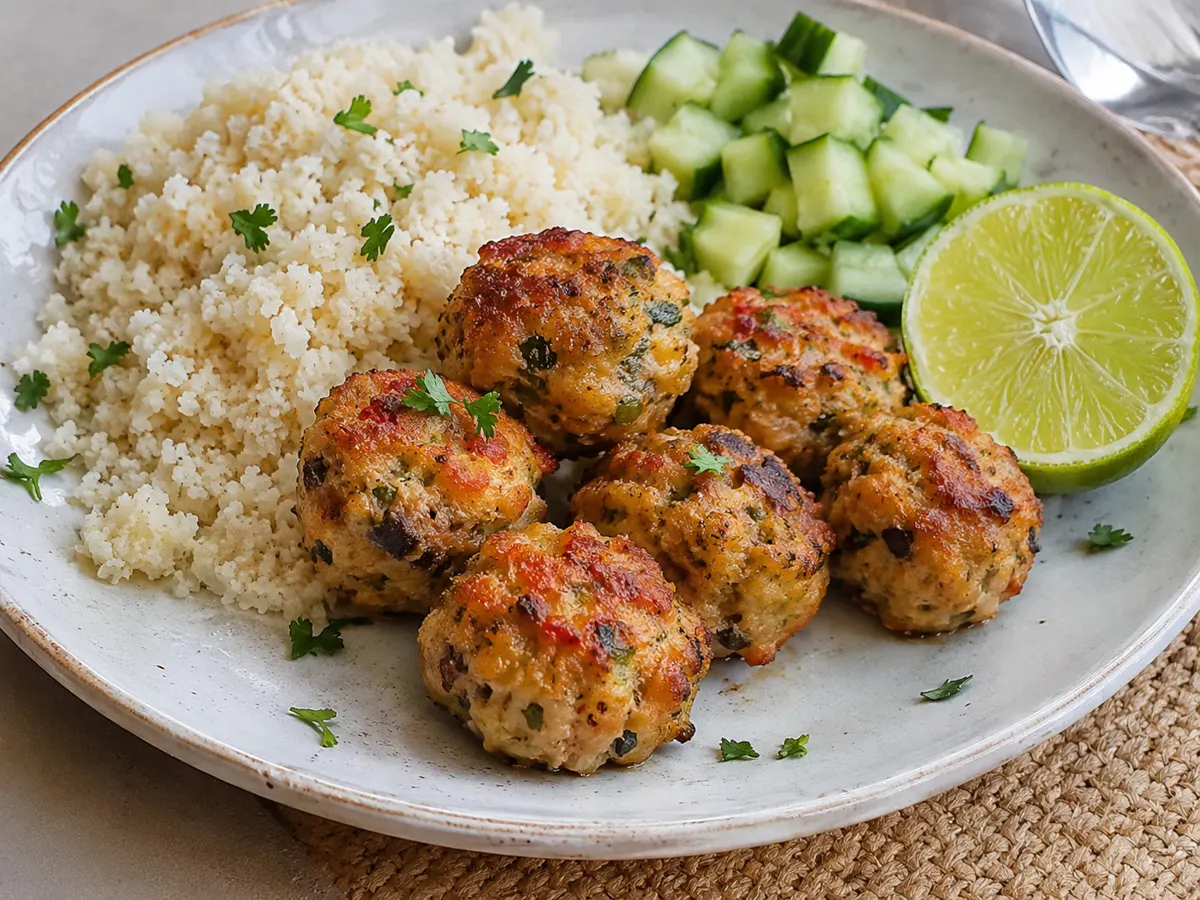
Oven-baked mackerel meatballs, airy attiéké, and crunchy cucumber: a contemporary variation detailed with ginger and lime.
Ingredients
- 500 g skinless and boneless mackerel fillets
- 400 g cooked attiéké
- 1 cucumber
- 1 small onion
- 1 egg
- 40 g breadcrumbs
- 1 lime
- 15 g fresh ginger
- 2 tablespoons oil
- 10 g parsley
- 3 g salt maximum
- Black pepper to taste
Preparation
Preheat the oven to 190 °C. Line a baking sheet with parchment paper and brush it with one tablespoon of oil. Pat the mackerel fillets dry, check for any remaining bones, then chop the flesh into small pieces. Place it in a cold bowl. Do not try to obtain a puree: the pieces should be able to bind while retaining some texture.
Peel the onion and ginger. Finely chop the onion and grate the ginger. Wash the parsley, dry it, and chop it. Add half of the parsley, onion, ginger, egg, and breadcrumbs to the fish. Season with some of the salt and black pepper. Mix gently with a fork to distribute the binding without unnecessarily crushing the flesh.
Form sixteen meatballs with clean, slightly moistened hands. Arrange them on the baking sheet, spacing them out, then flatten them slightly so they rest stably. Bake for about twenty to twenty-five minutes. Turn the sheet if your oven heats more on one side. The flesh must be fully cooked to the center; a clean thermometer can be used to check for a temperature of at least 74 °C.
While baking, wash the cucumber and cut it into small cubes. Cut the lime in half. Take one tablespoon of juice to start, then keep the rest for serving. Mix the cucumber with the remaining parsley. Keep this garnish fresh in the refrigerator rather than letting it wait near the oven.
Reheat the attiéké according to its packaging instructions. Carefully fluff it with a fork, then add the second tablespoon of oil and the measured lime juice. Let it cool slightly before incorporating the cucumber. Taste a small portion and adjust the salt within the planned limit, taking into account the seasoning of the meatballs.
Remove the meatballs from the oven and let them firm up for two minutes on the baking sheet before moving them with a spatula. Distribute the cucumber attiéké into four plates and add four meatballs per person. Serve the remaining lime separately. This presentation allows everyone to adjust the acidity without soaking the semolina or covering the taste of the fish.
Introduction
These mackerel meatballs give fish another place on an attiéké plate. The fillets are chopped with a knife, bound with an egg and a little breadcrumbs, then baked in the oven. The cucumber is added at the last moment to retain its crunch. The desired result contrasts a soft, lightly browned meatball with an airy and freshly seasoned semolina. Ginger supports the mackerel without masking its flavor, while lime provides a measured acidity.
This proposal is a contemporary creation around products found in the Ivorian repertoire. It does not claim to define a traditional form of meatball or a unique way of serving attiéké. Its practical particularity lies in the grouped oven cooking: the meatballs require little handling once shaped. Preferably choose fillets prepared by the fishmonger, then nevertheless check each piece with your fingers. Flesh free of all bones is essential before chopping.
Cultural context
Contemporary variation around products from the West African repertoire, proposed for this volume dedicated to Côte d'Ivoire. No exclusive regional origin or particular tradition is attributed to this formulation.
Institutional references FAO INFOODS: https://www.fao.org/infoods/infoods/tables-and-databases/faoinfoods-databases/en/ — Food composition benchmarks; no nutritional calculation of this formulation is announced. World Health Organization: https://www.who.int/teams/nutrition-and-food-safety/multisectoral-actions-in-food-systems/five-keys-to-safer-food-poster — General principles of cleanliness, food separation, cooking, and temperature control. FoodSafety.gov: https://www.foodsafety.gov/food-safety-charts/safe-minimum-internal-temperatures — Institutional cooking temperature benchmarks; durations remain to be adjusted to the product and equipment.
Tips
A stuffing that spreads between the fingers may contain insufficiently dried fillets or a particularly large egg. Before adding a lot of breadcrumbs, leave the mixture in the cold for five minutes so that the bread absorbs the liquid. Then shape a small test meatball. If it really remains impossible to handle, incorporate an additional teaspoon of breadcrumbs, then wait a few more moments.
Conversely, a very dry stuffing should be mixed for a shorter time and shaped without excessive compression. Strongly compacting the meatballs removes the spaces between the pieces and gives a harder texture after cooking. The browning on top varies with ovens; it alone does not allow one to decide if the center is cooked. Check a meatball located in the middle of the baking sheet.
To prepare the meal in advance, keep the raw meatballs separately in the refrigerator, along with the attiéké and chopped cucumber. Cook the fish close to serving time. Cooked leftovers should be cooled quickly and refrigerated within two hours; consume them within twenty-four hours and reheat them only once until they are thoroughly hot. Add fresh cucumber at the time of the second serving rather than reheating the entire garnish.
To serve children or people who prefer mild flavors, keep the ginger finely grated and the pepper moderate. The lime can be added to each plate rather than to the entire preparation. Present the meatballs with a fork and check their texture one last time by sharing them: no hard fragments should remain in the flesh. Preparing the fish deserves more attention than seeking a perfectly round shape.
Planning
The mackerel must remain cold during preparation. Only take out the amount to work with and put the bowl back in the refrigerator if the kitchen is warm. Chopping with a knife leaves small noticeable pieces; prolonged blending, on the other hand, produces a compact paste and quickly heats the fish. Dry ground bread or breadcrumbs are used here to retain some of the moisture, without replacing a significant amount of flesh.
The attiéké used is a processed and cooked food product. It is not about preparing semolina from fresh cassava. Follow the manufacturer's reheating instructions, then separate the grains with a fork. For the cucumber, remove the core only if it is very watery. Cut into small enough cubes to distribute throughout the attiéké, but thick enough to retain their firmness after seasoning.
Nutrition notes
Mackerel provides protein and lipids, including omega-3 fatty acids, but the actual composition varies depending on the fish and the portion consumed. Attiéké primarily constitutes the starchy element of this plate. Cucumber and parsley diversify textures and vegetables, without being sufficient on their own to define the balance of the entire day's diet. Egg and breadcrumbs must be announced to individuals concerned by their allergens. No precise caloric value is announced without calculation based on the ingredients actually used. Enjoy your meal: savor these still soft meatballs, with a semolina whose grains separate easily.
Conclusion
Serve at the indicated texture and adjust seasoning after tasting the cooked food.
Enjoy your meal
Enjoy your meal!