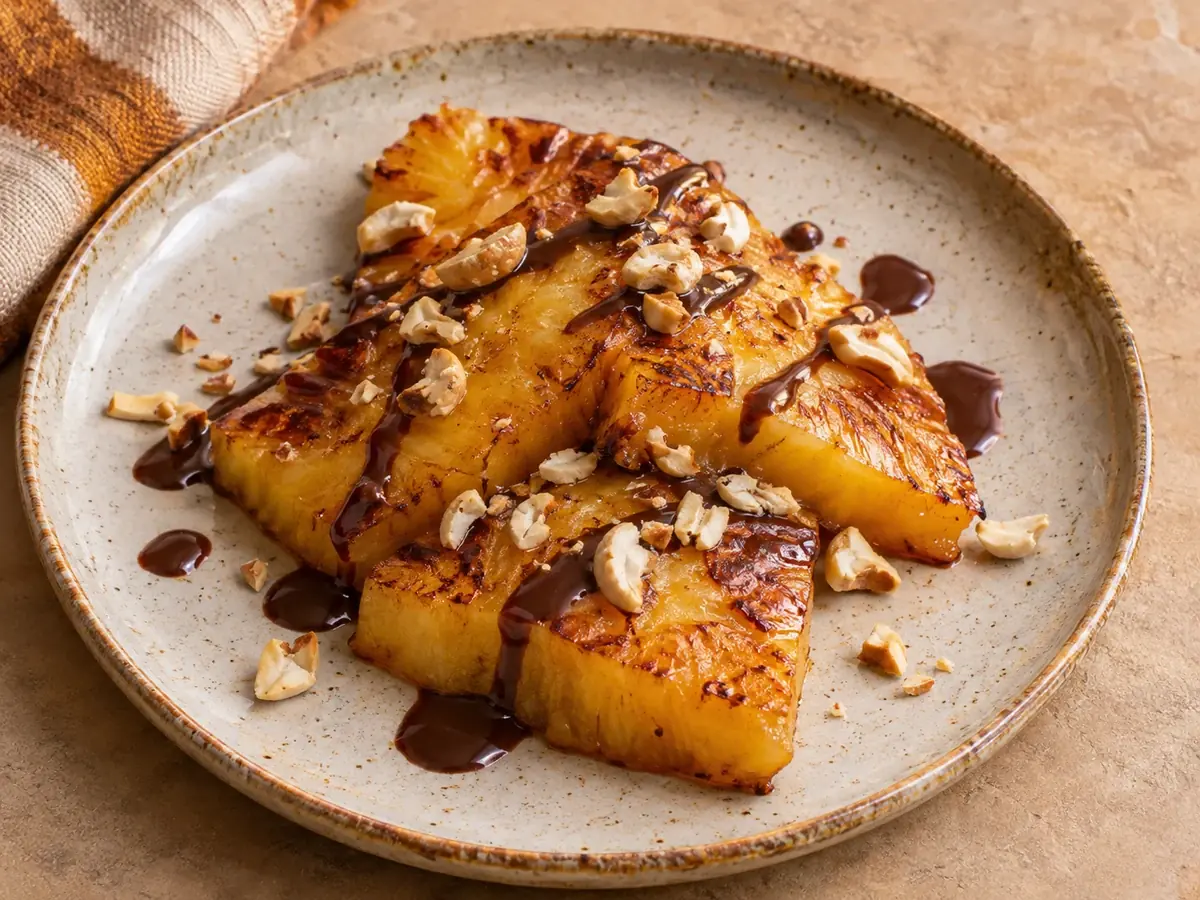
Pan-fried pineapple with cocoa and cashews
Prepare a pan-fried pineapple with cocoa and cashews: golden fruit, a light sauce without cream, and tips for keeping the cocoa smooth and not too bitter.
Ingredients
- 800 g ripe pineapple flesh
- 25 g unsweetened cocoa powder
- 60 g plain unsalted cashews
- 30 g sugar
- 15 ml sunflower oil
- 180 ml drinking water
- 10 ml lime juice optional
- 1 g ground vanilla
- 1 small pinch of salt less than 0.5 g
Preparation
Cut the prepared pineapple into thick half-slices or large, regular pieces. Drain them briefly if a lot of juice flows out, keeping this juice in a clean bowl. Do not press them: their purpose is to remain juicy. If you are using pieces of very different sizes, keep the smaller ones for another preparation or add them later to the pan so they don't fall apart before the others.
Heat the cashews in a small dry pan over medium heat for three to five minutes. Stir often and watch as soon as they begin to brown. Immediately pour them onto the cold plate. Let cool, then chop them coarsely with a knife. Large pieces provide a pleasant texture; a fine powder would disappear into the sauce and not give the same contrast when served.
Take 60 ml from the 180 ml of water and dilute the cocoa in a small bowl, whisking. Pour the remaining 120 ml of water into the saucepan with the sugar, vanilla, and tiny pinch of salt. Heat until the sugar dissolves. Add the diluted cocoa, stirring, then simmer gently for three to four minutes. The sauce should be smooth and slightly coating, but still fluid enough to spread in a drizzle.
Heat the oil in the large pan. Place the pineapple pieces in a single layer and brown them for two to three minutes on one side, then gently flip them. Continue for two to three minutes on the other side. Work in two batches if necessary: an overfilled pan collects a lot of juice, and the pieces simmer instead of browning. A golden hue is sufficient; do not seek a dark caramelization on all surfaces.
Gather the pineapple pieces in the pan and add two spoonfuls of their reserved juice if the bottom is dry. Heat for one minute, scraping up the juices with a suitable spatula. Taste a piece. Add lime juice only if the pineapple lacks vibrancy, and start with a small amount. An already tangy fruit does not necessarily need it. Turn off the heat while the fruit retains its shape.
Distribute the warm pineapple onto four plates. Add a little cocoa sauce, then the crushed cashews at the last moment. Offer the rest of the sauce in a small bowl so that everyone can serve themselves sparingly. Do not pour all the sauce into the pan: this would mask the golden sides and make it harder to control the balance. Serve immediately to maintain the contrast between the warm fruit and the crunchy nuts.
Introduction
A fruit dessert with a light sauce
Pan-fried pineapple with cocoa and cashews is served warm, in still juicy pieces, with a small amount of chocolate sauce. The cocoa does not form a thick ganache: it is diluted in a light syrup to accompany the fruit without completely covering it. Cashews add a crunchy contrast and a slightly roasted flavor. The dessert remains centered on the pineapple; the sauce and nuts are portioned at serving rather than being poured entirely over each plate.
This contemporary creation differs from the ginger-roasted pineapple in the first volume by its cooking method, seasoning, and garnish. It is not presented as a traditional Ivorian specialty. Cocoa and cashews offer a chosen flavor direction for the book here, without recounting an undocumented cultural origin. The name directly indicates the three major elements so that the reader knows what dessert they will prepare.
Cultural context
Contemporary creation based on products from the Ivorian repertoire. The proportions are not attributed to a regional tradition nor certified by the cited institutions.
Institutional references FAO INFOODS: https://www.fao.org/infoods/infoods/tables-and-databases/faoinfoods-databases/en/ — Food composition reference for subsequent nutritional calculation. No nutritional calculation of these recipes is claimed to have been performed. UNESCO: https://ich.unesco.org/fr/RL/les-savoir-faire-lies-a-la-fabrication-de-l-attieke-en-cote-d-ivoire-02086 — Context of attiéké manufacturing know-how, inscribed in 2024. Does not validate the combinations or proportions of the recipes. World Health Organization: https://www.who.int/teams/nutrition-and-food-safety/multisectoral-actions-in-food-systems/five-keys-to-safer-food-poster — General principles of cleanliness, food separation, cooking, and temperature control. The proposed shelf lives remain cautious household advice.
Tips
Keeping a cocoa sauce flexible and not too bitter Unsweetened cocoa has a natural bitterness. Sugar and fruit balance it, but there's no need to aim for a very sweet sauce. Taste it with a piece of pineapple rather than alone: the combination gives a more accurate reference. If it's too strong, add a little hot water and mix before considering more sugar. Excessive reduction concentrates both cocoa and sugar, and can result in a heavy sauce. Lumps mainly appear when the powder is poured directly into hot syrup. Diluting it in a small amount of water facilitates even dispersion. If a few clumps persist, whisk or pass the sauce through a fine sieve. Do not let the bottom burn: cocoa bitterness and a burnt taste are not corrected in the same way. Maintain a low heat and stir near the corners of the saucepan.
Preparing a dessert in advance The sauce can be made a few hours beforehand, cooled quickly, and stored in the refrigerator. It may thicken when cooled; gently reheat with a small spoonful of water to restore a fluid texture. Roasted cashews should be stored separately in a dry, sealed container after cooling. The pineapple can be cut in advance and kept cold, but cooking it just before serving is more pleasant, as its surfaces remain better defined. For a large gathering, brown the pieces in several batches and keep them warm for a short time in a hot dish. Do not add more oil to each batch without considering the total: the pan may simply need to be wiped if juices are burning. The method does not require flambéing the fruit or adding alcohol. Ice cream or yogurt would change the ingredients and allergens; the dessert already works with its three main elements.
Planning
Choose pineapple carefully and avoid sweetened powders
The weight of 800 grams corresponds to the flesh after removing the skin, eyes, and the central part, which is too firm if fibrous. Choose a ripe, fragrant pineapple, free of moldy spots or fermented odor. A very acidic fruit will remain livelier after cooking; a very ripe fruit will yield more juice and break down more easily. Cut pieces large enough to be turned with a spatula without becoming a compote.
Use unsweetened cocoa powder. A chocolate drink powder would alter the sugar dosage and sauce texture. Also, choose plain cashews, without added salt or seasonings. They should not be replaced without caution by an appetizer mix. Prepare a large pan for the fruit, a small saucepan for the sauce, and a cold plate to stop the roasting of the nuts. These separate steps provide more control than cooking everything in the same container.
Nutrition notes
Storage and nutritional guidelines Store leftovers quickly in the refrigerator in separate containers if possible. Gently reheat the fruit and sauce, then add the nuts when serving; they will remain crunchier this way. Cashews are a tree nut to be noted for people with allergies. Cocoa and other packaged products may also carry trace warnings. The presence of pineapple does not eliminate the contributions of sugar, oil, and nuts; no precise nutritional figures are announced without calculation. Enjoy your meal!
Conclusion
Serve with the indicated texture and adapt the seasoning to the products used.
Enjoy your meal
Enjoy your meal!