Vegetable terrine with attiéké and eggs
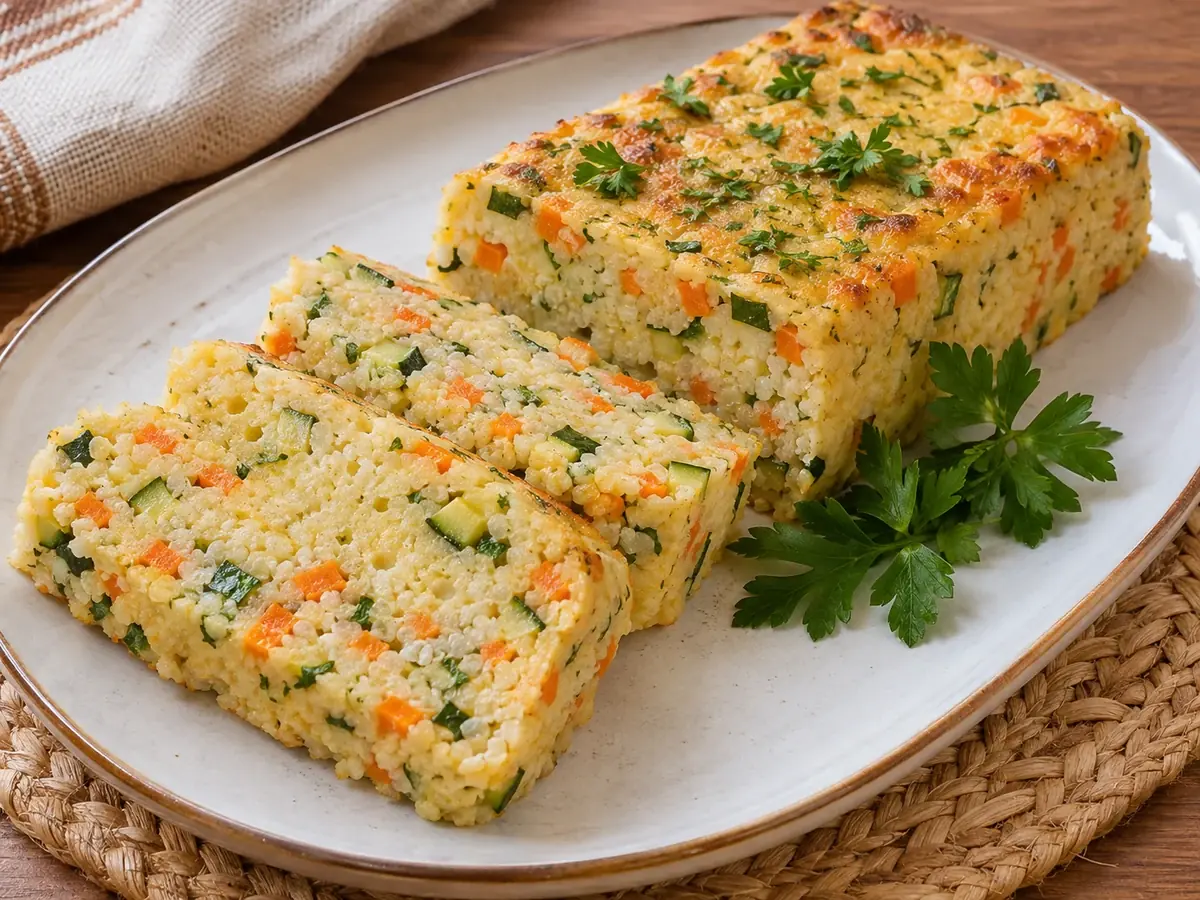
Prepare a vegetable terrine with attiéké and eggs, gently baked in the oven, with tips for obtaining flexible slices that hold their shape.
Ingredients
- 350 g pre-cooked attiéké
- 5 medium eggs
- 250 g carrots
- 200 g zucchini
- 120 g onion
- 150 ml pasteurized milk
- 20 ml sunflower oil
- 10 g parsley
- 5 g fresh ginger
- 3 g salt maximum
- 1 g pepper
Preparation
Preheat the oven to 170 °C (static heat). Chop the onion, grate the ginger, and dice the vegetables into pieces less than one centimeter. Heat 15 ml of oil in a pan. Sauté the onion for five minutes, then add the carrots with two tablespoons of water. Cover and cook for eight to ten minutes, stirring. The diced vegetables should begin to soften without turning into a purée.
Add the zucchini and ginger. Continue cooking uncovered for five to seven minutes, until the vegetables are tender and excess water has evaporated. Spread them on a clean plate to cool. A scorching hot filling would start to coagulate the eggs in the mixture; a very wet filling would weaken its hold. Meanwhile, oil the mold with the remaining 5 ml or prepare its parchment paper.
Break the eggs into a separate bowl, then pour them into a large mixing bowl. Add the milk, salt, and pepper. Whisk to combine without aiming for a voluminous foam. Incorporate the separated attiéké with a spatula, then the cooled vegetables and the washed and chopped parsley. Mix by lifting to distribute the diced vegetables and grains. Visually check that the bottom of the bowl does not contain a compact area of semolina.
Pour into the prepared mold and level the surface. Place the mold in a larger dish and pour hot water around it, up to about half its height, without getting any into the mixture. This bain-marie provides gentler cooking and limits dried-out edges. Check that the assembly is stable before moving it. Carefully bake for thirty-five to forty-five minutes, depending on the mold and oven.
Check for doneness in the center: the terrine should be set, with no visible egg liquid, and a blade inserted in the middle should come out clean. If the top browns too quickly, lightly cover it with suitable foil and extend the cooking time. Do not rely solely on the firmness of the edges. Remove the mold from the bain-marie with adequate protection, then let it rest for fifteen minutes before attempting to unmold or slice.
Loosen the edges if necessary and lift the parchment paper to transfer the terrine. Cut eight slices with a clean knife, wiping it between cuts to keep the surfaces neat. Serve two slices per person with vegetables or a small tomato sauce offered separately. If you prefer to avoid unmolding, cut directly in the mold if its coating allows, using an utensil that won't damage it.
Introduction
A terrine to slice without drying it out
The vegetable terrine with attiéké and eggs yields flexible slices, in which the cassava semolina grains remain perceptible. The eggs ensure it holds together, while the pre-cooked vegetables add color and moisture. The preparation can be eaten hot or warm after a short rest; it can also be served cold if it has been cooled quickly and stored correctly. The desired texture is neither that of dry bread nor that of a runny omelet.
This recipe is a contemporary creation from the second volume, with no claim to ancient Ivorian tradition. Attiéké is used as an already prepared and cooked ingredient, then integrated into an egg mixture. This culinary transformation should not be confused with the expertise of making attiéké itself. This sheet does not claim to replace or simplify this expertise: it only describes an additional domestic use of a readily available and well-preserved product.
Cultural context
Contemporary creation based on products from the Ivorian repertoire. The proportions are not attributed to a regional tradition nor certified by the institutions cited.
Institutional references FAO INFOODS: https://www.fao.org/infoods/infoods/tables-and-databases/faoinfoods-databases/en/ — Food composition reference for subsequent nutritional calculation. No nutritional calculation of these recipes is claimed to have been performed. UNESCO: https://ich.unesco.org/fr/RL/les-savoir-faire-lies-a-la-fabrication-de-l-attieke-en-cote-d-ivoire-02086 — Context of attiéké manufacturing know-how, inscribed in 2024. Does not validate the combinations or proportions of the recipes. World Health Organization: https://www.who.int/teams/nutrition-and-food-safety/multisectoral-actions-in-food-systems/five-keys-to-safer-food-poster — General principles of cleanliness, food separation, cooking, and temperature control. The proposed storage durations remain cautious domestic advice.
Tips
Why resting facilitates slicing Upon exiting the oven, the egg mixture remains fragile and contains steam. A short rest allows the whole to stabilize and yields cleaner slices. Cutting immediately can cause a properly cooked terrine to collapse. This rest should not become a prolonged wait all day at room temperature. If the dish is intended for cold service, then organize its rapid cooling and storage in the refrigerator. A terrine that releases a lot of water may contain insufficiently drained vegetables or very watery zucchini. Make sure their juice evaporates well before mixing and let them cool on a wide plate. Adding flour at the last moment changes the formulation and is not necessary when moisture is controlled. If the attiéké is particularly moist, separate its grains carefully and avoid adding liquid beyond the planned amount of milk.
Adaptations and cold service You can replace part of the carrots with finely chopped bell pepper, provided you pre-cook it with the onion and eliminate its residual water. Cooked vegetables remaining from another meal may be suitable only if they have been stored correctly and their seasoning is taken into account. Do not automatically add salt to an already seasoned filling. Parsley can be replaced by a little chives, but a significant amount of herbs would alter the texture. For cold service, allow the strongest heat to dissipate briefly, then cool the preparation without prolonged waiting and keep it in the refrigerator. A whole, very thick terrine cools slowly; appropriate portions facilitate this step. Only take out the slices needed for serving. Homemade mayonnaise would change the storage conditions and add other points of vigilance; a cooled and well-preserved tomato sauce is a simpler option to manage.
Planning
Choose the mold and prepare the vegetables
Use an oven-safe loaf pan of about twenty-four centimeters, or a small rectangular dish of similar capacity. A terrine that is too thick will cook less easily in the center and may dry out at the edges. Line the mold with parchment paper if its coating requires it, avoiding large creases in the corners. The preparation should remain a few centimeters from the edge to allow it to rise slightly without overflowing.
Cut the carrots and zucchini into small, regular dice. Carrots are firmer and start cooking before zucchini. This pre-cooking is not optional: raw vegetables would release water into the mixture and could remain crunchy when the eggs are already set. Also, separate the grains of attiéké before incorporating it. Compact clumps become dense pockets in the slices and prevent an even distribution of the eggs.
Nutrition notes
Allergens and nutritional information This recipe contains eggs and milk, two allergens to note. Lactose-free milk does not remove milk proteins; therefore, it is not automatically suitable for someone allergic to milk. Attiéké provides the main carbohydrates, eggs contribute proteins, and vegetables diversify the preparation. No precise nutritional figures are offered without calculation based on the ingredients and the yield obtained. Enjoy your meal! Serve the terrine in flexible slices, accompanied by a fresh garnish and a small amount of sauce.
Conclusion
Serve at the indicated texture and adjust seasoning to the products used.
Enjoy your meal
Enjoy your meal!