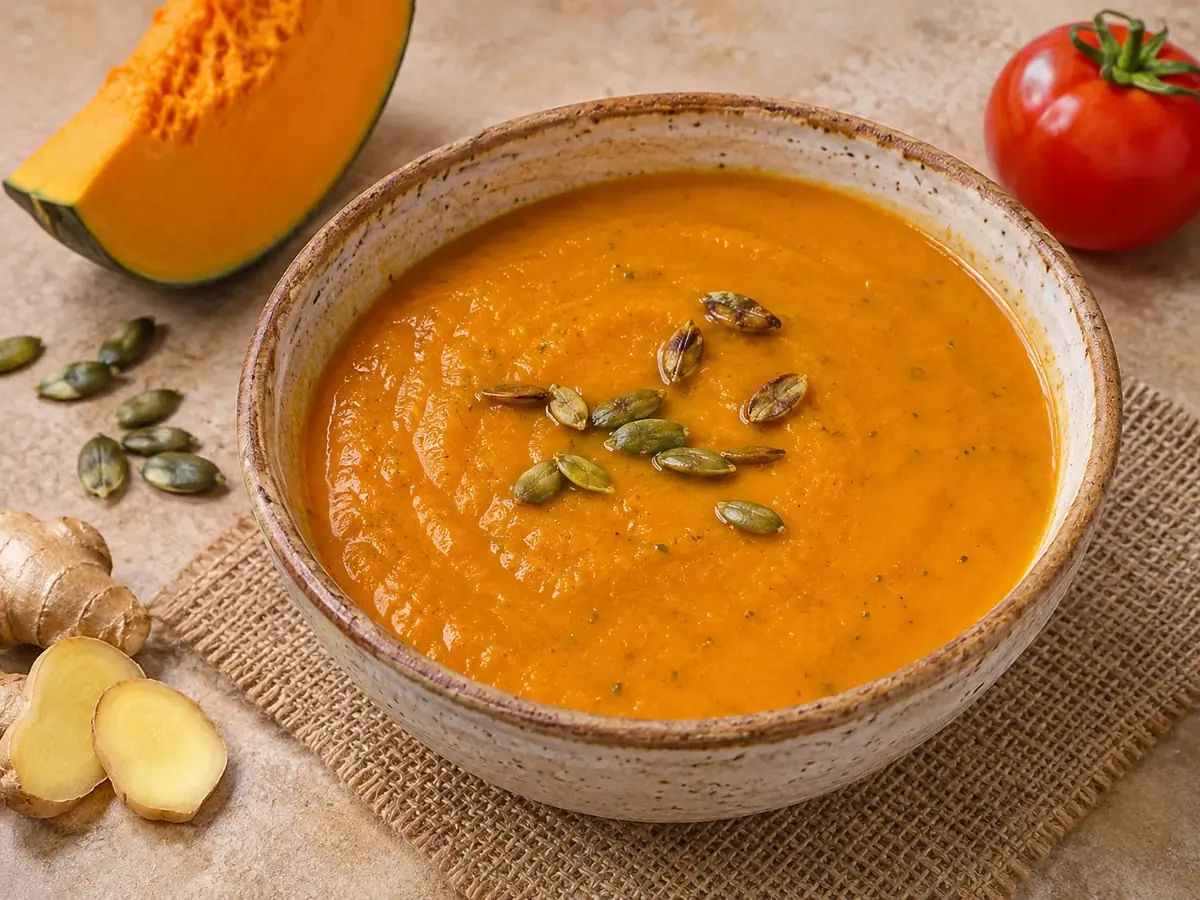
Squash soup with pumpkin seeds and ginger
Prepare a ginger squash soup, thickened with blended pumpkin seeds, without dairy cream and with tips for a velvety texture.
Ingredients
- 900 g peeled and deseeded squash
- 70 g plain hulled pumpkin seeds
- 180 g onion
- 200 g tomatoes
- 15 g fresh ginger
- 10 g garlic
- 20 ml sunflower oil
- 1 liter drinking water
- 15 ml lime juice
- 3 g salt maximum
- 1 g pepper
Preparation
Chop the onion and garlic, grate the ginger, and dice the tomatoes. Heat a small pan without oil. Pour in the pumpkin seeds and stir for two to three minutes over medium heat. They should develop a toasted aroma while remaining mostly green. Immediately transfer to a plate to stop the cooking. Reserve about 15 g for serving and keep the rest for blending into the soup.
Heat the oil in a large saucepan. Sauté the onion for six minutes over medium heat, without aiming for a dark color. Add the garlic and ginger, stir for one minute, then incorporate the tomatoes. Cook for five to eight minutes to concentrate their juice. If the aromatics stick before the tomatoes break down, add one or two spoonfuls of water. This aromatic base should be tender and fragrant before adding the squash.
Add the squash cubes and about 800 ml of water, reserving the rest for adjustment. Bring to a simmer and season with half of the planned salt. Cover partially, then cook for twenty to twenty-five minutes. Check several cubes with the tip of a knife: they should mash easily. If some remain firm, continue cooking before blending. Undercooked squash results in a grainy texture that the blender does not fully correct.
Add the 55 g of seeds reserved for blending and let simmer for an additional five minutes. Then turn off the heat. Blend carefully, in sequences, keeping the immersion blender head submerged to limit splashes. With a blender, proceed in small quantities according to its safety instructions for hot preparations. The soup should become homogeneous; a few extra passes are often necessary to finely reduce the seeds.
Return the soup to low heat. Gradually add the reserved water until a velvety consistency that flows easily from the ladle is achieved. First, pour in half of the lime juice, add the pepper, and taste. Adjust salt and acidity according to the result. Heat for a few minutes, stirring, without allowing a strong boil to cause splashes. The soup will thicken slightly upon resting: keep a slightly loose texture before serving.
Divide into four bowls for a light main dish or six small portions for a starter. Sprinkle the remaining seeds at the last moment so they do not soften completely in the liquid. Serve hot, with the chosen side dish presented separately. Do not add a large amount of oil as a finish: the seeds already provide some. If you want a more complete meal, a bean preparation or another protein source can be served alongside, depending on your menu.
Introduction
The vegetable and the seed in one soup
This squash soup with pumpkin seeds and ginger combines the flesh of the vegetable with some of its edible seeds, purchased hulled for easier preparation. The flesh provides volume and sweetness; the blended seeds add consistency and a deeper flavor. The result is intended to be velvety, without being as thick as a purée. A few seeds reserved for serving maintain a subtle contrast on the smooth surface.
The recipe card offers a contemporary creation for the second volume, distinct from the pistache soup in the first volume. It does not claim to reproduce a regional recipe under another name. The term “pumpkin seeds” avoids confusion with commercial pistachios, which are a different product. The specific combination with squash, tomato, and ginger here is an editorial formulation; it should not be cited as ethnographic testimony.
Cultural context
Contemporary creation based on products from the Ivorian repertoire. The proportions are not attributed to a regional tradition nor certified by the cited institutions.
Institutional references FAO INFOODS: https://www.fao.org/infoods/infoods/tables-and-databases/faoinfoods-databases/en/ — Food composition reference for subsequent nutritional calculation. No nutritional calculation of these recipes is claimed to have been performed. UNESCO: https://ich.unesco.org/fr/RL/les-savoir-faire-lies-a-la-fabrication-de-l-attieke-en-cote-d-ivoire-02086 — Context of the traditional knowledge related to attiéké production in Côte d'Ivoire, inscribed in 2024. Does not validate the combinations or proportions of the recipes. World Health Organization: https://www.who.int/teams/nutrition-and-food-safety/multisectoral-actions-in-food-systems/five-keys-to-safer-food-poster — General principles of cleanliness, food separation, cooking, and temperature control. The proposed shelf lives remain cautious household advice.
Tips
Correcting a texture that is too thick or too grainy A soup that is too thick can be thinned simply with hot water, added in small ladles. Mix, heat briefly, and taste again after each addition, as dilution also alters the salt and ginger. A texture that is too liquid can be gently reduced uncovered before final seasoning. Do not instinctively add starch: squash and seeds are usually sufficient to provide body, provided you haven't poured all the liquid too early. If seed particles remain noticeable, blend longer with a suitable appliance or pass the soup through a fine sieve. The latter option removes some of the material and slightly changes the yield. Cooking the seeds in the broth for five minutes helps soften them, but their fineness of grinding also depends on the power of the equipment. You can crush them before adding them if you know your blender has difficulty with whole seeds.
Preparation in advance and taste variations The soup can be cooked the day before, then cooled quickly and stored in the refrigerator. It often thickens when cold; add a little water when reheating rather than stirring it over high heat in a pan that is too dry. Reserve the finishing seeds in a separate, dry container. A large pot should be divided into shallower containers to cool efficiently, instead of being left overnight on the stove. Ginger can be reduced to ten grams for a milder flavor. A very sweet squash sometimes benefits from more lemon, but taste first with the tomato already present. A little chili served separately offers another direction without imposing the same intensity on everyone. The recipe does not call for dairy cream; adding it would be possible in an adaptation, but would alter the taste and allergens. Keep the first version simple to clearly recognize the role of the seeds.
Planning
Choose a squash and prepare the seeds
A firm-fleshed butternut squash works well and gives a naturally creamy soup. The weight of 900 grams is measured after the skin, seeds, and internal fibers have been removed. If you use a more watery squash, start with a little less water and add more after blending. The final amount of liquid should follow the texture of the vegetable, not just the number on the recipe card. Cut the flesh into regular cubes to avoid some pieces remaining firm while others are already broken down.
Choose hulled, plain, unsalted seeds. Discard any product with a rancid smell or stored in a damp bag. Light roasting reveals their aroma, but strong browning can easily lead to bitterness. Set aside an immersion blender or a blender suitable for hot liquids. If your appliance is not designed for this use, let the preparation cool sufficiently before blending and then reheat it in the saucepan. Always respect the manufacturer's limits.
Nutrition notes
Nutritional benchmarks and conclusion Squash constitutes the main vegetable volume, while seeds and oil notably add fats. Their presence does not justify any particular health promises. Exact nutritional values would require calculation from the products and yield actually obtained; therefore, they are not invented here. Check for trace mentions on packaged seeds in case of allergies. Enjoy your meal! Serve the bowls as soon as they are reheated and add the seeds just before serving to preserve their aroma.
Conclusion
Serve at the indicated texture and adapt the seasoning to the products used.
Enjoy your meal
Enjoy your meal!