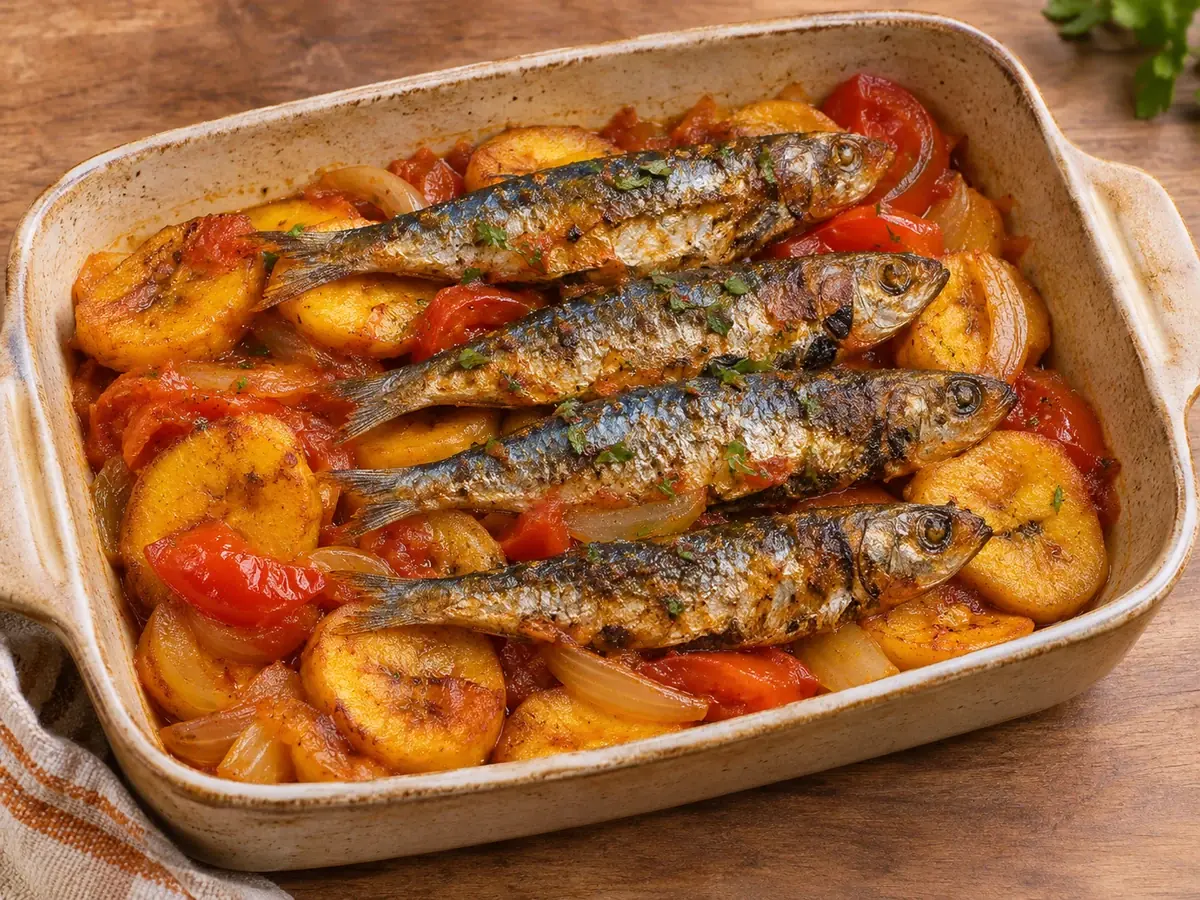
Oven-baked sardines on a bed of plantain and tomato
Cook oven-baked sardines on a bed of plantain and tomato with two cooking times to achieve tender plantains and perfectly cooked fish.
Ingredients
- 800 g fresh sardines, gutted and prepared
- 700 g firm yellow plantains, peeled
- 400 g tomatoes
- 180 g onion
- 10 g garlic
- 10 g fresh ginger
- 25 ml sunflower oil
- 20 ml lime juice
- 100 ml drinking water
- 10 g parsley
- 3 g salt maximum
- 1 g pepper
Preparation
Preheat the oven to 200 °C (static heat). Peel the plantains and cut them into slices about one and a half centimeters thick. Mince the onion, chop the garlic, and grate the ginger. Cut the tomatoes into thin wedges. Mix the plantains and vegetables in a large dish with 20 ml of oil, half of the salt, and half of the pepper. Pour the 100 ml of water into the bottom, without submerging the ingredients.
Spread in as even a layer as possible and bake for 25 to 30 minutes. Stir after fifteen minutes, lifting the slices to avoid breaking them. The tomatoes should begin to soften and the plantains to tenderize. Pierce a thick slice with a knife: it should offer little resistance. If the plantain remains firm, continue this first cooking before adding the fish.
During this cooking, gently pat the sardines dry with suitable paper. Mix the remaining 5 ml of oil with about 10 ml of lime juice and the reserved pepper. Lightly brush the fish, then add a small portion of the remaining salt. Do not let this preparation sit at room temperature for long. The citrus seasoning adds flavor; it does not replace refrigeration or complete cooking of the fish.
Remove the dish from the oven and place the sardines on the bed of vegetables and plantain. Leave a little space between them for heat to circulate. If the bottom is completely dry, add two or three spoonfuls of hot water to the side, without directly wetting the skin. Return to the oven for twelve to fifteen minutes, adjusting to the size of the fish and whether they are whole or opened.
Check for doneness in the thickest part of a sardine: the flesh should be opaque, flake easily, and be cooked through to the center. Opened fillets may require less time; large sardines more. Extend only if necessary and do not rely solely on skin color. The vegetables should be very hot and the plantain completely tender when the fish is ready.
Remove the dish, add the washed and chopped parsley, then offer the rest of the lemon at the table. Serve in four portions, distributing the fish according to their size rather than imposing the same number of pieces. Add a few slices of plantain and tomatoes to each plate. Point out any bones and take the time to prepare child-friendly portions. The dish is sufficient with a fresh garnish if you wish to complete the meal.
Introduction
An oven dish with a precise cooking order
Oven-baked sardines on a bed of plantain and tomato combine small fish with plantain slices that require more time to become tender. The recipe therefore begins with cooking the plantain and vegetables, before adding the fish. The sardines then flavor the bottom of the dish without undergoing the entire roasting time. The dish is shared directly at the table, with a little tomato juice to accompany the golden slices.
This is a contemporary creation that differs from the braised sardines and alloco already present in the first volume. The plantain is not fried: it softens in the oven with the moisture from the tomatoes and a measured amount of oil. This preparation is not attributed to a particular community. The choice of sardines depends on the market; their freshness and proper preparation are more important than an absolutely uniform size.
Cultural context
Contemporary creation using products from the Ivorian repertoire. The proportions are not attributed to a regional tradition nor certified by the cited institutions.
Institutional references FAO INFOODS: https://www.fao.org/infoods/infoods/tables-and-databases/faoinfoods-databases/en/ — Food composition reference for subsequent nutritional calculation. No nutritional calculation of these recipes is claimed to have been performed. UNESCO: https://ich.unesco.org/fr/RL/les-savoir-faire-lies-a-la-fabrication-de-l-attieke-en-cote-d-ivoire-02086 — Context of attiéké manufacturing know-how, inscribed in 2024. Does not validate the combinations or proportions of the recipes. World Health Organization: https://www.who.int/teams/nutrition-and-food-safety/multisectoral-actions-in-food-systems/five-keys-to-safer-food-poster — General principles of cleanliness, food separation, cooking, and temperature control. The proposed shelf lives remain cautious household advice.
Tips
Choose a fairly firm plantain A yellow plantain with a few black spots provides a measured sweetness and holds up well in the dish. A very ripe fruit crushes easily when you stir the vegetables; it can be used, but the slices will need to be thicker and handled with a wide spatula. A green plantain remains firmer and requires an adjustment of liquid and time. It is preferable to maintain the indicated ripeness for a first attempt. The size of the dish also influences the result. In a narrow container, the vegetables stack up and release abundant juice; in a very wide dish, the bottom can dry out quickly. Adjust with a few spoonfuls of hot water rather than a large glass added all at once. The final juice should lightly coat the slices, without giving them a boiled texture. A slight browning on some sides is pleasant, but it should not be sought at the expense of tenderness.
Organization and reasonable variations You can prepare and cook the plantain bed in advance, then cool it quickly and keep it in the refrigerator. Reheat it completely before placing the raw sardines: this allows for a short cooking time for the fish. Do not place raw fish on a cold base assuming the duration will remain the same. The whole dish would take longer in the oven and the surface of the sardines could dry out before the center of the dish is hot. Another small fish may be suitable if its size and thickness are comparable, but you must check for bones, preparation conditions, and cooking time. Ginger can be reduced for a milder flavor. A chili served separately allows everyone to choose the intensity without altering the juice of the common dish. Avoid pouring raw marinade that has touched the sardines onto the plates after cooking: it must cook with the dish or be discarded.
Planning
Prepare the fish carefully
If possible, ask your fishmonger for sardines that have been gutted and are suitable for oven baking. For easier serving, sardines that have been opened and deboned can be used, but they are more fragile and cook quickly. The weight indicated corresponds to the prepared fish with its skin. Inspect each piece and remove any remaining scales if necessary. Keep the sardines refrigerated until ready to season, in a separate container from the vegetables ready for cooking.
Small bones require particular attention when serving, especially for children. Oven baking does not make them disappear. If you choose fillets, double-check for bones before placing them in the dish. Do not replace fresh sardines with canned sardines using the same method: canned sardines are already cooked and would result in a different preparation, with a different salt content and heat resistance.
Nutrition notes
Storage and nutritional guidelines Quickly cool any remaining portions and place them in the refrigerator in sealed containers. Reheat a portion covered until hot in the center; the skin will be less firm and the plantain softer, which is normal. Fish is an allergen to be noted. Sardines contribute to protein intake, while plantain provides the main carbohydrates of the meal. No precise nutritional figures are attributed without calculation. Enjoy your meal! Serve the tomato juice sparingly to preserve the personality of each element.
Conclusion
Serve at the indicated texture and adapt the seasoning to the products used.
Enjoy your meal
Enjoy your meal!