Shrimp in coconut broth with fresh corn
Prepare shrimp in coconut broth with fresh corn, with a short cooking time for the crustaceans and guidelines for a fragrant yet balanced soup.
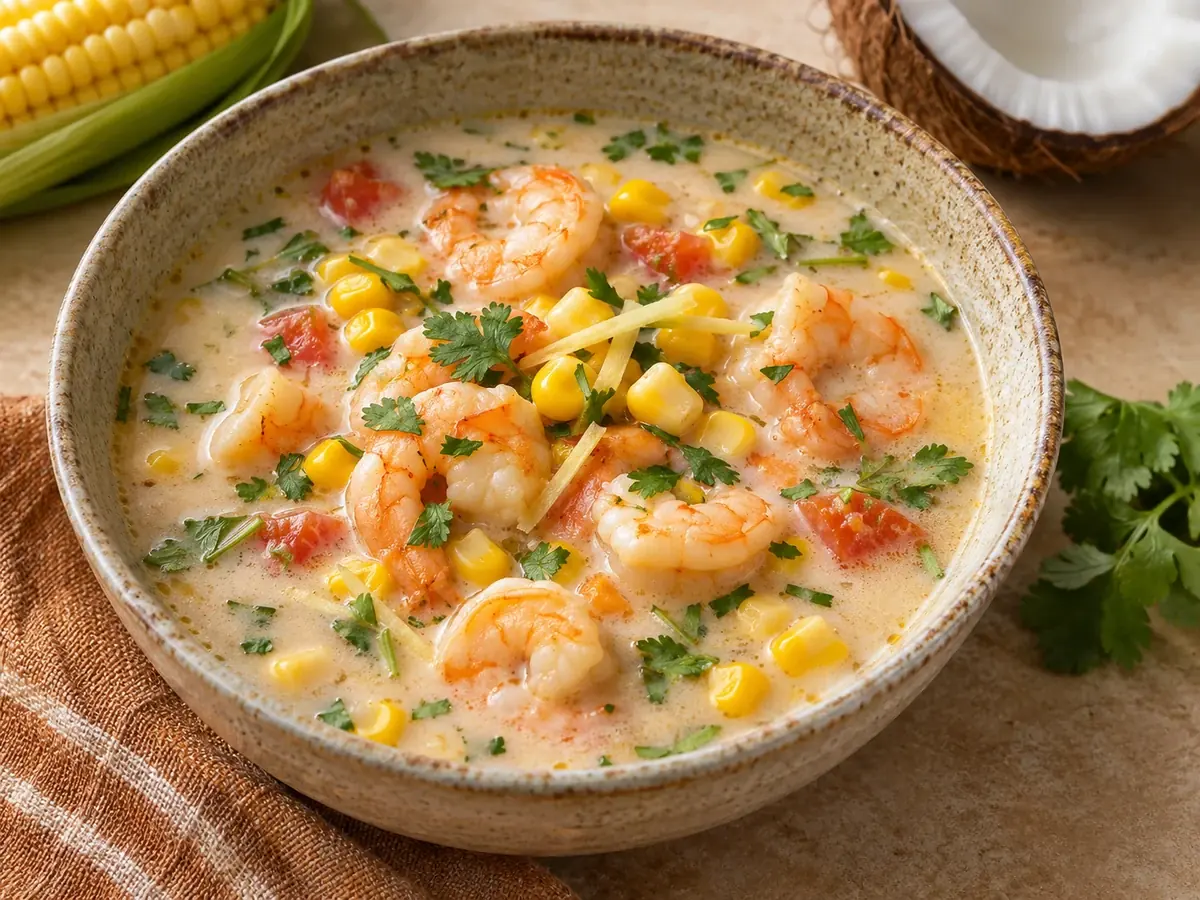
Ingredients
- 500 g raw shelled shrimp
- 300 g fresh corn kernels
- 300 ml unsweetened coconut milk
- 700 ml drinking water
- 200 g tomatoes
- 120 g onion
- 15 g fresh ginger
- 10 g garlic
- 15 ml sunflower oil
- 20 ml lime juice
- 10 g cilantro or parsley
- 3 g salt maximum
- 1 g pepper
- 1 whole chili pepper (optional)
Preparation
Chop the onion and garlic separately. Grate the ginger and dice the tomatoes into small pieces. Heat the oil in the saucepan and sweat the onion for five minutes over medium heat. Add the garlic and ginger, then stir for one minute. Incorporate the tomatoes and cook for five to eight minutes, until they release their juice. The bottom should remain moist; add a spoonful of water if the aromatics start to stick.
Pour in the 700 ml of water and add the fresh corn kernels. Bring to a simmer, then cook for ten to fifteen minutes uncovered or partially covered. The time depends on the maturity of the corn. Take a few kernels to check that they are tender, while retaining a slight resistance when bitten. If they remain hard, continue cooking them before adding the shrimp; the shrimp should not be used as a timer to tenderize the corn.
Add the coconut milk and mix gently. Place the whole chili pepper if you want a spicy note without dispersing many pieces. Let it simmer for three minutes, then add about half of the salt and the pepper. Avoid a very strong boil, which quickly concentrates the liquid and can give the broth a less homogeneous appearance. Taste to check for the presence of ginger and the sweetness of the coconut before final cooking.
Add the well-drained shrimp to the simmering broth. Distribute them with a spoon so that they are submerged, then cook for three to five minutes depending on their size. They should become opaque to the center and be fully cooked, without remaining translucent in their thickest part. Extend if necessary for large sizes, but avoid keeping the pot boiling afterwards: the flesh would unnecessarily firm up.
Turn off the heat and remove the whole chili pepper before serving, or clearly indicate its presence. First add half of the lime juice, mix and taste a spoonful of broth. Gradually complete with the rest according to its acidity. Adjust the salt only at this point. Wash and chop the herbs, then add a portion off the heat to preserve their fragrance. Keep a few leaves for the plates.
Distribute the shrimp and corn among four deep plates, then pour the hot broth. Add the reserved herbs at the last moment. Serve immediately with, depending on the meal, a small portion of plain rice presented separately. If you are preparing this soup as a starter, divide it into smaller portions and adjust the quantity of shrimp per plate. Do not let the crustaceans continue to cook for a long time in a pot kept on even a very low heat.
Introduction
A broth that gives corn its place
Shrimp in coconut broth with fresh corn is served in a deep plate, with enough liquid to be eaten with a spoon. Coconut milk softens the broth without giving it the density of a cream. The corn kernels provide a distinct texture, while the shrimp are cooked only at the end of the preparation. This sequence allows for tender corn and still supple crustaceans, two results that are difficult to achieve when everything is put into the pot from the start.
This contemporary proposal is intended for the second volume of Côte d’Ivoire. It is not presented as a traditional soup whose name or region of origin would be attested. The combination of corn, shrimp, and coconut here is a culinary choice. The recipe details this choice so that the reader can reproduce and adapt it in a reasoned manner, without confusing an editorial creation with a testimony on the habits of a community.
Cultural context
Contemporary creation based on Ivorian ingredients. The proportions are not attributed to a regional tradition nor certified by the cited institutions.
Institutional references FAO INFOODS: https://www.fao.org/infoods/infoods/tables-and-databases/faoinfoods-databases/en/ — Food composition reference for subsequent nutritional calculation. No nutritional calculation of these recipes is claimed to have been performed. UNESCO: https://ich.unesco.org/fr/RL/les-savoir-faire-lies-a-la-fabrication-de-l-attieke-en-cote-d-ivoire-02086 — Context of the know-how for making attiéké, inscribed in 2024. Does not validate the combinations or proportions of the recipes. World Health Organization: https://www.who.int/teams/nutrition-and-food-safety/multisectoral-actions-in-food-systems/five-keys-to-safer-food-poster — General principles of cleanliness, food separation, cooking, and temperature control. The proposed shelf lives remain cautious domestic advice.
Tips
Adjusting the intensity of coconut and lemon Coconut milk varies greatly in concentration depending on the brand. A very thick product will give a richer broth than an already diluted preparation. Mix the contents of the can well before measuring the 300 ml and check that it does not contain added sugar. If the coconut taste is too dominant, dilute with a little hot water and re-evaluate the salt. This correction increases the volume of soup; do not then try to reduce everything strongly, which would cancel the adjustment. Lime is added at the end of cooking, as it should provide a fresh note rather than massive acidity. Some fruits yield a lot of juice and varying potency. A measurement of 20 ml represents an available quantity, not an obligation to pour everything. Always taste with the broth and a corn kernel: its sweetness influences the overall balance. An excess of added sugar to correct an overly acidic soup would unnecessarily change the recipe.
Substitutions and service organization With canned corn, drain and rinse the kernels, then add them at the same time as the coconut milk. They only need to be reheated. You can prepare the onion, tomato, and corn base in advance, cool it quickly, and store it cold. At mealtime, completely reheat this base, add the coconut, then cook the shrimp at the last minute. This organization avoids reheating already cooked crustaceans multiple times. If you use cooked shrimp, do not apply the same cooking time as raw shrimp. Briefly reheat them in the hot broth according to their packaging instructions. The texture will be different, and the title of your adapted recipe should specify this choice if you publish a distinct method. Fish could also make a pleasant soup, but would require a different weight, different piece size, and cooking control specific to the chosen species.
Planning
Prepare the shrimp and choose the corn
The weight of 500 grams refers to shrimp after shelling. If you buy them whole, plan for more and adjust according to the actual yield. Remove the dorsal filament when present, then keep the flesh refrigerated in a closed container until use. Frozen shrimp should thaw in the refrigerator according to package instructions. Drain them before cooking; the thawing water does not replace part of the broth.
To get fresh corn, place the cob vertically in a large dish and detach the kernels with a knife, moving down along the core. The dish collects the kernels and limits their dispersion. Canned plain corn can be a quick fix, but it is already cooked and should be added later. Fresh corn is preferred here for its texture and sweetness. Plan for a wide, deep enough saucepan to mix without splashing, and a small ladle for serving.
Nutrition notes
Storage and nutritional guidelines Quickly refrigerate leftovers in small, shallow containers, avoiding keeping a large lukewarm pot for a long time. Reheat only the quantity intended for the next meal, ensuring that the center is thoroughly hot. Crustaceans are a major allergen to be noted; herbs and lemon do not alter this constraint. Corn provides carbohydrates, shrimp contribute protein, and coconut milk adds fats. No numerical values are given without calculation. Enjoy your meal!
Conclusion
Serve with the indicated texture and adapt the seasoning to the products used.
Enjoy your meal
Enjoy your meal!