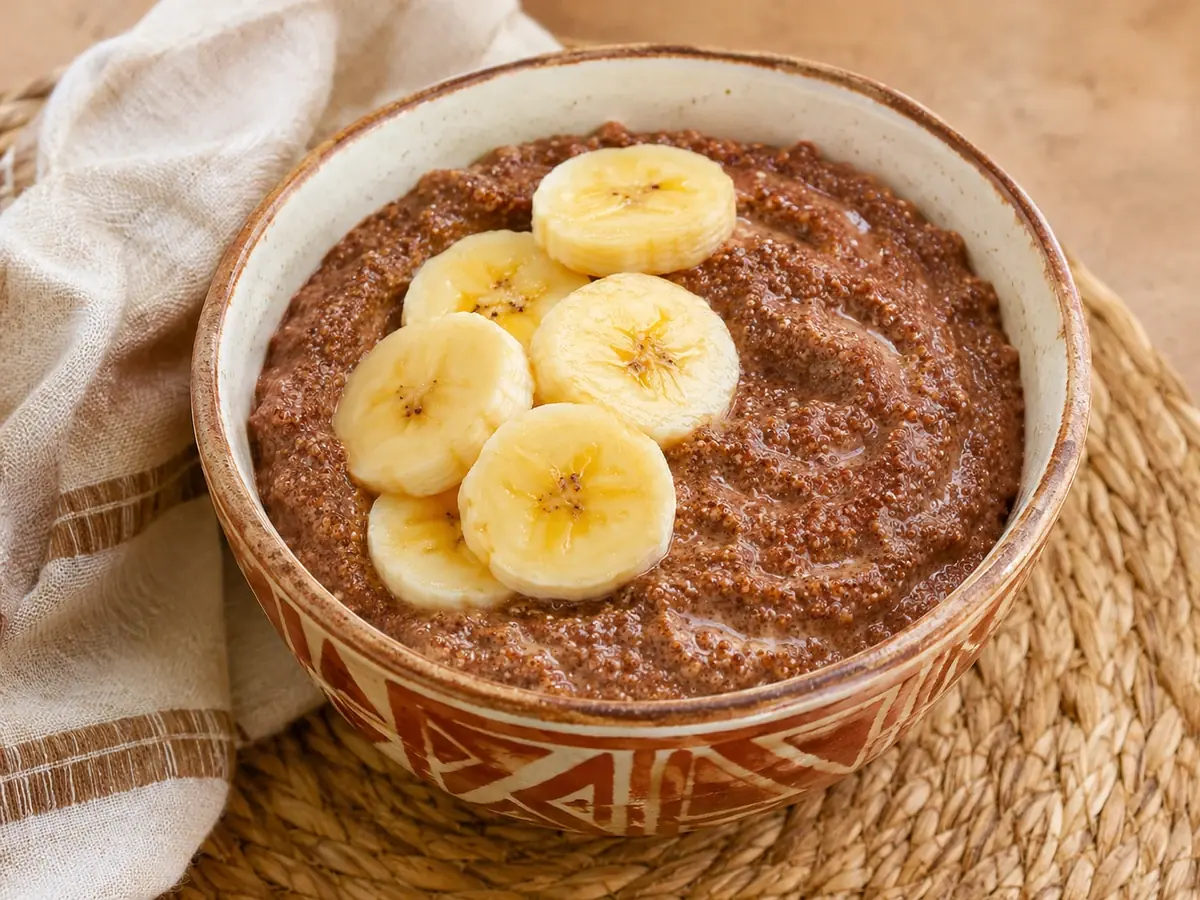
Fonio cream with cocoa and banana
Prepare a fonio cream with cocoa and banana: hydrate the grains, mix the cocoa without lumps, and adjust consistency for serving.
Ingredients
- 120 g pre-cooked packaged fonio
- 500 ml pasteurized milk
- 350 ml drinking water plus a little for adjustment
- 20 g unsweetened cocoa powder
- 2 ripe bananas yielding about 240 g of flesh
- 20 g optional sugar
- 1 g ground vanilla
- 1 small pinch of salt less than 0.5 g
Preparation
Read the fonio instructions and prepare it according to the preliminary operations required by its manufacturer. If rinsing is necessary, use a very fine sieve to avoid losing the small grains. Drain thoroughly. Take 100 ml from the 500 ml of milk and pour into a bowl. Gradually add the cocoa, whisking until a smooth liquid paste is obtained, without small pockets of dry powder.
Pour the 350 ml of water into a thick-bottomed saucepan. Add the small pinch of salt and bring to a simmer. Incorporate the fonio, stirring to distribute the grains evenly, then lower the heat. Cook for five to eight minutes, or according to package directions, until the fonio has begun to absorb the water. Stir regularly with a flexible spatula, especially near the corners where the cereal can accumulate.
Gradually add the remaining 400 ml of milk and the vanilla. Mix, then let it cook gently for an additional five to eight minutes, always adapting the duration to the fonio used. The preparation should become creamy while retaining small tender grains. If it thickens very quickly before they are cooked, add a little hot water. Vigorous cooking could cause the milk to stick to the bottom and impart a burnt taste that is difficult to correct.
Pour in the cocoa and milk mixture, stirring. Continue simmering gently for three to four minutes to homogenize the flavor. Scrape the bottom with the spatula and observe the consistency: the cream should flow slowly from the spoon, as it will thicken further as it rests. Do not aim for the final desired firmness in the bowl directly from the saucepan. If necessary, add a few spoonfuls of hot water to regain a supple texture.
Peel one banana and mash it finely on a clean plate. Incorporate this puree into the hot cream, then continue for one minute over low heat, mixing. Taste before adding the optional sugar. Start with half the planned amount and check again: cocoa and banana vary enough to make automatic dosing unnecessary. Turn off the heat when the mixture is hot, homogeneous, and at the desired consistency.
Divide into four bowls and let cool for a few minutes. Slice the second banana just before serving, then arrange the slices on the surface. If the cream has thickened too much during resting, loosen each portion with a small amount of very hot milk or water, mixing before garnishing. Serve at a pleasant temperature and mix the bowls intended for children well to avoid a hotter area in the center.
Introduction
A creamy cereal to eat with a spoon
Fonio cream with cocoa and banana offers a warm breakfast or snack, with a consistency thicker than a drink but softer than a cereal cake. Fonio maintains a discreet presence under the cocoa, while banana adds sweetness and a bit of texture. The preparation serves four modest bowls. Its volume and filling nature invite adapting the rest of the meal rather than systematically adding it to an already hearty breakfast.
This is a contemporary creation part of a project on West African cereals. The recipe does not present this cocoa association as a traditional specialty of Côte d’Ivoire and does not attribute an unverified local origin to it. The product chosen is pre-cooked packaged fonio, whose manufacturer's instructions remain important: another fonio may require different washing, hydration time, or cooking. The formulation must remain linked to the product actually used.
Cultural context
Contemporary creation based on products from the Ivorian repertoire. The proportions are not attributed to a regional tradition nor certified by the cited institutions.
Institutional References FAO INFOODS: https://www.fao.org/infoods/infoods/tables-and-databases/faoinfoods-databases/en/ — Food composition reference for subsequent nutritional calculation. No nutritional calculation of these recipes is claimed to have been performed. UNESCO: https://ich.unesco.org/fr/RL/les-savoir-faire-lies-a-la-fabrication-de-l-attieke-en-cote-d-ivoire-02086 — Context of attiéké manufacturing know-how, inscribed in 2024. Does not validate recipe combinations or proportions. World Health Organization: https://www.who.int/teams/nutrition-and-food-safety/multisectoral-actions-in-food-systems/five-keys-to-safer-food-poster — General principles of cleanliness, food separation, cooking, and temperature control. The proposed shelf lives remain cautious household advice.
Tips
Understanding cream that thickens after cooking Cereals continue to absorb some of the liquid during resting. This evolution explains why a preparation that is still fluid in the saucepan can become compact ten minutes later. So keep a little hot water handy for final adjustment. The additional amount cannot be identical for all fonios: the prior treatment, the fineness of the grain, and the evaporation in your saucepan modify the result. Adjusting the texture is not a recipe failure. Crunchy grains indicate insufficient hydration or cooking. It is better to add a little liquid and continue gently before adding the garnish, rather than masking this texture with more banana. Conversely, a cream that is too liquid may simply require two or three minutes of resting. Wait before significantly extending cooking, then re-evaluate. Excessive evaporation also concentrates sugar and cocoa, which alters the taste balance.
Preparing a cold or take-away version The cream can be served cold after rapid cooling and refrigeration. It will be firmer; stir it with a little cold milk just before eating if you want to regain a supple texture. Add the banana slices at the last moment, as they brown and soften while waiting. For transport, use an appropriate container and a solution that keeps it cold, rather than keeping a bowl with milk at room temperature for several hours. You can prepare a portion without added sugar, relying on the sweetness of the banana, but the result will not be sugar-free in the nutritional sense: fruit and milk naturally contain them. This distinction avoids a misleading promise in the title or description. A mention of a gluten-free product would also require checking the packaging and contamination risks, even when the initial cereal does not contain gluten.
Planning
Choose a cocoa and measure liquids
Use unsweetened cocoa powder, not a chocolate drink powder already mixed with sugar and other ingredients. 20 grams provide a clean flavor without aiming for strong bitterness. A very intense powder may require a slight adjustment, but add it in small quantities after tasting. Cocoa should be mixed with cold liquid before adding to the saucepan to avoid lumps that resist mixing in hot liquid.
Pasteurized milk and water together form the cooking base. You can use an unsweetened plant-based drink in a clearly indicated adaptation, but the taste, allergens, and nutritional composition will change. Bananas should be ripe, without moldy parts or a fermented smell. Firm flesh is harder to mash and provides less sweetness; a very ripe banana makes the cream sweeter without requiring all the optional sugar.
Nutrition notes
Storage and nutritional benchmarks Cool leftovers in small containers and quickly place them in the refrigerator. Preferably consume the preparation the next day, with freshly cut finishing banana. Reheat over low heat, stirring and adding a little liquid, without multiplying reheating cycles. Milk is an allergen to be reported and contributes to the proteins in this formulation; fonio and banana primarily provide carbohydrates. No precise caloric value is attributed without calculation based on the products used. Enjoy your meal! Serve this cream with a still supple texture to allow the cocoa and the delicate grain of the fonio to express themselves.
Conclusion
Serve at the indicated texture and adapt the seasoning to the products used.
Enjoy your meal
Enjoy your meal!