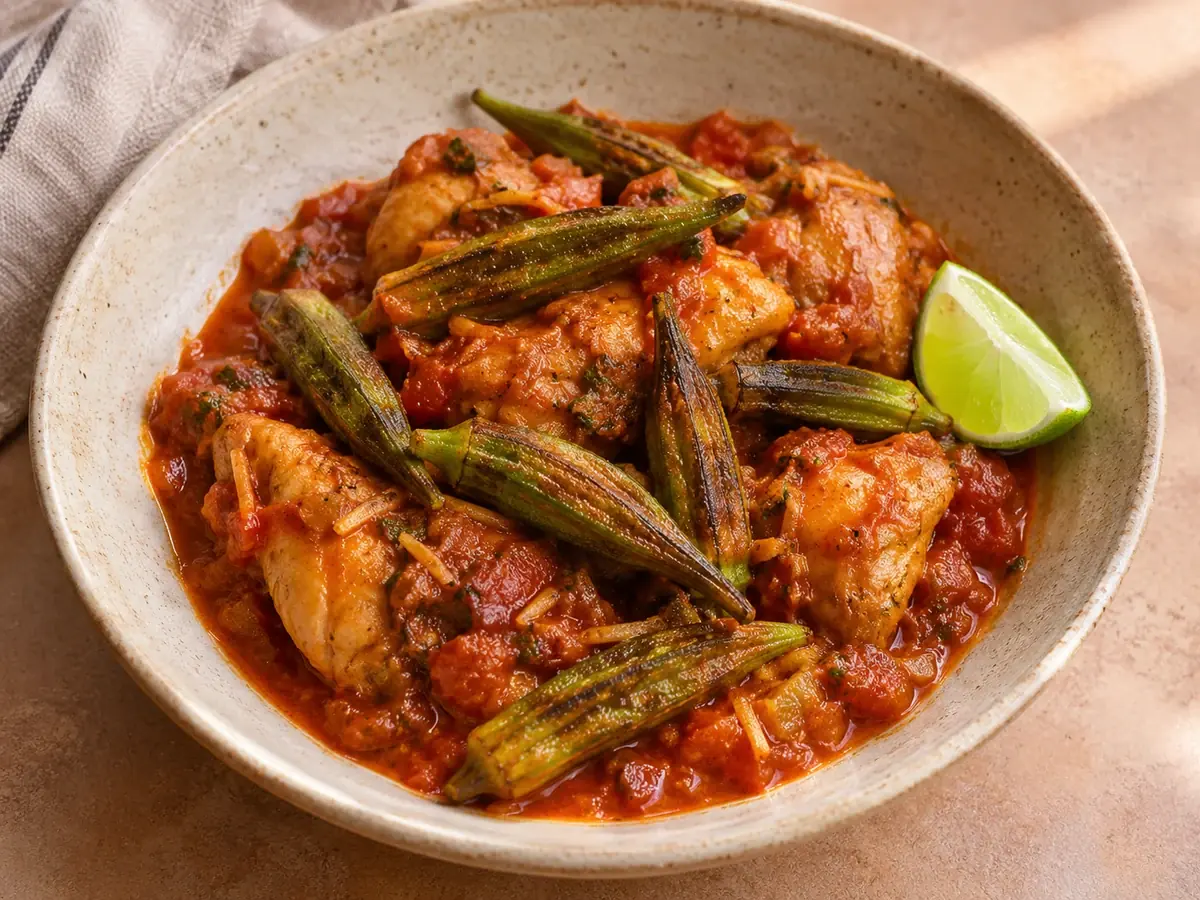
Chicken with roasted okra and lime
Cook a chicken with roasted okra and lime: separate cooking of vegetables, short ginger sauce, and tips to keep okra whole.
Ingredients
- 800 g boneless chicken thighs
- 500 g fresh okra
- 300 g tomatoes
- 180 g onion
- 15 g fresh ginger
- 10 g garlic
- 30 ml sunflower oil
- 25 ml lime juice
- 250 ml drinking water
- 3 g salt maximum
- 1 g pepper
- 1 whole chili pepper (optional)
Preparation
Preheat the oven to 220 °C (static heat). Mix the very dry okra with 10 ml of oil and a small pinch taken from the total salt. Spread them on a baking sheet in a single layer. Roast for fifteen to twenty minutes, turning them after ten minutes. They should have some golden spots and remain slightly firm. Remove them before they dry out; their cooking will briefly finish in the sauce.
While roasting, heat the remaining 20 ml of oil in a large sauté pan. Pat the chicken dry and brown it in two batches if necessary, three to four minutes per side. A light browning is sufficient; it is not yet cooked through. Set it aside in a container intended for further cooking. Lower the heat before adding the aromatics to avoid burning the accumulated juices at the bottom.
Sauté the sliced onion in the same pan for five minutes. Add the minced garlic and grated ginger for one minute. Incorporate the diced tomatoes and scrape the bottom with a spatula to loosen the juices. Let it stew for eight to ten minutes over medium heat. If the tomato lacks juice, add two spoonfuls of the reserved water. The mixture should become soft and well-bound before the chicken returns.
Return the chicken pieces to the sauté pan. Pour in the rest of the 250 ml of water and add the whole chili pepper, if using. Season moderately with salt and pepper, then partially cover. Simmer for twenty to twenty-five minutes, turning the pieces halfway through cooking. Adjust the duration to their thickness: the poultry must be fully cooked. For a reliable check, use a probe in the center of a large piece and reach at least 74 °C.
Uncover and reduce for a few minutes if the sauce is too abundant. Then add the roasted okra and mix gently to coat them. Continue for five minutes at a low simmer, just enough to combine the flavors and finish their cooking. Avoid repeated spoon movements, which would damage the pods. The sauce should remain short, with distinct pieces of chicken and visible okra, rather than an entirely bound texture.
Turn off the heat, then add 15 ml of lime juice. Taste the sauce with a piece of okra and a piece of chicken before using the remaining juice and reserved salt. Remove the whole chili pepper to offer it separately. Let it rest for three minutes, then divide into four portions. Serve immediately with the planned side dish and a little sauce in each plate, without drowning the vegetables under an excessive volume.
Introduction
Two cooking methods to preserve the okra
This chicken with roasted okra and lime uses separate cooking of the vegetables before combining them with the poultry. The okra retains its shape and a slightly browned surface, while the chicken simmers in a short tomato and ginger sauce. This choice produces a different texture from a long-cooked okra sauce known for its thickening properties. It allows you to enjoy the whole pods, with tender flesh that still retains some firmness.
The recipe presents a contemporary creation featuring chicken and okra, without calling it a kédjénou or a traditional version of a known sauce. The lime is mainly used as a finishing touch, and its dosage is adjusted after reduction. For a meal for four people, serve with a separately chosen side dish, for example, a little rice or attiéké, adjusting the quantity to appetite and the rest of the menu.
Cultural context
Contemporary creation based on Ivorian ingredients. The proportions are not attributed to a regional tradition nor certified by the institutions cited.
Institutional References FAO INFOODS: https://www.fao.org/infoods/infoods/tables-and-databases/faoinfoods-databases/en/ — Food composition reference for subsequent nutritional calculation. No nutritional calculation of these recipes is claimed to have been performed. UNESCO: https://ich.unesco.org/fr/RL/les-savoir-faire-lies-a-la-fabrication-de-l-attieke-en-cote-d-ivoire-02086 — Context of attiéké manufacturing know-how, inscribed in 2024. Does not validate the combinations or proportions of the recipes. World Health Organization: https://www.who.int/teams/nutrition-and-food-safety/multisectoral-actions-in-food-systems/five-keys-to-safer-food-poster — General principles of cleanliness, food separation, cooking, and temperature control. The proposed storage durations remain cautious domestic advice.
Tips
Understanding the role of drying Okra naturally contains compounds that become viscous upon contact with water and after cutting. Keeping them whole and drying them well reduces their dispersion in the sauce, without completely eliminating it. The separate cooking is not intended to make a characteristic of the vegetable disappear, but to achieve a different texture here. If some pods open during roasting, simply incorporate them last and stir as little as possible. A low-power oven may require a few extra minutes. In this case, monitor the ends and stir the tray to prevent one side from drying out. If you don't have an oven, sear the okra in a large pan, in small quantities, with the planned oil. This alternative requires more attention and produces a different browning, but it maintains the logic of two cooking methods. Do not fill the pan to the point of retaining moisture between the pods.
Preparing a milder or spicier version For a table sensitive to chili, remove it from the pot and serve a condiment on the side. Ginger already provides a pleasant aromatic presence. If you want more acidity, add the lemon to the plate rather than pouring all the juice into the communal dish. An overly acidic sauce is difficult to correct without changing the balance; gradual dosing allows everyone to adjust their portion without imposing the same result on the entire table. Chicken breasts can replace thighs, but they require shorter cooking and dry out faster. Keep thick pieces and check their cooking without unnecessarily prolonging it. Bone-in pieces, however, would require an adaptation of weight and time; they do not directly correspond to the indications in this recipe. When changing the cut, use internal cooking as the main reference and re-evaluate the sauce reduction separately.
Planning
Choose young okra and prepare the poultry
Pick small, firm okra pods without large blemishes or withered ends. Very large pods can become fibrous, even after long cooking. Rinse them quickly then dry them thoroughly with a clean cloth: a damp surface promotes steam and delays browning in the oven. Remove only the hard tip of the stem without widely opening the cavity. If a pod is too long, you can cut it in half, but it will release more mucilage.
Boneless chicken thighs offer meat that holds up well to short simmering. Cut them into similarly sized pieces, around five centimeters, and refrigerate. Do not wash raw chicken: splashes can contaminate the sink and nearby surfaces. Prepare vegetables before poultry, then use a separate cutting board. Keep a clean plate for cooked chicken and do not reuse the one that contained raw meat without washing it.
Nutrition notes
Meal storage and serving Quickly cool leftovers in small portions and store them in the refrigerator in closed containers. When reheating, add a little water if the sauce has thickened, cover, and heat until warm throughout. The okra will be softer, which is normal. The preparation provides chicken and vegetables; the side dish determines a large part of the meal's carbohydrates. No precise nutritional values are indicated without detailed calculation. Enjoy your meal! Serve the okra on top so that its texture and color remain prominent.
Conclusion
Serve with the indicated texture and adapt the seasoning to the products used.
Enjoy your meal
Enjoy your meal!