Sweet potato, fish and leek gratin
Prepare a sweet potato, fish and leek gratin, without béchamel, with a smooth purée and a filling that remains moist in the oven.
Ingredients
- 1 kg peeled sweet potatoes
- 600 g deboned white fish fillets
- 350 g leek whites
- 150 g onion
- 10 g garlic
- 15 g fresh ginger
- 200 ml unsweetened coconut milk
- 150 ml drinking water
- 20 ml sunflower oil
- 15 ml lime juice
- 3 g salt maximum
- 1 g pepper
Preparation
Place the sweet potato cubes in a steamer basket and cook them for 20 to 25 minutes over simmering water. Cooking in water is still possible, but drain very carefully. Pierce several cubes to check that the center is tender. Mash them while still hot with a potato masher with 100 ml of coconut milk. Gradually add a little of the planned water if necessary, until you get a purée that spreads easily with a spoon.
Heat the oven to 190 °C in static heat. Sauté the chopped onion in oil, in a large sauté pan, for five minutes. Add the minced leeks and continue for eight to ten minutes over medium heat. Stir and pour one or two spoonfuls of water if the vegetables start to stick. They should become tender without taking on a strong brown color, which would dominate the sweetness of the gratin.
Add the grated garlic and ginger to the leeks. Stir for one minute, then pour in the remaining 100 ml of coconut milk and the rest of the water, without exceeding the amount needed to form a short sauce base. Let it simmer for three to five minutes. Season with half of the salt and pepper. The sauce should coat the vegetables; if it seems very liquid, reduce it before adding the fish.
Cut the fillets into pieces of four to five centimeters. Check again for any bones, then place the fish in the sauté pan. Cook gently for five to eight minutes depending on the thickness, without stirring vigorously. The fish should be cooked through and flake under light pressure; extend if necessary. Add the lime juice, taste the sauce and adjust the seasoning with the reserved salt only if needed.
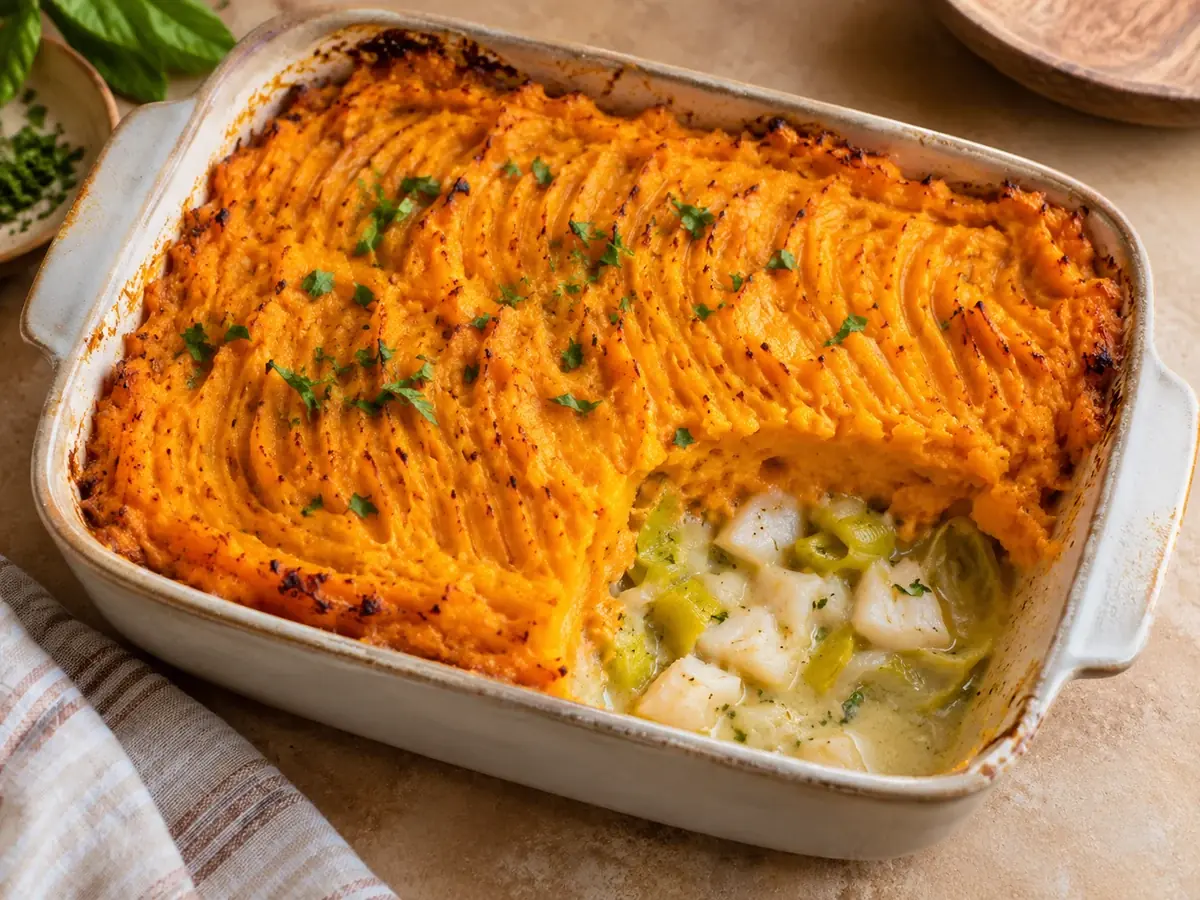
Pour the hot filling into the gratin dish. Distribute the fish without crushing it. Place the purée in large spoonfuls, then gently bring them together with the back of a spoon. Avoid dragging the utensil to the bottom, which would bring the fish and sauce up into the top layer. Draw shallow streaks with a fork to create a relief that will brown in the heat.
Bake for fifteen to twenty minutes, until the gratin is very hot and lightly colored. If the top remains pale, briefly use the grill, constantly monitoring and respecting the dish's compatibility. Let rest for five minutes before serving in four portions. This short rest helps the sauce stabilize and allows for lifting cleaner slices, without aiming for a firmness as solid as a cake.
Introduction
A gratin in two distinct layers
The sweet potato, fish and leek gratin is built with a moist filling, covered with a smooth and slightly striated purée. The surface gently browns in the oven, while the fish remains protected under the sweet potato. Coconut milk replaces a white sauce here, but in small quantities: it accompanies the vegetables and fish without turning the filling into soup. A purée that is too thick would form a dry lid, while a purée that is too liquid would completely mix with the bottom.
This recipe is a contemporary creation proposed for volume two, without attribution to a particular regional tradition. Sweet potato allows for exploring another use than frying, cake, or simple roasting already present in the first volume. White fish can be chosen according to the market and availability, provided firm, well-preserved, and carefully deboned fillets are selected. The name of the species actually used deserves to be indicated when the recipe is published.
Cultural context
Contemporary creation based on products from the Ivorian repertoire. The proportions are not attributed to a regional tradition nor certified by the cited institutions.
Institutional References FAO INFOODS: https://www.fao.org/infoods/infoods/tables-and-databases/faoinfoods-databases/en/ — Food composition reference for subsequent nutritional calculation. No nutritional calculation of these recipes is claimed to have been performed. UNESCO: https://ich.unesco.org/fr/RL/les-savoir-faire-lies-a-la-fabrication-de-l-attieke-en-cote-d-ivoire-02086 — Context of attiéké manufacturing know-how, inscribed in 2024. Does not validate the combinations or proportions of the recipes. World Health Organization: https://www.who.int/teams/nutrition-and-food-safety/multisectoral-actions-in-food-systems/five-keys-to-safer-food-poster — General principles of cleanliness, food separation, cooking, and temperature control. The proposed storage durations remain cautious domestic advice.
Tips
The two settings that prevent a watery gratin The first cause of a too-liquid bottom is a filling that is insufficiently reduced before assembly. The fish can still release juice during cooking; it is therefore better for the vegetables to be coated rather than submerged. The second cause is sweet potato cooked in too much water and then poorly drained. Steaming facilitates moisture control, but good cooking in water followed by a few minutes of evaporation also gives a satisfactory result. If the purée becomes too fluid, put it back in a saucepan over low heat for a few minutes, stirring to evaporate the excess. Do not add raw flour to fix it at the last minute. If it is too compact, loosen it with hot water, spoonful by spoonful, mixing after each addition. The liquid proportions are a starting point: the variety of sweet potato and the dry matter content of the coconut milk change the final texture.
Adapt the fish and organize the meal Frozen fillets are suitable if thawed in the refrigerator according to package directions, then drained and patted dry. Do not pour the water released by thawing directly into the filling. Smoked fish would make a different recipe, saltier and more powerful; it should not replace the same amount of white fish here without modifying the whole dish. The goal of this version is to maintain a mild flavor, enhanced by ginger and lemon. You can prepare the purée and filling separately a few hours in advance, cool them quickly, and store them in the refrigerator. Assembly with cold elements will require a longer reheating time than indicated for hot assembly. In this case, cover the gratin at the beginning to protect the surface and ensure the center is thoroughly heated. For a daily meal, a salad or crunchy vegetables are sufficient as a complement: sweet potato already represents the starch of the dish.
Planning
Prepare the vegetables and choose the dish
Weigh the sweet potatoes after peeling and cut them into cubes of about three centimeters. An orange flesh will generally give a smoother and sweeter purée than a very floury white flesh. These differences require adjusting the water in the purée in small quantities. The kilogram provided is enough to cover a family dish without forming an excessive thickness. Use a dish of about twenty-four centimeters per side, or a rectangular format of comparable capacity.
Split the leek whites lengthwise and rinse between the layers, where soil can remain. Then finely mince them. A regular cut allows them to melt before the fish cooks. Separate the vegetable cutting board from the raw fish one, or carefully clean and disinfect the equipment between uses. Keep the fillets in the refrigerator until ready to incorporate them, then cut them into pieces large enough to remain recognizable in the gratin.
Nutrition notes
Storage and nutritional benchmarks Divide leftovers into shallow containers and quickly place them in the refrigerator. Reheat one portion at a time, covered at first, until hot in the center. Fish is an allergen to be noted; also check the labels on packaged coconut milk. The dish combines a starch, fish, and vegetables, but no precise caloric value is announced without calculation based on the products used. Bon appétit! Serve while preserving the two layers, to find the sweet purée and fragrant filling in every bite.
Conclusion
Serve at the indicated texture and adapt the seasoning to the products used.
Enjoy your meal
Bon appétit!