Stuffed bell peppers with attiéké and smoked fish
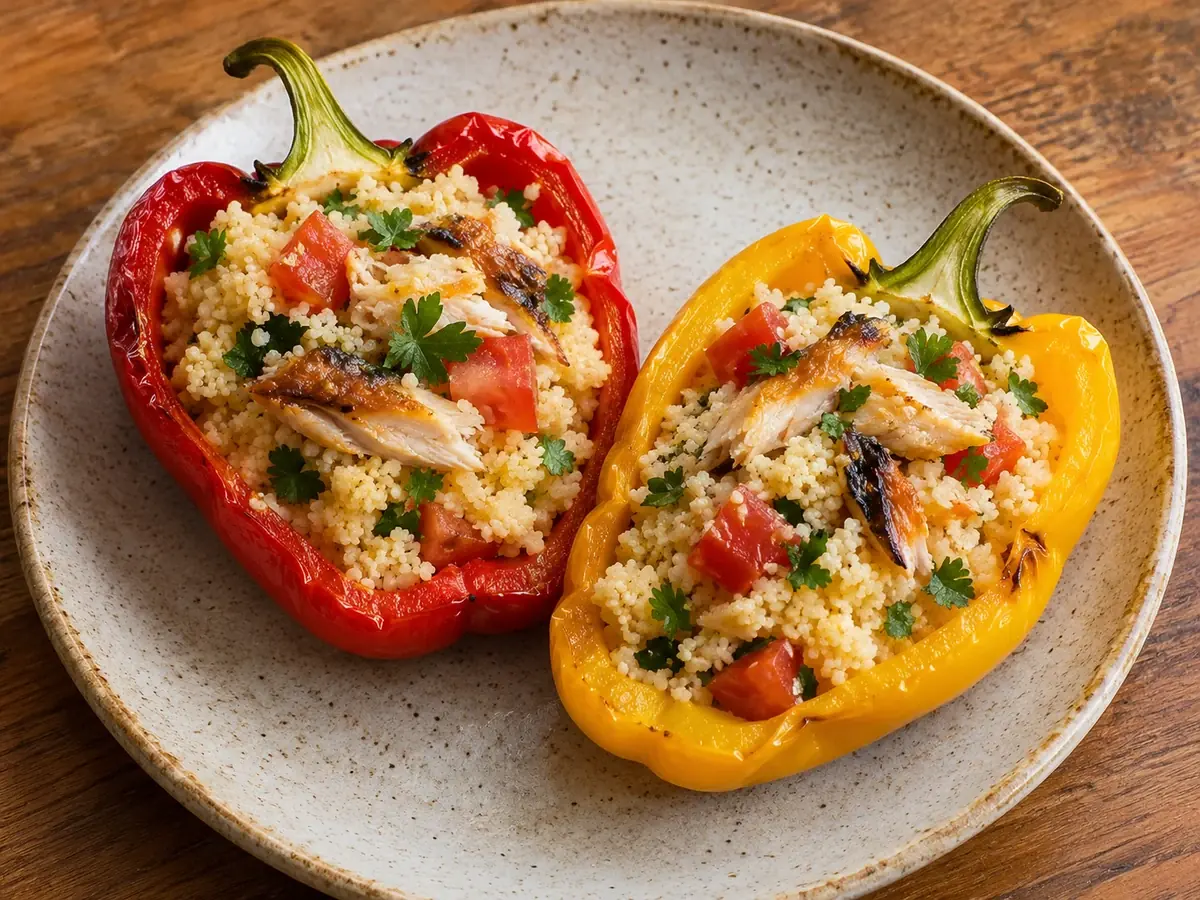
Make stuffed bell peppers with attiéké and smoked fish: tender semolina, well-seasoned stuffing, and oven-baked without drying out the fish.
Ingredients
- 4 large sweet bell peppers
- 500 g cooked attiéké
- 250 g smoked fish flesh, ready to cook and carefully deboned
- 250 g tomatoes
- 120 g onion
- 10 g garlic
- 20 ml sunflower oil
- 15 ml lime juice
- 150 ml drinking water for the dish and stuffing
- 10 g parsley
- 1 g pepper
- 1 g salt maximum and only after tasting
Preparation
Preheat the oven to 190 °C (static heat). Arrange the bell pepper halves in a large enough dish, cut sides facing up. Brush their edges with 5 ml of oil and pour 100 ml of water into the bottom of the dish. Bake for fifteen minutes to begin softening the walls. This pre-cooking prevents the stuffing from being too dry when the bell pepper finally becomes tender.
Examine the smoked fish flesh in small quantities and remove all visible or palpable bones. Crumble it into bite-sized pieces, without mashing it. Keep it in the refrigerator during vegetable preparation if you need to interrupt the work. Chop the onion and garlic, then dice the tomatoes. Wash the parsley and dry it before chopping; set it aside for the finishing of the stuffing.
Heat the remaining 15 ml of oil in a sauté pan. Sauté the onion gently for five to six minutes. Add the garlic for one minute, then the tomatoes and the reserved 50 ml of water. Cook for eight to ten minutes, stirring. The mixture should remain moist, without forming a very liquid sauce. Add the fish and heat gently for five minutes, also following any cooking requirements for the product used.
Fluff the cooked attiéké (steamed cassava couscous) in a salad bowl. If it is compact, separate the clumps with a fork before incorporating it. Add the warm tomato and fish mixture, parsley, and pepper. Mix by lifting, then taste a small amount with a piece of fish. Only add salt if necessary, within the specified limit. Smoked fish may be enough to season the entire stuffing.
Remove the dish and distribute the stuffing among the eight bell pepper halves. Lightly press to give a regular shape, without compressing the semolina. Cover the dish with a suitable lid or a baking sheet to limit drying. Return to the oven for fifteen to twenty minutes. The bell peppers should be tender and the stuffing hot throughout; extend if necessary depending on the thickness of the vegetables and the initial temperature of the attiéké.
Uncover only during the last five minutes if you want a slightly drier surface. Check that the bottom of the dish is not completely dry of water, then remove the bell peppers. Add a small amount of lime juice to the hot stuffing. Let rest for three minutes and serve two halves per person. A separately prepared cucumber salad provides contrast without adding sauce inside the bell peppers.
Introduction
A fragrant stuffing in a roasted vegetable
Stuffed bell peppers with attiéké and smoked fish form a complete dish with a simple presentation: each person receives two half-peppers, garnished with soft semolina and fish flesh distributed in small pieces. The bell pepper provides a slightly sweet juice that mixes with the stuffing during cooking. The smoked fish should remain an identifiable and flavorful element, rather than being reduced to a salty paste that would cover all other ingredients.
This recipe is a contemporary creation for the second volume. It does not bear the name of a documented traditional specialty. It combines a central product of the Ivorian repertoire, attiéké, with practical oven cooking for a family kitchen. The reference to UNESCO concerns only the know-how of attiéké production. It does not validate the proposed stuffing, its proportions, or an ancient origin of this presentation method.
Cultural context
Contemporary creation based on products from the Ivorian repertoire. The proportions are not attributed to a regional tradition nor certified by the cited institutions.
Institutional References FAO INFOODS: https://www.fao.org/infoods/infoods/tables-and-databases/faoinfoods-databases/en/ — Food composition reference for subsequent nutritional calculation. No nutritional calculation of these recipes is claimed to have been performed. UNESCO: https://ich.unesco.org/fr/RL/les-savoir-faire-lies-a-la-fabrication-de-l-attieke-en-cote-d-ivoire-02086 — Context of the know-how for making attiéké, inscribed in 2024. Does not validate the combinations or proportions of the recipes. World Health Organization: https://www.who.int/teams/nutrition-and-food-safety/multisectoral-actions-in-food-systems/five-keys-to-safer-food-poster — General principles of cleanliness, food separation, cooking, and temperature control. The proposed storage times remain cautious household advice.
Tips
Preserving the semolina during cooking Attiéké has already undergone its transformation and cooking before being incorporated into the stuffing. It therefore needs to be reheated and flavored, not subjected to long cooking in a lot of water. The juice from the tomatoes and the steam from the dish are usually enough to soften it. If your semolina is particularly dry, add one or two spoonfuls of water to the stuffing before filling. A large amount of liquid would result in a sticky mass instead of distinct grains. Pre-cooking the bell peppers is another protection against drying out. If you omit it, the walls may remain firm while the semolina has already lost its moisture. Very thick bell pepper halves may sometimes require five more minutes before stuffing. Conversely, small, thin bell peppers soften quickly: observe their tenderness and adjust the duration. The shape of the vegetable matters more than a difference of one or two minutes on the timer.
Adjustments and substitutions A particularly strong smoked fish can be used in a slightly smaller quantity, provided it is replaced with an additional amount of plain cooked fish, carefully deboned. The taste will be milder, and the amount of salt will need to be re-evaluated. Avoid masking poor quality fish with more lemon or chili. These seasonings do not correct uncertain preservation or a suspicious odor: the initial quality remains crucial. For a fish-free version, choose a different stuffing and title: simply replacing the flesh with canned tuna does not result in a vegetable preparation. Cooked white beans could be suitable, but would require a new aromatic balance. This recipe intentionally maintains a precise objective: attiéké with smoked fish in a melting bell pepper. Significant changes must appear in the ingredient list and in the name of the adapted recipe.
Planning
Choose the fish and prepare the bell peppers
Buy smoked fish from a traceable source with clear storage instructions. The 250 grams refer to the usable flesh after removing skin, bones, and undesirable parts. Very dry, very salty fish or fish requiring special rehydration should be prepared according to the supplier's instructions before weighing the necessary amount. Smoking does not automatically mean the product is ready to eat without cooking.
Choose large bell peppers of similar size that can lie flat on their outer surface. Different colors make for an attractive dish, but the choice is practical before being decorative. A green bell pepper may have a stronger taste; red or yellow ones easily complement smoked fish. Cut them lengthwise, through the stem if possible, to obtain eight stable halves. Remove the seeds and white membranes without piercing the flesh.
Nutrition notes
Storage and serving guidelines Prepare the stuffing as close to filling as possible, or cool it quickly before refrigerating. Do not store warm stuffed bell peppers in a large, deep dish for long. For leftovers, divide portions into shallow containers and quickly place them in the refrigerator. Reheat covered until the center is thoroughly hot. Fish is an allergen to be noted, and its smoked nature can significantly increase the salt content of the meal. Attiéké provides the main carbohydrates of the plate, fish contributes to protein intake, and bell peppers increase the vegetable portion. No specific nutritional values are announced without analysis of the products actually used. Enjoy your meal! Present the bell pepper halves with their stuffing visible, reserving the cooking juice at the bottom of the dish rather than systematically pouring it into each portion.
Conclusion
Serve at the indicated texture and adjust seasoning to the products used.
Enjoy your meal
Enjoy your meal!