Patha
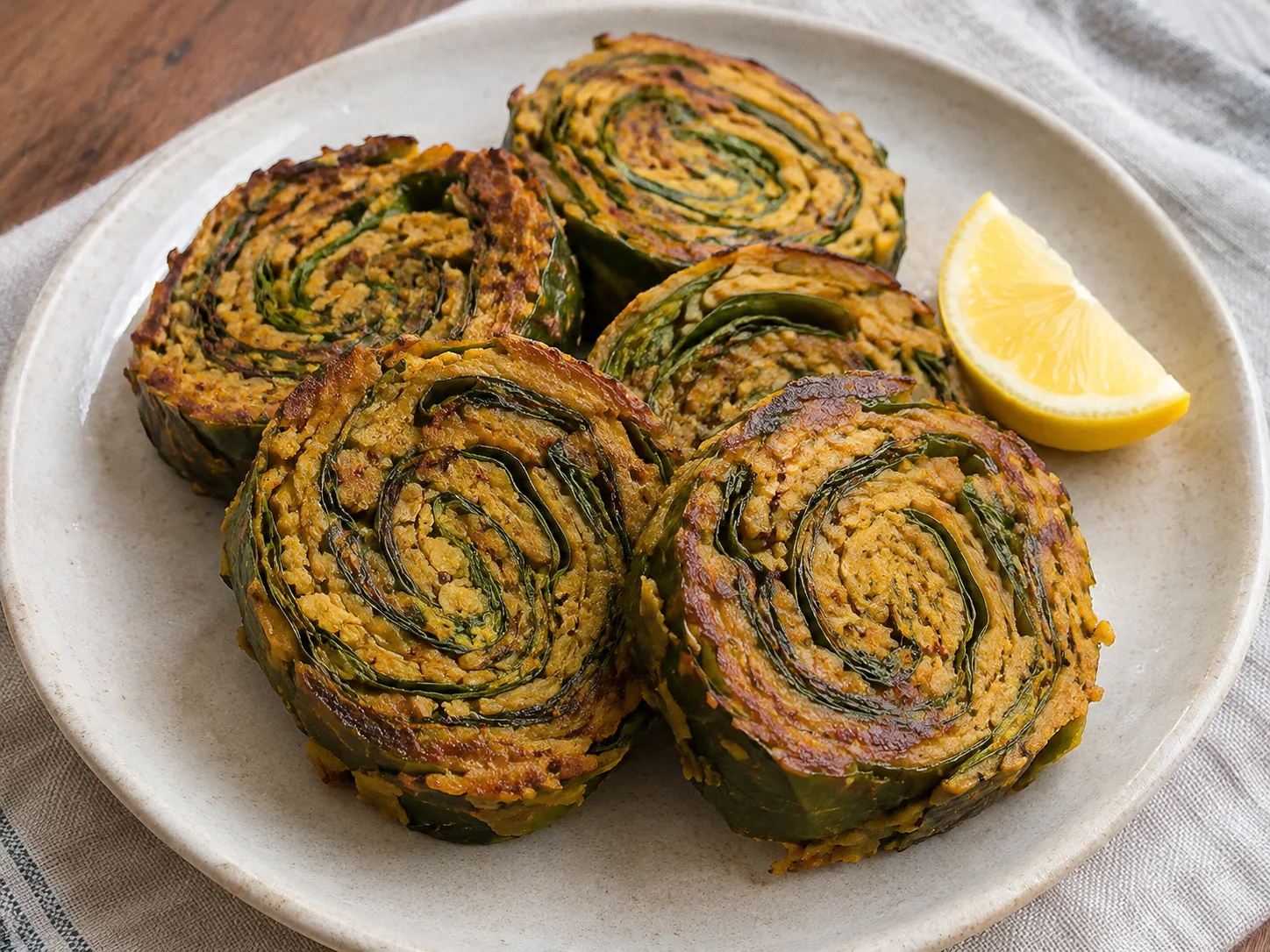
A roll of edible madumbi leaves spread with spiced chickpea batter, steamed, chilled, sliced and pan-fried, for four portions.
Ingredients
- 6–8 large edible madumbi leaves sold for cooking, about 300 g after preparation
- 180 g chickpea flour
- 180 ml water for batter, adjust slightly
- 15 g plain tamarind paste
- 10 g sugar
- 10 g crushed garlic
- 10 g grated ginger
- 1 teaspoon ground cumin
- 1 teaspoon ground coriander
- ½ teaspoon ground turmeric
- ½ teaspoon ground chilli, optional
- 4 g fine salt
- 25 ml vegetable oil for pan-frying
- Water for steaming, replenish as needed
- 1 lemon, cut into wedges for serving
Preparation
Check the leaves' food-grade provenance and supplier instructions. Wash, remove stalks and carefully thin thick ribs without tearing the leaves. Dry. Wear gloves if handling irritates the skin and never taste raw leaves.
Loosen tamarind in some of the 180 ml water and strain out fibres or seeds if necessary. Mix chickpea flour, sugar, garlic, ginger, cumin, ground coriander, turmeric, optional chilli and salt. Add liquid to make a thick, smooth, spreadable batter.
Lay one large leaf rib-side up on a clean surface and spread a thin layer of batter across it. Add another leaf with its orientation slightly offset and repeat, using all leaves and batter without piling it only in the centre.
Fold sides inward into a rectangle and roll firmly without tearing. Wrap in baking paper and secure loosely with kitchen string. Make two smaller rolls if one would not fit the steamer.
Bring water to the boil. Place the roll on a rack above the water and cover. Steam steadily for about 1 hour 30 minutes in an ordinary pot, or longer if the supplier specifies. Check the water regularly and replenish with hot water without letting it touch the roll.
Remove carefully and let the strong steam dissipate on a rack for about 20 minutes. Refrigerate to firm without leaving it cooling for hours on the counter. Once firm, unwrap and cut about 1.5 cm thick with a clean knife.
Heat 25 ml oil in a wide pan. Brown slices for about 3–4 minutes per side, in two batches if needed, until thoroughly hot inside and lightly crisp outside. Drain briefly and serve with lemon separately. Steaming must already be complete.
Introduction
Patha is built in layers: spread thin batter over prepared leaves, stack and roll firmly. Steam the roll first, cool it to firm the layers, then slice and briefly fry the rounds. Pan-frying is a finishing step rather than a substitute for the initial cooking.
Use only leaves sold for food and identified by the supplier as madumbi or taro leaves suitable for this preparation. Do not use ornamental plants or unidentified gathered leaves. Never eat the leaves raw. Follow supplier instructions if they require different preparation or longer cooking.
Choose a steamer and a pot with a well-fitting lid. The roll sits above the water and must not touch the pot bottom. Monitor the water throughout and allow time for chilling before slicing. Cooking time cannot establish a plant's identity or make an unsuitable leaf acceptable.
Cultural context
Patha appears in South African Indian-influenced cooking, particularly around Durban, and is often paired with puris. Local cookery publications describe spiced leaf rolls that are steamed and sliced; flour blends and seasonings differ. This original version uses chickpea flour and prolonged steaming in an ordinary pot rather than pressure cooking. Selecting correctly identified edible leaves remains the first requirement.
Tips
Add water in small amounts if the chickpea flour absorbs strongly. Runny batter leaks while rolling; very dry batter spreads poorly.
Thin ribs carefully on a stable board with the blade away from fingers. Patch small tears with another leaf rather than stretching them.
Never place the roll directly on the pot bottom. Maintain steam and sufficient water, with hot water ready for replenishing.
Chilling helps clean slicing. Let heavy steam escape, then refrigerate; evenly cut slices brown more consistently.
Do not test uncooked leaves by tasting or rely on appearance alone. Correct identification and food preparation instructions come first.
Variations
Swiss chard can be used for a clearly labelled adaptation when suitable madumbi leaves are unavailable. It is a different ingredient and needs its own cooking method, rather than automatically inheriting the same timing. Adjust or omit optional chilli. A lightly oiled oven finish gives another texture.
Accompaniments
Serve small slices with puris, lemon or chutney and perhaps a fresh salad. Chickpea flour already gives substance, so choose bread quantities according to the rest of the meal. Arrange rounds flat to show their spirals.