Puris
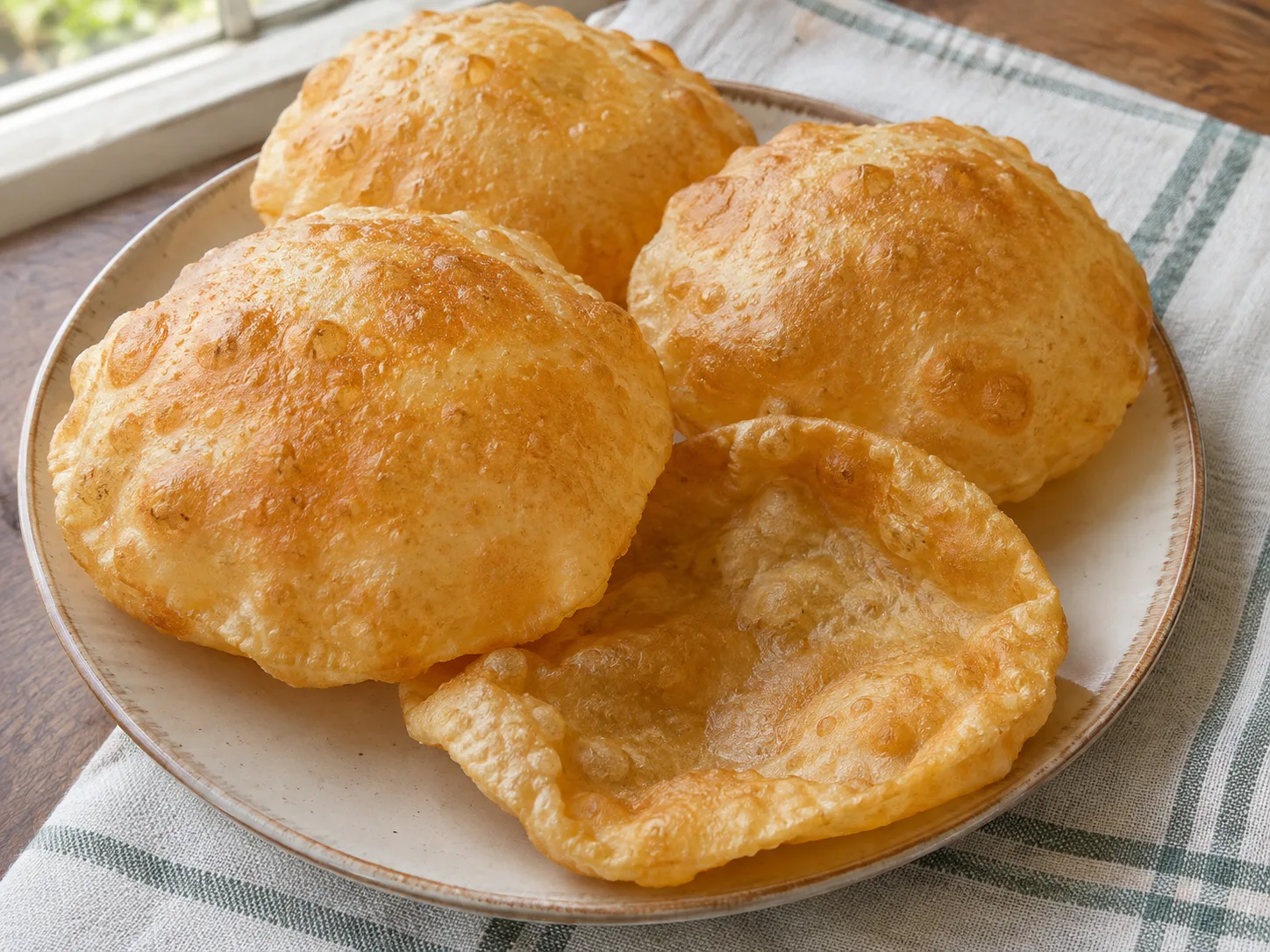
Twelve small, soft puffed fried breads for curry, vegetables or sliced patha, making four portions of three.
Ingredients
- 300 g plain wheat flour, plus a little for rolling
- 80 g plain yoghurt
- 110 ml room-temperature water, adjust slightly
- 15 ml vegetable oil for dough
- 3 g baking powder
- 3 g fine salt
- Vegetable oil for deep-frying, enough for the pan
Preparation
Mix flour, baking powder and salt thoroughly in a bowl so the small quantities disperse evenly before adding liquid.
Add yoghurt and 15 ml oil. Gradually mix in water, reserving some until the flour's absorption is clear. Form a soft dough that holds together; correct dryness with drops of water or genuine stickiness with a light dusting of flour.
Knead about 5 minutes until more even. Cover and rest for 20 minutes in a temperate kitchen. This relaxes the dough for rolling; do not wait for it to double like yeast dough.
Divide into twelve even portions, keeping them covered. Roll each into a 10–12 cm disc of even thickness with little extra flour. Avoid tearing the centre or making excessively thin edges.
Heat oil in a deep, stable pan without overfilling, aiming for 175–180 °C. Prepare a slotted spoon and draining rack. Test one piece to adjust heat.
Carefully slide in a disc. Spoon a little hot oil over its surface without piercing it. Turn once the underside starts to colour. Cook about 45–60 seconds per side, adjusting to thickness, until golden and cooked through.
Drain and continue, allowing temperature to recover between breads. Serve twelve puris as they are cooked or after a brief wait under a loosely laid clean cloth. Their interiors are very hot immediately after frying.
Introduction
This home version combines plain flour, yoghurt, water and a little oil. A small amount of baking powder lightens the dough without a long fermentation. After a short rest, divide and roll even discs before frying. Steam helps them puff, so intact surfaces and consistent thickness matter.
Make twelve small puris sized to fit the frying pan comfortably. Dough should be soft but firm enough to lift from the worktop. Very sticky dough requires excess rolling flour, which then ends up in the oil.
Serve soon after draining. The breads gradually deflate as they cool, which is normal: they should still be soft and pleasant with sauce. Have the rest of the meal ready before the first batch.
Cultural context
Puris belong to South Asian fried-bread traditions and also appear in South African Indian-influenced cooking, notably with patha. South African cooks publish versions using water, fermented milk or yoghurt. This yoghurt-and-baking-powder formula is one domestic adaptation. Unlike layered roti, it is deep-fried without a layering step; unlike vetkoek, it does not develop a thick yeast-raised crumb.
Tips
Rotate discs while rolling to keep thickness even. A thick centre can stay damp while thin edges colour.
Brush off surplus rolling flour before frying; loose flour can settle and burn in the oil.
Partial puffing is acceptable if the bread is cooked. Do not extend frying solely to force a large bubble.
A cool bath cooks slowly and makes heavier bread; excessive heat colours the surface too fast. Adjust gradually after the first piece.
Keep dough water away from hot oil and use a sufficiently long utensil. Never hold puffed bread with bare fingers over the pan.
Variations
Maas or another suitable fermented milk can replace yoghurt, with water adjusted to its consistency. Wholemeal flour needs new hydration trials and can change puffing. A little cumin is possible, but the plain version is versatile.
Accompaniments
Serve with bean curry, spiced vegetables or patha, adjusting quantities because puris are already a fried starch. Tomato-and-cucumber salad adds freshness. Present sauces separately so breads stay easy to lift and tear.