Potato samoosas
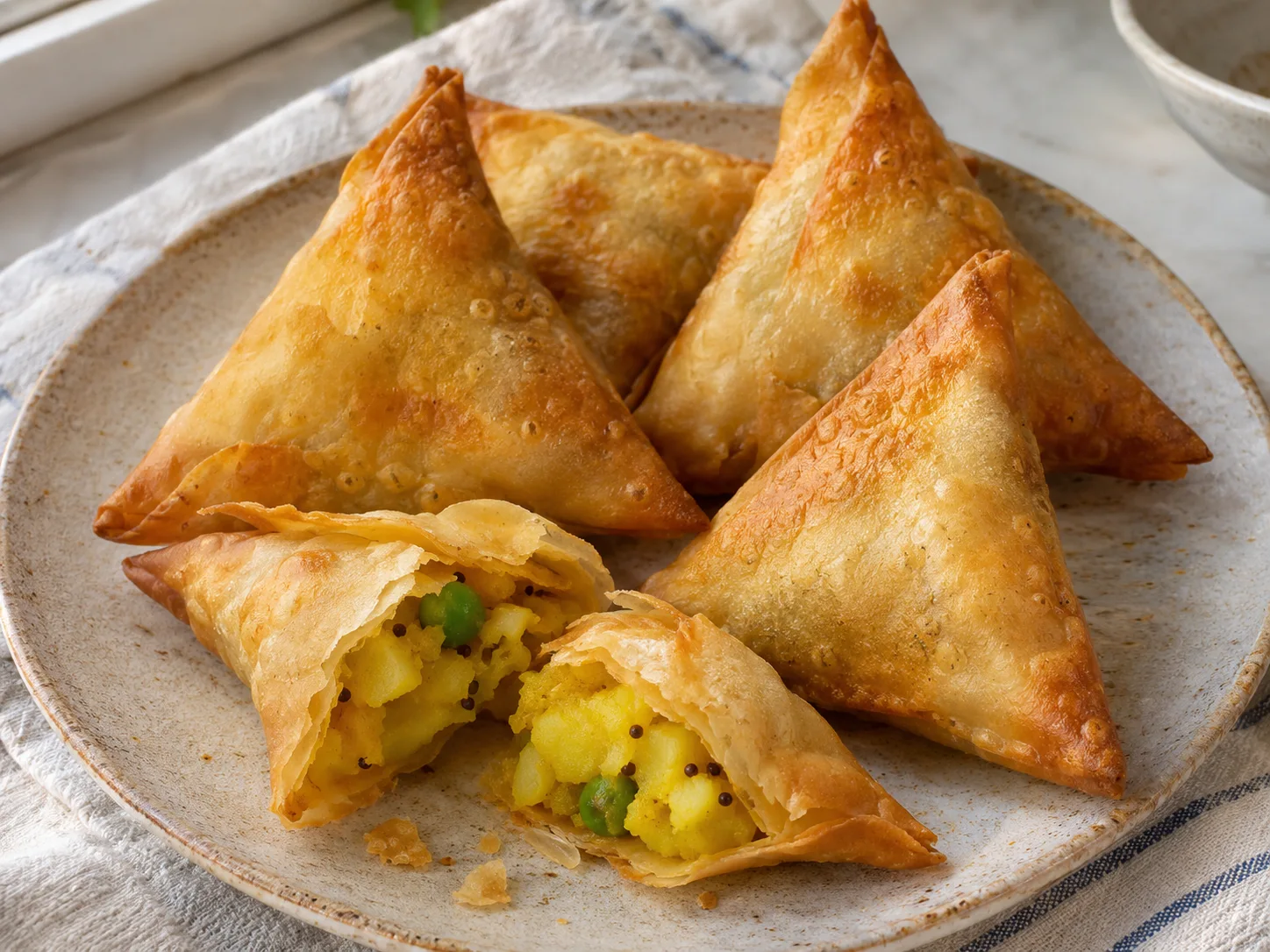
Sixteen crisp triangles filled with potato, peas and spices, for four portions of four pieces.
Ingredients
- 16 samoosa pastry strips, about 240 g in total
- 400 g peeled potatoes, cubed
- 80 g frozen peas
- 100 g finely chopped onion
- 15 ml oil for the filling
- 8 g crushed garlic
- 8 g moderately hot curry masala
- ½ teaspoon mustard seeds
- ½ teaspoon ground cumin
- ¼ teaspoon ground turmeric
- 3 g fine salt initially, then adjust
- 10 g chopped fresh coriander
- 20 g flour for sealing
- 30 ml water for sealing, adjust as needed
- Water for boiling potatoes, discarded after draining
- Vegetable oil for deep-frying, enough for the pan
Preparation
Cover the potato cubes with water in a saucepan. Simmer for about 15–20 minutes, depending on size, until easily pierced. Drain thoroughly and return briefly to the warm pan off the heat to release steam.
Heat 15 ml oil in a sauté pan. Let mustard seeds sizzle briefly, then soften onion for about 7 minutes. Add garlic for 1 minute, then masala, cumin and turmeric for 30 seconds without scorching.
Roughly crush the potatoes with a fork. Add to the pan with peas and 3 g salt. Stir over low heat for about 3–5 minutes until peas are cooked and the filling is fairly dry. Remove from heat, stir in coriander and taste.
Spread the filling in a shallow dish to cool quickly. Mix 20 g flour with 30 ml water to make a thick sealing paste. Keep pastry strips covered as you work so that they remain flexible.
Fold a corner across one strip, then again to make a triangular pocket. Add a small portion of filling without straining the points. Continue folding, spread sealing paste on the last flap and press closed. Make sixteen pieces, adapting the filling amount to the strips.
Heat oil to about 175–180 °C in a deep, stable pan. Fry a few pieces at a time for about 3–4 minutes, turning if necessary, until golden and cooked. Adjust to the pastry thickness and avoid overcrowding.
Drain on a rack or briefly on absorbent paper. Rest for 1–2 minutes and serve without a tight cover. Offer chutney alongside to preserve the crisp shell.
Introduction
The filling starts with cooked, thoroughly drained potatoes. Roughly crush them rather than making a perfectly smooth purée: small tender pieces give texture without pushing sharp edges against the pastry. Onion, mustard seeds and measured spices create a distinct filling that needs no cheese to bind it.
Cool the mixture quickly before folding. Hot potatoes release steam that softens thin pastry, so make the filling first and use the cooling interval to prepare the flour paste and work surface.
Commercial samoosa strips make assembly straightforward. Check their ingredients when cooking for someone avoiding eggs or dairy; a meat-free filling does not determine the composition of the pastry. Divide the filling between sixteen triangles according to the width of your strips.
Cultural context
Potato samoosas are documented in Cape Malay cooking. Salwaa Smith describes potato-and-pea filling, while the potato samoosa recipe published by Tantalise My Taste Buds credits Simone Fortuin. Seasoning and folding vary between households. This original method combines peas, mustard seeds and cumin with quantities designed for sixteen pieces.
Tips
Drain potatoes immediately rather than leaving them in their cooking water. Release steam before mixing and cool the completed filling promptly.
Use a fork rather than a blender. Small tender pieces are pleasant; large angular chunks can puncture pastry.
The modest turmeric quantity already colours the filling. Check spice freshness before increasing doses merely to intensify the colour.
Reduce filling if a trial triangle is difficult to close. Extra sealing paste cannot compensate for an overfilled pocket.
Let the frying oil recover between batches and keep assembled triangles away from splashes and the sealing-water bowl.
Variations
Omit peas and increase potato slightly if desired, keeping the total filling quantity manageable. Chilli is optional. Oven cooking requires suitable pastry and its own package instructions, with a texture different from frying.
Accompaniments
Serve with mild chutney, coriander sauce or tomato-and-cucumber salad. For a buffet, use the sixteen-piece yield to adjust portions to the other dishes. Put sauces in separate bowls and use them sparingly.