Roasted amadumbe
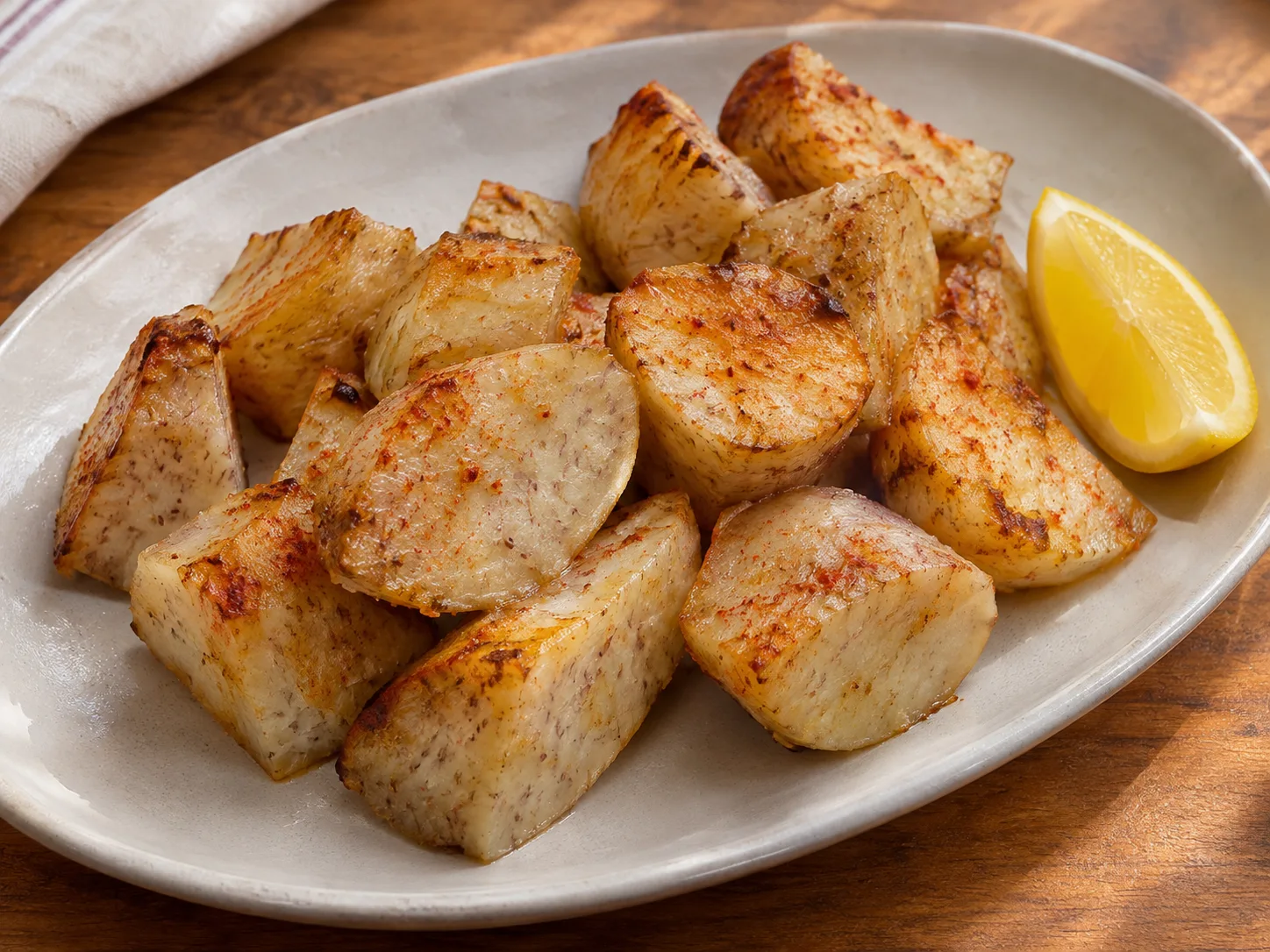
Taro boiled until tender, then oven-roasted with a measured amount of oil.
Ingredients
- 800 g edible taro, peeled weight
- 1.5 litres water for boiling, adjusted to the pot
- 30 ml neutral vegetable oil
- 3 g fine salt for final seasoning, then adjust
- Salt for the boiling water, to taste
- Black pepper
- Half a teaspoon sweet paprika, optional
- 1 small lemon cut into wedges, optional for serving
Preparation
Buy correctly identified food-grade taro. Peel, wearing gloves if handling irritates your skin. Rinse and cut large corms into even 3–4 cm pieces. Do not taste raw taro.
Cover with about 1.5 litres water, adjusting as needed, and salt lightly if desired. Boil gently for about 25–35 minutes or longer until a knife enters several centres easily, with no firm core.
Drain and discard the water. Leave to steam-dry for 5–10 minutes.
Heat the oven to 210°C fan or 220°C conventional. Line a large tray with baking paper; use two trays if doubling the recipe.
Gently coat the cooked taro with 30 ml oil, 3 g salt, pepper and optional paprika. Space the pieces on the tray without crushing them.
Roast for about 20–25 minutes, turning once halfway. Aim for golden edges without burning; lower the temperature if colouring too fast.
Rest for 2 minutes, taste and adjust seasoning. Serve hot with lemon wedges separately, without covering for a long wait.
Introduction
Two stages give a tender centre and golden edges: cook fully in water, then drain and dry before roasting. Serve the lemon separately to preserve the surface.
Cultural context
Amadumbe is a South African name for taro corms, notably used in KwaZulu-Natal. Slow Food documents this food, which is also cooked in many other parts of the world. This oven method is a home adaptation, not a claim to represent every local preparation.
Tips
Cooking time varies: test the centres of several pieces.
For advance preparation, cool boiled taro promptly and refrigerate. Dry before oiling and allow extra roasting time if cold.
Distribute the measured oil evenly rather than pooling it in one corner.
Variations
Omit paprika for a plain version or add chopped herbs after cooking. Pan-frying the boiled pieces is another adaptation; retain the complete preliminary cooking.
Accompaniments
Serve with grilled fish, leafy vegetables or a little stew. Taro already supplies starch, so another large starchy side is unnecessary.