Tshidzimba
A softly bound mixture of samp, cowpeas, Bambara groundnuts and peanuts, with some individual grains still visible.
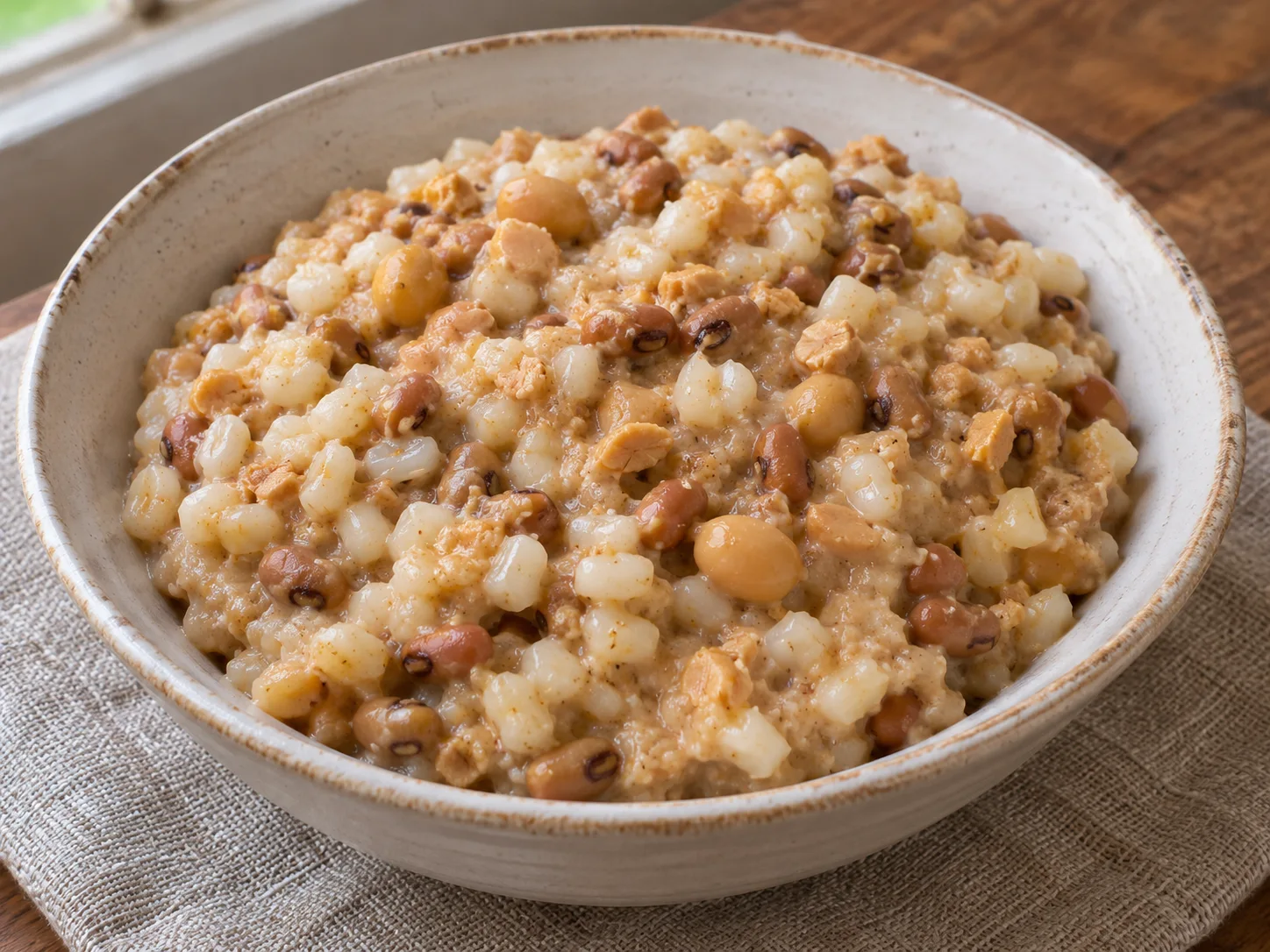
Ingredients
- 180 g dry samp
- 100 g dry cowpeas
- 100 g dry shelled Bambara groundnuts
- 60 g plain unsalted peanuts, for cooking with the grains
- 40 g plain unsalted peanuts, finely ground for binding
- 2 litres water to start cooking, plus hot water as needed
- 4 g fine salt initially, then adjust
- Additional soaking water, discarded
Preparation
Sort samp, cowpeas and Bambara groundnuts separately and remove debris. Rinse, cover generously with water in separate containers and soak overnight in the refrigerator. Drain and discard soaking water.
Put samp in a large pot with about 1 litre fresh water and the 60 g whole peanuts. Put cowpeas and Bambara groundnuts in separate pans, each with about 500 ml fresh water. Bring each to the boil, then maintain a steady simmer. Keep ground peanuts for later.
Cook each component until tender. Start checking cowpeas after about 45 minutes; samp and Bambara groundnuts may take considerably longer. Add hot water before the grains dry out. Do not stop cooking a pulse that is still hard simply because an hour has passed.
Combine the tender pulses with the samp, adding some cooking liquid to keep it soft. A grain of each ingredient should squash easily between two spoons. Keep cooking any hard component separately before adding it.
Mix the 40 g ground peanuts with a small ladle of hot cooking liquid. Stir into the pot and simmer gently for a further 25–30 minutes, scraping the bottom regularly. The ground peanuts must cook, not simply be sprinkled on at serving.
Stir in 4 g salt, taste and adjust. The mixture should be bound but not stiff. Add hot water in small amounts if dry, or reduce uncovered if too wet. Mash a small proportion of grains if more binding is desired.
Rest off the heat for 5 minutes and serve in six bowls or a warm dish. It firms as it cools; keep a little hot water ready if serving is delayed.
Introduction
Samp gives texture, pulses give substance and peanuts bind the mixture. Weigh ingredients dry and check every component for tenderness. Samp is cracked, dehulled maize, not maize flour. Bambara groundnuts, also sold as jugo beans or ditloo, are a pulse distinct from peanuts. This recipe gives six portions as a meal base.
Cultural context
The Association for Dietetics South Africa documents tshidzimba as a Venda preparation of maize, pulses and peanuts. Family proportions vary. Its pronounced peanut component distinguishes this version from the umngqusho .
Tips
Separate cooking is a practical choice for ingredients from different suppliers, not a claim of a universal traditional method.
Use roomy pans because pulses swell and can foam. Skim if needed and lower the heat after boiling.
Use fresh, properly stored food-grade peanuts. Discard rancid or mouldy products and clearly disclose the peanut allergen.
Cool leftovers promptly in shallow containers and refrigerate. Reheat with a little water until thoroughly hot, stirring to prevent sticking.
Variations
If Bambara groundnuts are unavailable, extra cowpeas can be used as a clearly identified adaptation. Unsweetened peanut butter may replace ground peanuts in another version, but adjust quantities for concentration. Here we retain ground peanuts to show their binding role.
Accompaniments
Serve with cooked greens, cabbage or tomato salad. The dish already combines grain, pulses and peanuts, so another large starch portion is unnecessary. A small serving of meat stew may be offered separately.