Isijingi
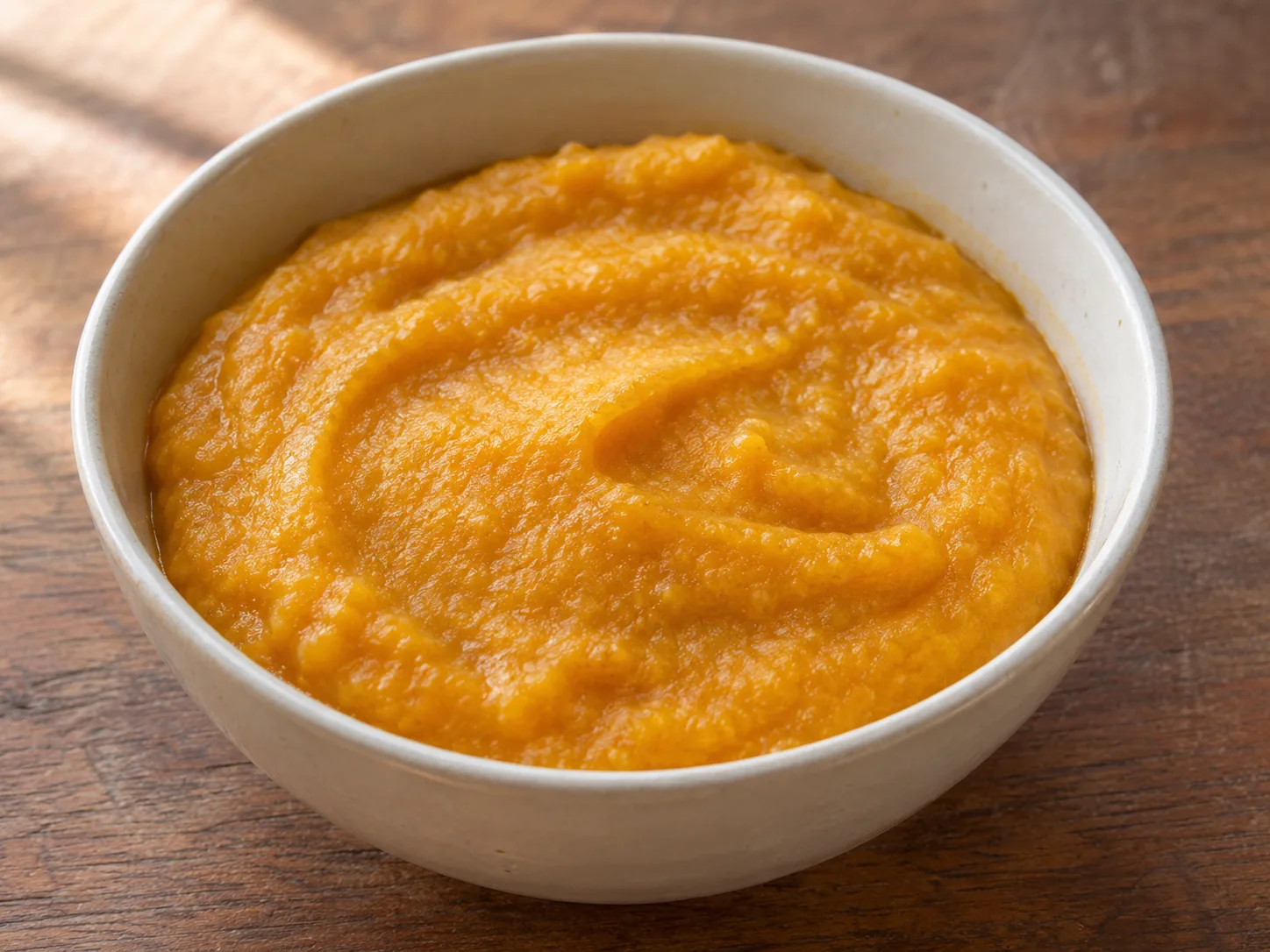
A soft pumpkin and maize-meal preparation, served in bowls or as an accompaniment.
Ingredients
- 800 g peeled and deseeded orange-fleshed pumpkin
- 120 g fine white maize meal for pap
- 500 ml water for the first cooking
- 150–250 ml additional hot water, depending on pumpkin and meal
- 20 g butter, optional
- 3 g fine salt initially, then adjust
- For an optional serving variation only: a little hot milk or sugar, offered separately
Preparation
Cut the prepared pumpkin into even 2 cm cubes and remove stringy fibres. Stabilise large pieces before peeling so they do not roll under the knife.
Put pumpkin, 500 ml water and 3 g salt in a heavy pot. Bring to a simmer, cover and cook about 20 minutes until easily mashed. Check halfway that the bottom stays moist and add water if needed.
Mash the pumpkin in its cooking liquid. If there is a large excess of free water, evaporate some uncovered. Keep the mash fairly fluid because the maize meal will absorb moisture.
Lower the heat and gradually sprinkle in maize meal while stirring vigorously. Start with a whisk if useful, then use a sturdy spoon as it thickens. Scrape the bottom and corners; add some of the extra hot water if it becomes too stiff.
Cover and cook very gently for 20–25 minutes, stirring regularly. Check the meal package because grind affects cooking time. Add hot water little by little to keep it soft. The raw flour taste must disappear. Beware of thick hot splashes.
Stir in optional butter and adjust salt after tasting. Loosen with hot water if firm. If too fluid, reduce uncovered rather than adding raw meal at the last minute.
Serve immediately in four warm bowls or a serving dish. It firms as it cools. Hot milk and a little sugar can be offered separately for a breakfast variation; they are not required ingredients of this version.
Introduction
Weigh the pumpkin after peeling and removing seeds. Use fine white maize meal intended for pap, not cornflour or cornstarch. This version is lightly salted, with no added sugar and a little optional butter. Aim for a soft spoonable consistency, not a stiff paste.
Cultural context
Isijingi is documented in South African cooking as a pumpkin and maize preparation, with differences in texture and sweetness. Here the cooked pumpkin is bound with maize meal in one pot, making it distinct from plain pap served beside vegetables or pumpkin fritters.
Tips
Maize meal for pap, coarse grits and cornstarch are different products. Coarser meal needs longer cooking and more water.
A sweet pumpkin may need no sugar. For a savoury plate, add contrasting greens or a light sauce.
Use a heavy pot and low heat. If the bottom burns, transfer the unburnt part to a clean pot without scraping in the burnt layer.
Reheat with a little water, stirring until thoroughly hot and soft; refrigerated maize naturally becomes firmer.
Variations
Omit butter for a dairy-free preparation, or use a little neutral oil if desired. Adjust the final water for a firmer texture without shortening the necessary cooking. If adding sugar, record it for nutrition estimates. Do not assign every adaptation to a named community without evidence.
Accompaniments
Serve with greens, beans or a modest portion of stew. Pumpkin and maize already form a substantial base; another large starch portion is unnecessary. It can also be enjoyed alone in a bowl.