Al Musaba'a
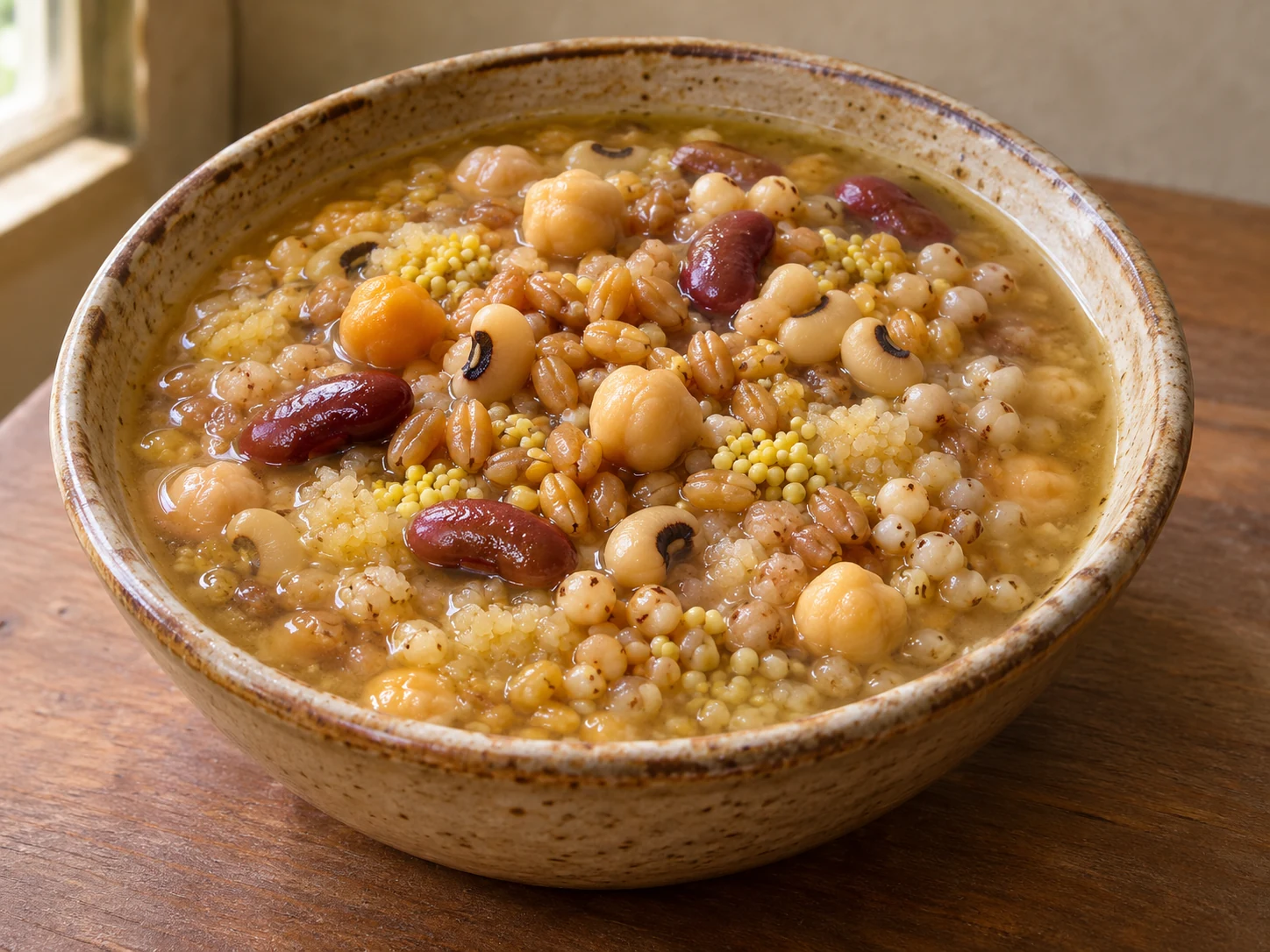
A Sudanese preparation of seven cereals and pulses brought together in a light broth. A savoury home version using already cooked kidney beans.
Ingredients
- 150 g cooked, drained chickpeas
- 150 g canned kidney beans, rinsed and drained
- 150 g cooked, drained cowpeas
- 150 g cooked wheat berries
- 150 g cooked bulgur
- 150 g cooked millet
- 150 g cooked sorghum grains
- 900 ml water
- 15 ml neutral oil
- 1 teaspoon ground cumin
- 1/2 teaspoon ground coriander
- 3 g salt
- 1 pinch black pepper
Preparation
Weigh each cereal and pulse after cooking and draining. Rinse and drain the canned kidney beans. Check that chickpeas, cowpeas, wheat and sorghum are tender: the brief shared simmer cannot cook grains that remain hard. Keep the prepared ingredients refrigerated until needed.
Pour the 900 ml water into a large saucepan. Add the already cooked chickpeas, kidney beans, cowpeas, wheat and sorghum. Bring to a simmer and heat for eight minutes over moderate heat, stirring gently to avoid crushing the pulses.
Add the cooked millet and bulgur. Stir and continue at a gentle simmer for five to eight minutes. These smaller grains can thicken the liquid: keep the heat gentle and carefully scrape the base to prevent sticking.
Mix the oil, cumin, coriander, salt and pepper with a small ladleful of hot broth. Return to the pan and stir. Simmer for another two minutes to distribute the spices throughout.
Check consistency. It should be possible to serve with a ladle while retaining a generous proportion of grains. If it thickens excessively, add a little measured hot water. Taste before adding more salt, particularly if the precooked ingredients were already salted.
Divide among six bowls and serve hot. Stir gently before each serving to distribute the seven components evenly. Cool portions intended for keeping promptly, then refrigerate in shallow containers.
Introduction
Al Musaba'a brings seven plant ingredients together in one saucepan. Its distinctive feature is not simply combining seven bean varieties: the mixture includes cereals too. Chickpeas, kidney beans and cowpeas join wheat, bulgur, millet and sorghum. Shapes, colours and textures complement one another in a broth light enough to leave each component recognisable.
This version uses an explicitly stated shortcut: every grain and pulse is weighed already cooked. This avoids imposing one shared cooking time on products that soften at different rates. Sorghum may remain firm when bulgur has already broken down; dried chickpeas do not cook like canned beans. Combining properly cooked products therefore offers better control even when time is short.
The one hundred and fifty grams stated for each ingredient are not dried weights. This makes a substantial difference to the final quantity. Preparing one hundred and fifty grams of each in dried form would make a much larger pot and change the stated portions. For six bowls, the seven cooked components total one kilogram and fifty grams, before water and seasoning. Read the list before starting the preliminary cooking.
Cultural context
The Sudanese Kitchen presents Al Musaba'a as a seven-component preparation including the cereals and pulses chosen here. It mentions both savoury and sweet seasoning. This recipe chooses one direction, savoury with cumin and coriander, to provide a coherent method. It does not simply pile salt, sugar and sweet spices together.
Using already cooked products is a home-method adaptation. It preserves the mixture's idea while separating cooking processes that are difficult to synchronise. This is particularly useful for kidney beans: the recipe explicitly uses ready-to-eat canned beans and never asks for briefly reheating merely soaked dried beans. Preparation from dried beans must follow the manufacturer's instructions.
Do not confuse this recipe with baleela made only with chickpeas. Both can be served in bowls, but their compositions genuinely differ. The seven-component mixture defines this recipe. If one is missing, an enjoyable adaptation can still be made, provided the change is stated rather than silently retaining a description that no longer matches the pan.
Tips
Drain before weighing to preserve proportions.
Keep smaller grains for the end of reheating.
Choose low-salt products when combining several canned ingredients.
Use a sufficiently wide saucepan to stir without crushing.
Planning
When starting with dried products, prepare each type separately and follow its packaging instructions. The dried quantities needed depend on water absorption; cooking a little extra and then measuring out the required cooked weight is more reliable. Keep leftover grains refrigerated or freeze in small portions rather than leaving them on the worktop for another meal.
Bulgur contains wheat, as do wheat berries: this recipe therefore contains gluten. Millet and sorghum do not make it suitable for a gluten-free diet. Substituting the two wheat components changes the formula and must be described explicitly. Also check canned-product labels for added sauces or seasonings.
The broth is deliberately simple. A large quantity of tomato, cream or purée would hide the different grains. The spices are measured and distributed through the liquid before the final heating. This avoids pockets of powder on the surface and allows the whole mixture to be tasted evenly before adjusting.
Storage
Cool remaining portions promptly in shallow containers, then refrigerate for twenty-four to forty-eight hours. Cereals continue absorbing liquid after cooking, so a thicker texture the next day is expected. Add a little water when reheating and heat the portion completely.
Avoid repeatedly reheating the whole pan. Take out what will be eaten and leave the rest cold. Cooked grains can be frozen separately before assembly, making future preparation easier without repeating every long cooking process.
Variations
A sweet version can be considered separately with suitable seasoning, but requires reviewing the oil and savoury spices in this recipe. It is not enough to pour sugar into a cumin-seasoned bowl. For a first attempt, keeping to one version makes quantities and assessment easier.
If sorghum is difficult to obtain, replacing it produces a different cereal-and-pulse mixture. This may be useful for everyday cooking, but the title and list must remain honest. Also avoid counting the same mixture as several new recipes merely by changing one spice or the volume of broth.
Accompaniments
Serve a bowl with a vegetable salad or small fresh garnish. Cereals are already well represented, so bread is not essential. For a larger meal, adjust portion size rather than routinely adding several starchy foods.
It also suits family-style serving. Stir gently before filling bowls because heavier grains settle at the bottom. Nutritional values refer to one sixth of the whole pot, not a bowl of liquid almost devoid of grains.