Attiéké and fish patties
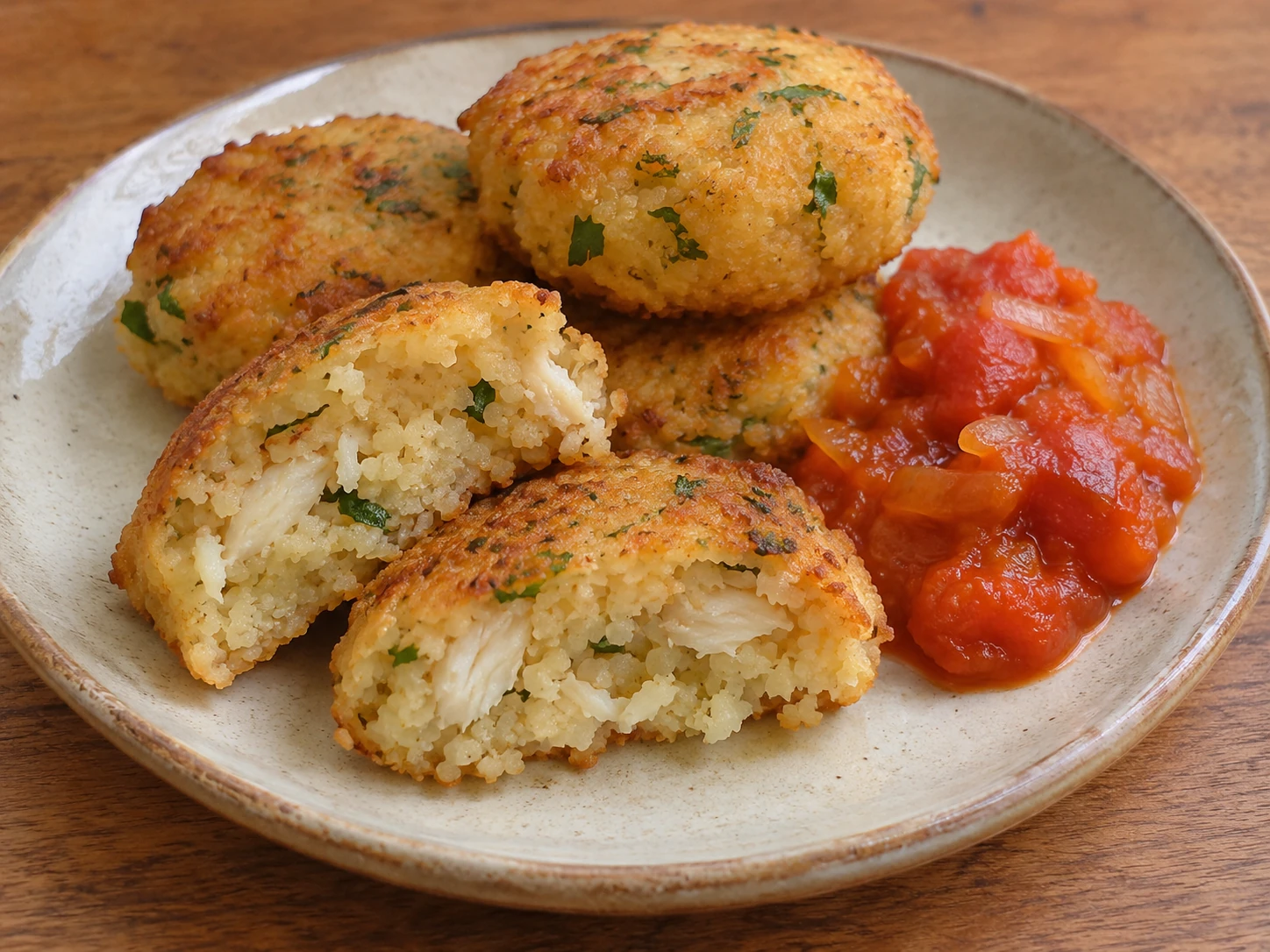
Cooked, cooled attiéké becomes twelve small pan-fried patties with cooked fish, for four portions. Keep the cassava grains visible rather than blending everything to a paste. Egg and flour bind the mixture, while spring onion, parsley and lime zest provide flavour. The preparation times assume that the attiéké and fish are already cooked and safely chilled.
Ingredients
- 350 g cooked, cooled attiéké
- 250 g cooked fish without skin or bones
- 1 egg
- 40 g wheat flour
- 1 spring onion
- 1 tsp finely grated lime zest
- 2 tbsp chopped parsley
- 3 tbsp neutral oil
- Salt and black pepper
Preparation
Fluff the attiéké with a fork. Check the fish carefully with your fingers, remove every bone and flake it.
Finely slice the spring onion. Mix attiéké, fish, onion, parsley and zest. Add beaten egg, then flour, to obtain a mixture that holds when pressed.
Add pepper and salt cautiously, considering the fish seasoning. Cover and refrigerate for 20 minutes.
Form twelve patties 1 cm thick. Press the edges firmly so they do not crumble when turned.
Heat half the oil in a non-stick pan. Cook over medium heat for 4 minutes on each side, in two batches, adding the rest of the oil.
Serve hot with cooked lemony tomato sauce. Check that the centres are thoroughly hot and the egg is fully cooked.
Introduction
Cooked, cooled attiéké becomes twelve small pan-fried patties with cooked fish, for four portions. Keep the cassava grains visible rather than blending everything to a paste. Egg and flour bind the mixture, while spring onion, parsley and lime zest provide flavour. The preparation times assume that the attiéké and fish are already cooked and safely chilled.
Cultural context
Attiéké is processed cassava, and the skills related to its production in Côte d’Ivoire were inscribed by UNESCO in 2024. That recognition concerns community knowledge, not certification of these contemporary patties. This recipe is a family creation using ready-prepared attiéké.
Tips
Use only attiéké and fish that were cooled promptly and refrigerated.
Check every flake for bones.
Chill and press thin patties; add flour sparingly only if necessary.
Planning
Fluff the grains and flake the fish without prolonged blending. Finely chop the spring onion. A 1 cm thickness lets the centre heat through while the crust forms.
Serving
Serve three small patties per person as a starting portion, with cucumber or tomato salad. Keep sauce separate until eating. The attiéké already supplies a starch component.
Storage
Keep ingredients and the raw egg mixture refrigerated. A leftover ingredient does not acquire a new storage life when reused. Cool cooked patties promptly and preferably eat the next day, reheating completely.
Variations
White fish gives a mild result; a fattier fish changes flavour and oil needs. Canned tuna has different moisture and salt and is not an identical substitution. Adjust lime zest to taste.
Accompaniments
Serve with tomato or cucumber salad and a cooked sauce on the side. Accompaniments are not included in the recipe portions.
Nutrition notes
Attiéké contributes carbohydrate and fish contributes protein. Fat varies with the fish and cooking oil. No numerical values are calculated. Contains fish, egg and wheat: cassava-based attiéké does not make the whole recipe gluten-free.