Salatat Bambay
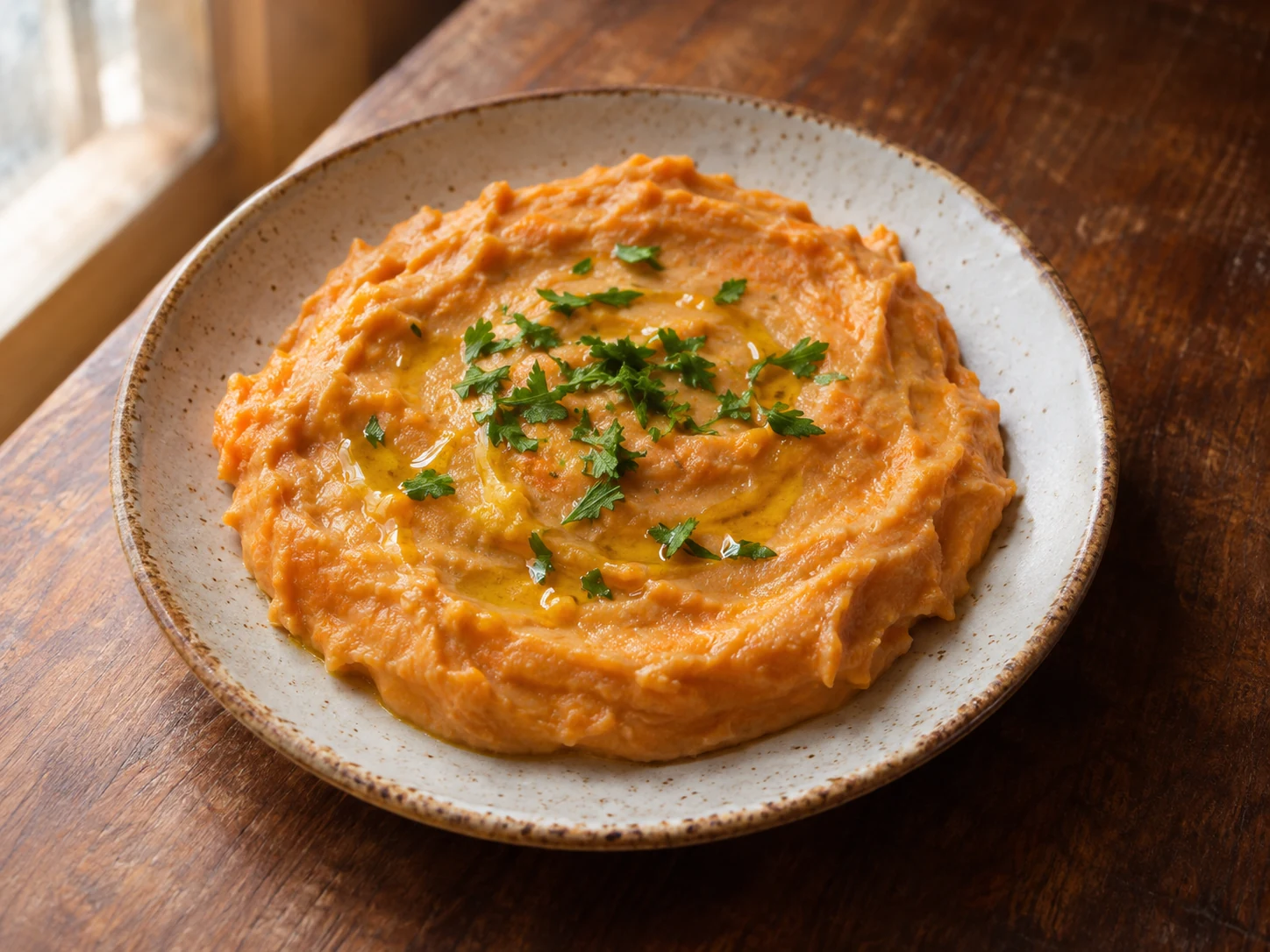
Mashed sweet potato seasoned with yoghurt, peanut butter, garlic and lime. Six side-dish portions.
Ingredients
- 800 g peeled sweet potatoes
- 15 g butter
- 40 ml pasteurised semi-skimmed milk
- 100 g plain pasteurised yoghurt
- 40 g unsweetened peanut butter
- 20 ml lime juice
- 5 ml vinegar
- 1 small garlic clove, finely grated
- 10 g washed, chopped fresh parsley
- 5 ml olive oil to finish
- 3 g salt, adjusted to taste
- 1 pinch black pepper
Preparation
Peel the sweet potatoes, rinse and cut into even cubes about three centimetres across. Weigh after peeling to obtain eight hundred grams. Place in a saucepan and cover with drinking water, without adding a large quantity of salt at this stage.
Bring to the boil, then simmer for about fifteen to twenty minutes until a fork enters several pieces easily. Do not continue until the cubes dissolve into the water. Drain thoroughly and allow steam to evaporate for one to two minutes in the pan off the heat.
Mash with a fork or potato masher, incorporating the butter and 40 ml milk. Keep a thick texture rather than adding enough liquid to make soup. Spread in a clean dish and allow to cool until no longer hot.
In a bowl, combine the yoghurt, peanut butter, lime juice, vinegar and grated garlic. Whisk until smooth. Add salt and pepper carefully, especially if the peanut butter already contains salt.
Fold the dressing into the cooled sweet potatoes with a spatula. Taste with a clean spoon and adjust acidity if needed. Distribute the five millilitres olive oil over the surface and add the washed, chopped parsley.
Serve six side-dish portions. If not eating immediately, cover and refrigerate. Use a clean serving utensil and keep the remainder cold rather than leaving the entire dish on the table for a long time.
Introduction
The salatat Bambay in this recipe uses sweet potato, rather than papaya or ordinary potato. The pieces are cooked and mashed before being mixed with a yoghurt and peanut dressing. Lime, vinegar and garlic balance the vegetable's sweetness. The intended texture is a thick accompaniment taken with a spoon, rather than a salad of raw cubes.
The eight-hundred-gram weight refers to sweet potatoes after peeling. Buying exactly that weight of whole vegetables can yield less after damaged parts and skins are removed. To maintain the balance between base and dressing, weigh after preparation. Colour depends on the variety: orange flesh makes the illustration brighter, but pale flesh can also be used when properly cooked.
Cooling before adding yoghurt is a texture step. A still-burning-hot mixture may make the dressing more liquid and alter its appearance. This does not mean leaving the sweet potatoes at room temperature all day: spread them in a clean dish so they lose heat quickly, then combine and refrigerate if not serving immediately.
Cultural context
The Sudanese Kitchen repertoire presents Salatat Bambay as a sweet-potato salad with dairy ingredients, peanuts and an acidic note. This identification matters because a transliterated name can be confusing when separated from its description. The recipe therefore keeps the short title while clearly naming the vegetable in its other fields.
The preparation differs from aubergine salata aswad even though peanuts and yoghurt are common to both dressings. Sweet potato changes the flavour, consistency and balance of the plate. This is not the same salad renamed with a new photograph: the vegetable is boiled, mashed and seasoned, without roasting or frying aubergines.
Serving as a side dish suits this measured formula. It can be presented alongside vegetables or a main course without describing it as a dessert despite the sweet potato's natural sweetness. Reference used to identify the dish: https://www.sudanese.kitchen/archive ; quantities and cooling before adding yoghurt are explained for home cooking.
Tips
Drain the sweet potatoes thoroughly before mashing.
Start with the stated acid quantities and taste before adding more.
Distribute the garlic finely through the dressing to avoid strongly flavoured pieces.
Use a spatula to combine, controlling texture without making the mixture sticky.
Planning
This recipe contains milk and peanuts. Butter, liquid milk and yoghurt must all be included in allergen information. Peanut butter is mixed throughout the dish: removing only a topping cannot make a portion suitable for someone with a peanut allergy. Check that the chosen product contains neither added sugar nor flavoured ingredients that would change the seasoning. Vinegar provides flavour, not an independent preservation method.
Serving
The recipe makes 6 portions; accompaniments are counted separately.
Storage
Place leftovers in a clean covered container in the refrigerator and preferably consume within twenty-four hours. Use a clean spoon to take a portion. Some water separation may occur from the yoghurt; stir gently before serving. Discard a preparation left warm for a long time or showing an abnormal smell or appearance. Freezing gives a less pleasant texture and is not preferred here.
Variations
Some sweet-potato varieties have drier flesh. If the mixture seems too firm, add a very small quantity of milk after incorporating the dressing, then mix again before deciding to add more. A version without butter or yoghurt is a separate adaptation that needs its own description and calculation. Do not substitute a purée of another fruit or vegetable at the same weight without checking the result.
Accompaniments
Serve a small portion alongside vegetables, grilled food or pulses. Sweet potato already supplies a starchy component; a large portion of rice and bread need not automatically be added. Other meal components are excluded from this side dish's nutrition. For a buffet, bring out small successive quantities rather than one large dish left lukewarm for a long time.
Nutrition notes
Sweet potato provides carbohydrates and fibre; peanuts and dairy products contribute fat and protein.