Shorbat zabadi
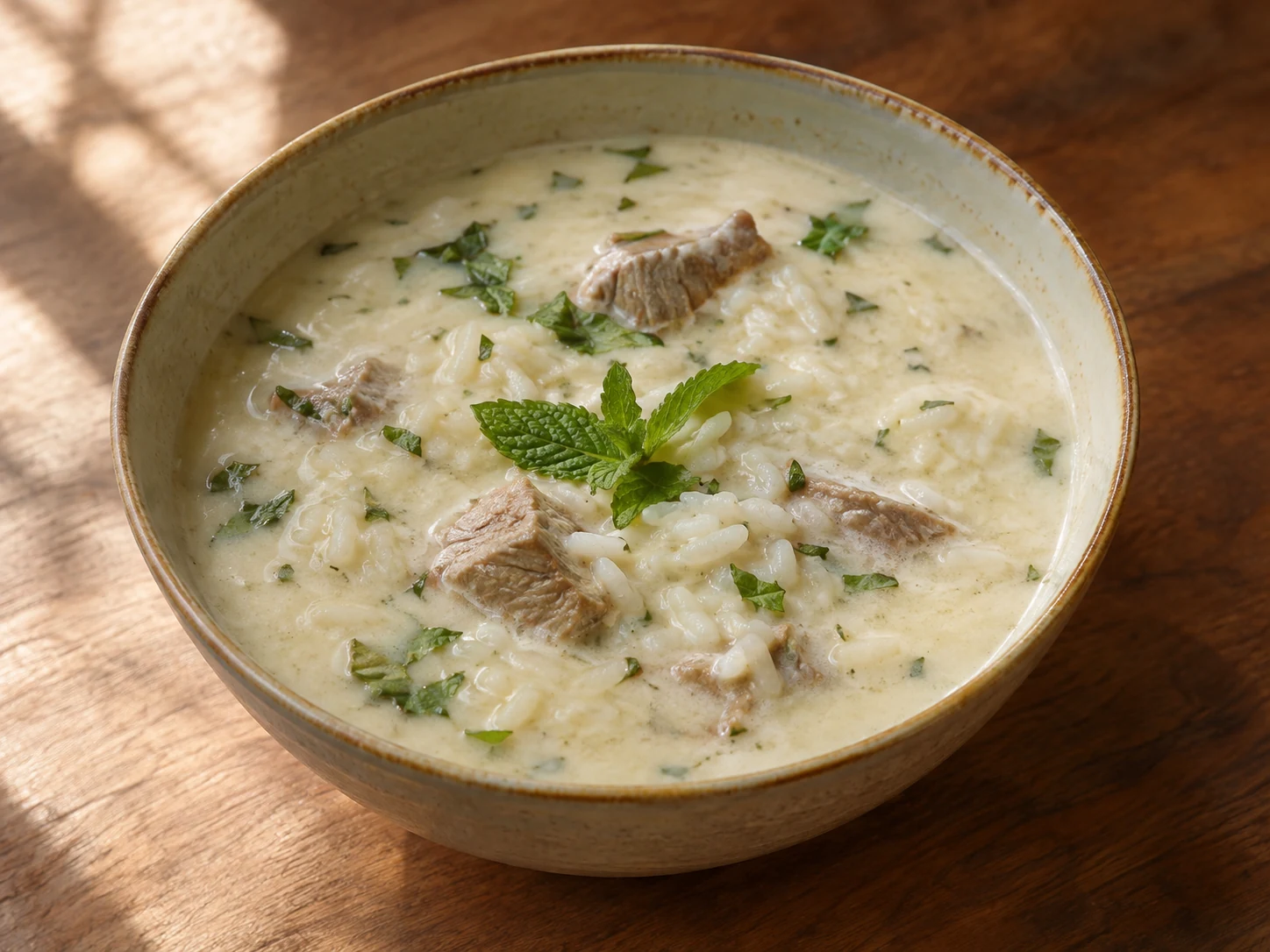
Lamb and rice soup thickened with yoghurt and flavoured with fresh mint. A home version for six portions.
Ingredients
- 400 g boneless lamb shoulder in 2–3 cm cubes
- 1 onion weighing 150 g
- 1.5 litres water, plus a little more if needed
- 100 g dried white rice
- 400 g plain pasteurised yoghurt
- 15 g wheat flour
- 2 finely chopped garlic cloves
- 15 g washed fresh mint leaves
- 3 g salt, adjusted to taste
- 1 pinch black pepper
Preparation
Peel and chop the onion. Put the lamb, onion and 1.5 litres water in a saucepan. Bring to the boil, skim with a clean spoon, then partially cover and simmer gently for about 75–105 minutes until the meat is tender.
Meanwhile, prepare the yoghurt, flour and garlic in a bowl. Whisk out any flour lumps and refrigerate the mixture until needed. Wash the mint in clean water, drain thoroughly and chop just before adding at the end.
Check the broth quantity once the lamb is tender. Top up with hot water if needed to restore about 1.2 litres liquid around the meat. Rinse the rice, add to the pan and simmer for about fifteen to twenty minutes until tender.
Remove the yoghurt mixture from the refrigerator. Gradually whisk in two small ladlefuls of hot broth to reduce thermal shock. Lower the heat under the saucepan, then pour in the tempered yoghurt while stirring constantly.
Heat the soup gently for about eight to ten minutes, stirring the base, until the flour is cooked and the mixture lightly thickened. Avoid a vigorous boil, which makes the yoghurt separate. If the soup becomes too thick, add hot water in small amounts.
Add the mint, salt and pepper at the end, then stir. Check that the whole soup is hot and the rice tender. Divide among six bowls, sharing the meat evenly. Serve without leaving the soup waiting a long time in a lukewarm saucepan.
Introduction
This shorbat zabadi combines lamb broth, rice and a yoghurt thickening mixture. Fresh mint is added at the end so its flavour remains noticeable. It is not a cold soup or merely diluted yoghurt: the meat and rice are cooked before the thickening stage, then the yoghurt is incorporated gently. Flour helps create a lightly bound texture that remains fluid enough to serve in a bowl.
The broth is made from the lamb and an onion. There is therefore no need for purchased stock or leftovers with an unknown salt content. The four hundred grams of meat are weighed without bone. Using the same weight of a very bony cut would change the amount actually distributed among the six bowls. A cut suited to slow cooking is preferable to very lean meat intended for quick searing.
The yoghurt is tempered before entering the soup. This means gradually adding some hot liquid to it while whisking. This step does not remove the need to lower the heat afterwards: a strong boil can still make the mixture separate. The aim is a creamy but light soup, with recognisable rice grains and tender pieces of lamb.
Cultural context
The Sudanese Kitchen documents a soup of lamb broth, rice, yoghurt and mint. The title Shorbat zabadi refers here to this particular yoghurt version; it does not claim to be the exclusive name of one soup throughout all Arabic-speaking cuisines. Mint and rice help distinguish this recipe from the flour-and-onion kishk already in the collection.
Such precision is useful for both translation and illustration. Rice grains and small pieces of lamb should be recognisable in a pale base with a green touch of mint. A brown peanut soup or a bowl of cucumber with yoghurt would be unsuitable. Cultural notes are limited to the documented preparation rather than assigning it a festival or region of origin without sufficient sourcing.
Bread may accompany serving but is not automatically an ingredient. Rice already plays a role in the texture and cereal component of the meal. Reference used to identify the dish: https://www.sudanese.kitchen/recipe/mint-and-yoghurt-soup ; meat, water and yoghurt quantities are adapted for six portions in this home version.
Tips
Temper the yoghurt gradually rather than pouring it in cold all at once.
Watch the soup after adding rice, because the grains may stick to the base.
Chop the mint just before using to preserve its fragrance.
Divide the meat between bowls before topping up with liquid.
Planning
This recipe contains milk and wheat gluten. Whisk the flour smooth before it meets the broth. Use unsweetened plain yoghurt; a flavoured product cannot simply be corrected with salt. Simmering time depends on the lamb cut: check tenderness before proceeding with rice. If the meat needs longer, wait rather than cooking the rice for an additional hour until the grains disappear.
Serving
The recipe makes 6 portions; accompaniments are counted separately.
Storage
Cool leftovers promptly in small containers and refrigerate. Consume within two days and reheat over low heat, stirring until thoroughly hot. Rice absorbs more liquid while resting; add a little water to loosen the soup. Freezing can make the yoghurt grainy even if the flavour remains similar; favour making an amount suited to the planned serving.
Variations
A meat-free version would require vegetable stock and a different nutritional estimate; it should not retain the same protein values. Dried mint can flavour an adaptation, but its quantity is much smaller than that of fresh leaves. Adding oats or another cereal changes thickening and cooking time. Test these changes separately rather than combining every substitution in one saucepan.
Accompaniments
Serve as a meal soup with vegetables or a fresh salad according to appetite. If adding bread, portion it separately rather than treating it as already included in the bowl's calories. A small portion may also form part of a multi-dish meal; adjust the number of bowls to the quantity actually served.
Nutrition notes
Lamb and yoghurt provide protein, and rice provides carbohydrates. Values exclude any bread served alongside.